
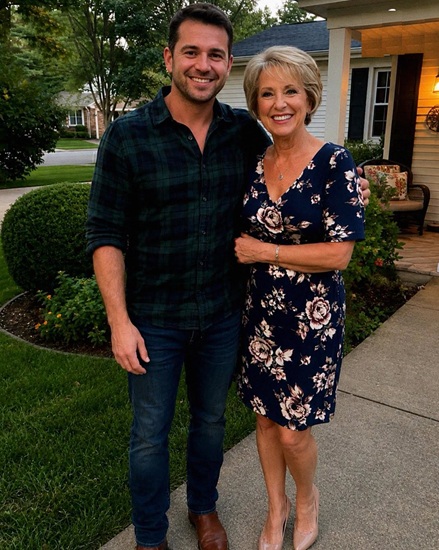
For three years after my father’s death, I believed my greatest responsibility was making sure my mother never felt alone. I visited every week, called almost every evening, and tried to fill the silence that grief had left inside her home. I told myself I was honoring my father’s memory by looking after the woman he had loved for more than forty years. I never imagined that one quiet Thursday evening would make me question everything I believed I knew—not because my mother had betrayed anyone, but because I had allowed fear and assumptions to speak louder than trust.
My parents’ house had always been the heart of our family. Music drifted through the open windows on summer afternoons, laughter echoed from the kitchen, and friends rarely needed an invitation to stop by. After my father passed away, the atmosphere changed completely. The garden slowly became overgrown, the piano remained closed, and many rooms seemed untouched for days at a time. My mother still smiled whenever I visited, but those smiles never seemed to last. Every conversation ended with the same reassuring words that she was “doing fine,” even when I could tell she was carrying more sadness than she wanted anyone else to see.
Among the few people who continued visiting regularly was Patrick, a longtime family friend who had grown up just a few houses away. He had known my parents since childhood and often stopped by to mow the lawn, repair small household problems, or simply share a cup of coffee with my mother. I always appreciated his kindness. Whenever I thanked him, he reminded me that my parents had treated him like family when he was growing up and that helping now was simply his way of giving something back.
Everything changed the afternoon I unexpectedly drove past my mother’s house without calling first. As I prepared to park, I noticed Patrick’s car pulling into the driveway. Curious, I remained where I was. A few moments later my mother stepped out of the passenger seat wearing a blue dress I had not seen since before my father’s passing. What surprised me most, however, was her laughter. It was genuine, warm, and completely different from the quiet smiles she usually offered during my visits. Watching them exchange a friendly goodbye before Patrick drove away left me with more questions than answers.
Over the next several weeks I happened to notice the same pattern. Every Thursday evening Patrick arrived at almost exactly the same time, and every Thursday my mother seemed happier than I had seen her in years. Eventually I asked her directly where they had been going. She smiled softly and simply replied that they had developed a little Thursday tradition and preferred to keep it private. Her answer, although polite, only deepened my curiosity. For the first time, I wondered whether there was something she was deliberately choosing not to tell me.
At home that evening I shared my concerns with my husband, Daniel. He gently reminded me that privacy and secrecy are not always the same thing. He suggested my mother deserved friendships and personal moments that belonged only to her. Although his words made sense, I found it difficult to quiet my imagination. I had spent so long trying to protect my mother from loneliness that I struggled to accept the possibility that she had built part of a new life without telling me.
Unable to stop thinking about it, I eventually spoke with my brother. He listened patiently before cautioning me against making assumptions without knowing the facts. His advice stayed with me, yet I continued noticing little details that seemed to support my growing curiosity. My mother spent more time baking than she had in years. Patrick visited more frequently. Occasionally I arrived unexpectedly and found conversations ending just as I walked through the door. None of those moments proved anything, but together they convinced me that some important piece of the story remained hidden.
One Thursday evening I decided to speak directly with Patrick. After he dropped my mother off at home, I approached him before he could drive away. I admitted that I was confused and simply wanted to understand why the weekly outings had become such a closely guarded secret. Patrick listened carefully before quietly explaining that he had promised my mother he would not discuss it. His response frustrated me even more because I interpreted his silence as confirmation that something unusual was happening. Looking back now, I realize he was simply honoring a promise made to someone he respected.
The following week my curiosity finally led me to follow them. Keeping several cars behind, I watched as they drove across town before stopping outside a modest blue house. An elderly woman opened the front door, and my mother embraced her with tears in her eyes. Confused, I slowly walked toward the house. Patrick noticed me first, while my mother looked both surprised and concerned. Before anyone could speak, the elderly woman smiled gently and invited me inside.
Over cups of tea, my mother finally explained everything. While organizing old family documents after my grandmother’s passing, she had discovered letters revealing that she had been adopted as an infant. The woman sitting across from us was Margaret—her biological mother—who had spent decades searching for the opportunity to reconnect. Patrick had helped my mother locate her and had quietly driven her to their weekly visits while she slowly built the courage to understand this unexpected chapter of her life. She had kept it private not because she wished to exclude the family, but because she first needed time to process emotions she barely understood herself.
As I listened, every misunderstanding disappeared. My mother’s laughter had not been replacing my father’s memory. It reflected the healing that sometimes arrives in unexpected ways. Patrick had never been hiding anything improper; he had simply respected my mother’s wishes during an intensely personal journey. I apologized to both of them for allowing fear to cloud my judgment. They accepted my apology with kindness, reminding me that love often requires patience as much as curiosity.
The following Thursday I returned carrying a homemade dessert and an old family photo album. Together we spent the afternoon sharing photographs, telling stories, and allowing two generations separated by circumstances to begin building new memories together. Watching my mother laugh beside Margaret, I realized that grief and hope can exist side by side. Sometimes healing does not erase the past—it simply creates room for new beginnings while continuing to honor the people we have loved all along.

