After returning home from a demanding trip, she wanted nothing more than a quiet evening and a chance to recover. Days of delayed flights, crowded terminals, long drives, and very little sleep had left her mentally and physically exhausted. Her suitcase remained unopened near the front door because only one thing mattered at that moment—a warm shower followed by a full night’s rest. Home finally felt peaceful again, and she looked forward to ending the day on a calm note.
The hot water helped wash away the stress that had built up throughout her journey. Steam slowly filled the bathroom while the sound of running water drowned out every lingering thought about missed connections and travel delays. For several minutes, she simply stood beneath the shower, grateful to be back in familiar surroundings. It was the first time in days that she felt completely relaxed, and she expected the evening to end quietly.
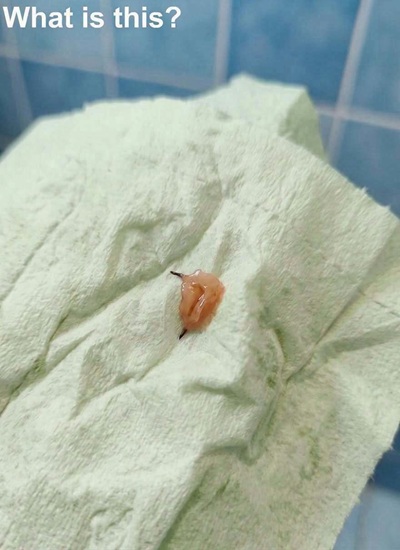
As she turned off the water and reached for a towel, something near the shower drain caught her attention. Resting against the light-colored tile was a tiny pale object with a single dark strand extending from one side. Because the room was still filled with steam and the lighting remained fairly dim, the shape looked unusual at first glance. She immediately stopped moving and stared at it, trying to understand exactly what she was seeing.
Her imagination quickly filled in the missing details. After spending time in airports, hotels, and unfamiliar places, countless possibilities crossed her mind. She briefly wondered whether it might be an insect, a small piece of plant material, or even something carried inside her luggage during the trip. Although none of those ideas were based on evidence, exhaustion made every possibility seem more believable than it normally would have.
The quiet apartment suddenly felt much different than it had only moments earlier. Every drop of water echoed through the bathroom, and even the gentle sound of the ventilation fan seemed unusually loud. She remained standing in place, watching the tiny object without getting any closer. The dark strand appeared to shift slightly whenever warm air moved through the room, making it seem almost as though it were moving on its own.
Leaving the bathroom without identifying the object did not feel like a good option. Curiosity and caution competed with one another as she searched for a safe way to inspect it. She pulled several paper towels from the holder and folded them into a thick layer before slowly approaching the drain. Every movement felt unusually careful as she prepared to pick it up without touching it directly.
With steady concentration, she gently lifted the object using the folded paper towels. It remained completely still. There was no movement, no unexpected reaction, and no indication that it was anything more than a very small object resting on the tile. Even so, she decided to continue examining it under brighter light before reaching any conclusions.
She carried it to the bathroom counter beneath the vanity lights and placed it on a clean tissue. Curious to understand what had startled her so much, she opened the medicine cabinet and removed a pair of tweezers. Carefully turning the object from one side to the other, she looked for anything that might explain its unusual appearance. Under stronger lighting, the pale surface appeared much less mysterious than it had near the shower drain.
For quite some time, she quietly studied the object from different angles. Fatigue often influences how people interpret unfamiliar sights, especially after stressful situations or insufficient sleep. She found herself remembering stories she had read, documentaries she had watched, and countless scenes from suspense films. Each thought briefly seemed possible before giving way to another explanation that sounded equally unlikely.
Eventually, she realized she needed to slow down and rely on observation instead of imagination. After putting on her reading glasses, she leaned closer and gently touched the object with the tip of the tweezers. Rather than moving or reacting, it simply crumbled slightly under the light pressure. At that moment, the answer became immediately obvious.
The object was not unusual at all.
What had appeared mysterious under dim lighting turned out to be nothing more than a small grain of rice that had absorbed moisture from the steam inside the bathroom. The dark strand that had seemed so alarming was simply a stiff plastic bristle that had likely broken away from a household cleaning brush and become lodged beside the softened grain. Together, they had created an unexpected shape that looked far more dramatic than it really was.
She couldn’t help laughing at herself. Moments earlier she had imagined complicated explanations, yet the reality proved remarkably ordinary. The combination of poor lighting, travel exhaustion, lingering stress, and surprise had convinced her that she was looking at something far more unusual than a simple household object. Once she understood what it really was, the tension disappeared almost instantly.
The experience reminded her how easily the human mind can misinterpret incomplete information. Psychologists have long explained that people naturally try to identify potential dangers when faced with unfamiliar situations. This instinct can be helpful because it encourages caution, but it can also lead the imagination to create explanations that seem convincing until additional information becomes available.
After cleaning the bathroom and finally unpacking her belongings, she reflected on how different the evening had become because of one tiny misunderstanding. Something that had briefly felt frightening eventually became a humorous story she could laugh about. Looking back, she realized that taking a closer look had completely changed her perspective.
By the time she went to bed, the stressful moment had become a simple reminder that appearances can sometimes be misleading. Tiredness, stress, and unfamiliar circumstances often influence the way people interpret what they see. In many situations, careful observation and a calm approach reveal that the explanation is much simpler than the imagination first suggests. Sometimes the greatest sense of relief comes not from escaping danger, but from discovering there was never any danger there at all.
