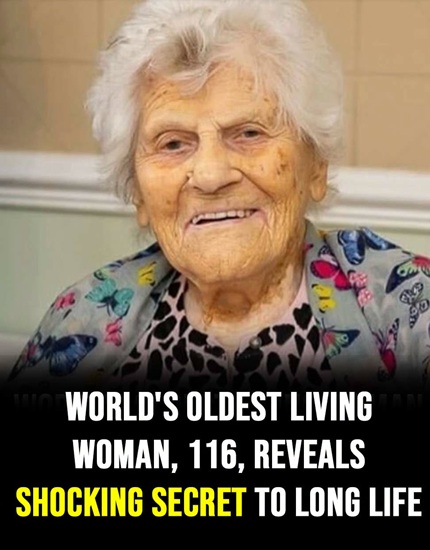
People are often fascinated by those who reach an exceptional age, especially when they have lived through more than a century of history. Questions about their routines, eating habits, and outlook on life naturally follow, as many hope to discover a formula for living longer. Ethel Caterham, who has been recognized as the world’s oldest verified living person, offers a refreshingly simple perspective. Rather than crediting a special diet or strict daily routine, she has often said that avoiding unnecessary arguments and maintaining a calm approach to life has served her well.
While she has never claimed that this is a guaranteed recipe for longevity, her words have resonated with people around the world. According to Guinness World Records and LongeviQuest, Ethel became the world’s oldest verified living person after the passing of the previous titleholder. At 116 years old, she has experienced an extraordinary period of human history that very few people have witnessed firsthand. During her lifetime, she has seen enormous changes in transportation, communication, medicine, education, and everyday life.
From a childhood in the early twentieth century to today’s digital era, her life spans generations of remarkable historical transformation. Ethel was born on August 21, 1909, in Shipton Bellinger, Hampshire, before growing up in Tidworth, Wiltshire, as one of eight children. Growing up in a large family taught her the importance of cooperation, responsibility, and adapting to changing circumstances.
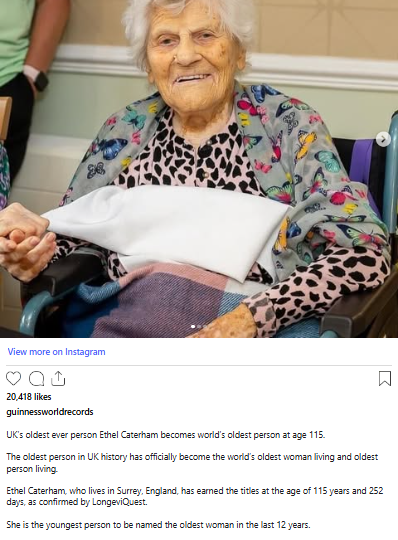
Those early experiences helped shape the resilience that would become a defining characteristic throughout her long life. Longevity also appears to run in her family, as one of her sisters lived to the age of 104, suggesting that both family history and lifestyle may have contributed to Ethel’s exceptional lifespan.
As a young adult, Ethel demonstrated a willingness to embrace opportunities beyond her hometown. At the age of eighteen, she traveled to British India to work as an au pair for a military family. At a time when overseas travel was far less common than it is today, the experience represented a significant step into an unfamiliar world. She later spoke about experiencing a unique blend of British customs and Indian traditions while living abroad, gaining valuable life experiences that broadened her understanding of different cultures and communities.
After spending several years working as a nanny in both India and the United Kingdom, Ethel met Norman Caterham during a dinner gathering in 1931. Their relationship soon developed, and they married in Salisbury Cathedral two years later. Norman served in the British Army and eventually became a lieutenant colonel in the Royal Army Pay Corps. His military career meant that the family relocated several times, allowing Ethel to experience life in different parts of the world while supporting her husband and raising their family.
Among the places where the Caterham family lived were Hong Kong and Gibraltar. During their time in Hong Kong, Ethel chose to become actively involved in the local community by establishing a nursery that welcomed both British and local children. She taught English, organized educational activities, encouraged creative play, and helped young children develop valuable social skills. Friends and family have often described her as someone who genuinely enjoyed helping others learn and grow, qualities that remained part of her personality throughout her life.
Following their overseas years, the family eventually returned to England, where Ethel and Norman raised their two daughters, Gem and Anne. Like many families of their generation, they experienced moments of happiness alongside periods of personal loss and change. Norman passed away in 1976, but Ethel continued to remain closely connected with her family while embracing new chapters of life with remarkable determination and independence.
Few people alive today have personally witnessed such a wide range of historic events. Ethel was born before the outbreak of the First World War and later lived through both global conflicts that shaped the twentieth century. She also witnessed the development of commercial aviation, the first Moon landing, the expansion of television, the rise of personal computers, the arrival of the internet, and the rapid growth of smartphones and digital communication. Her lifetime reflects one of the most dramatic periods of technological and social change in recorded history.
Another remarkable chapter came during the COVID-19 pandemic. At the age of 110, Ethel contracted the virus at a time when older adults faced the greatest health risks. Despite those concerns, she recovered successfully, adding another extraordinary milestone to her already remarkable life. Her recovery attracted widespread attention and highlighted the resilience she had demonstrated throughout many decades of personal and global challenges.
As journalists continued asking about the secret behind her longevity, Ethel consistently offered the same thoughtful response. She explained that she tries not to argue with people, preferring instead to listen carefully before making her own decisions. Her widely quoted remark, “Never arguing with anyone. I listen and I do what I like,” has been interpreted by many as advice about maintaining perspective, reducing unnecessary stress, and focusing energy on what truly matters rather than becoming involved in avoidable conflict.
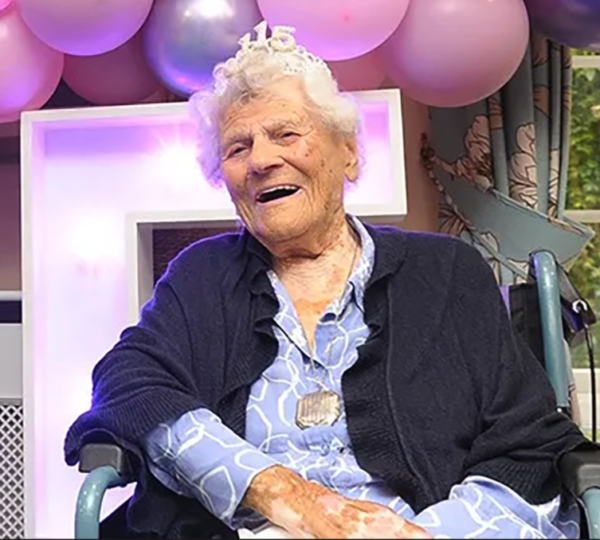
Over the years, Ethel’s remarkable age has been recognized through several significant milestones. She became the oldest living person in the United Kingdom before later being recognized internationally as the world’s oldest verified living person. Her birthdays have attracted messages of congratulations from many people, including members of the British royal family. King Charles III acknowledged her achievements with a special message celebrating her extraordinary milestone and wishing her continued happiness.
Despite reaching an age that very few people have achieved, Ethel maintained an active lifestyle for much of her later years. She continued driving until she was ninety-seven years old and remained an enthusiastic contract bridge player well into her centenarian years. Family members have described her as independent, practical, and mentally engaged, qualities that allowed her to remain active far longer than many people might expect.
Following the passing of her younger daughter Anne in 2020, Ethel moved into a care home in Surrey, where she continues to receive support from dedicated staff members. Those who care for her frequently describe her as warm, gracious, and appreciative. When celebrating her milestone birthdays, the care home praised her remarkable strength, wisdom, and positive outlook, noting that her life continues to inspire everyone fortunate enough to know her.
Experts who study exceptional longevity often explain that there is no single explanation for living beyond one hundred years. Genetics, healthcare, lifestyle choices, supportive relationships, and other factors all appear to contribute in different ways. Ethel herself has never suggested that her personal philosophy guarantees a long life. Instead, she presents it as a simple approach that has helped her navigate life’s many challenges while maintaining peace of mind through changing circumstances.
Today, Ethel Caterham’s story continues to inspire people around the world because it represents much more than a longevity record. Her life reflects resilience, adaptability, curiosity, and a willingness to embrace each new stage of life with quiet determination. Having witnessed more than a century of history, she reminds us that remarkable lives are often built not through extraordinary claims, but through consistent kindness, steady resilience, meaningful relationships, and an enduring appreciation for each passing year. Her journey continues to offer valuable perspective for people of every generation while celebrating a lifetime shaped by experience, service, family, and hope.
