
The criminal case against three-time Olympic canoeist David Hearn has officially come to an end after the U.S. Department of Justice requested that all charges against him be dismissed. Hearn, 67, had been facing a serious felony charge related to an incident at the Lincoln Memorial Reflecting Pool in Washington, D.C., where authorities initially alleged he had damaged federal property. The charge carried the possibility of a lengthy prison sentence, drawing significant public attention because of both Hearn’s athletic background and the unusual circumstances surrounding the case.
The incident occurred in June while Hearn was reportedly taking a bicycle ride through the National Mall. According to court records, he briefly interacted with a section of the Reflecting Pool where part of the protective liner had already begun separating from the pool floor. Federal investigators initially concluded that his actions constituted intentional property damage, leading to his arrest and the filing of a felony charge. Hearn consistently denied intentionally damaging the landmark and maintained that he merely examined a loose section before immediately letting go when instructed by park personnel.
Throughout the legal proceedings, Hearn repeatedly stated that he had no intention of harming public property. According to his account, the material appeared to have already detached from the surface of the pool before he ever touched it. His attorneys argued from the beginning that the government’s allegations failed to accurately reflect what had occurred and insisted that surveillance footage and witness testimony would ultimately support their client’s version of events.
As the investigation continued, prosecutors conducted an extensive review of additional evidence, including engineering reports, construction records, witness statements, and information regarding the recent renovation of the Reflecting Pool. That review ultimately led federal officials to conclude that the available evidence did not support the original accusation of vandalism. Instead, investigators found substantial evidence suggesting the deterioration had already begun due to construction-related issues rather than deliberate damage caused by visitors.
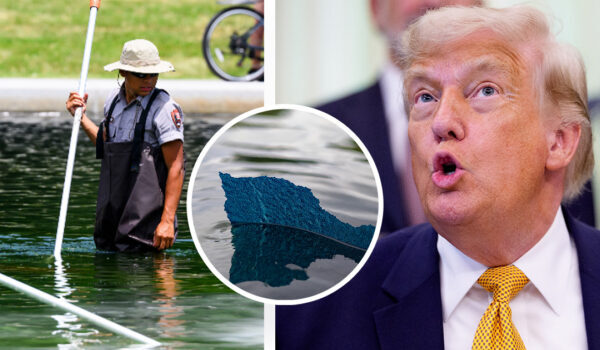
In a detailed court filing requesting dismissal of the case, federal prosecutors acknowledged that newly reviewed information significantly changed their understanding of the situation. The filing explained that the widespread deterioration affecting the Reflecting Pool appeared to stem from problems associated with the installation process rather than isolated acts of vandalism. Prosecutors concluded that, based on the evidence available, they could not establish criminal responsibility beyond a reasonable doubt.
According to the court filing, the deterioration involved sections of the newly installed liner that had begun bubbling, separating, and peeling shortly after the renovation project was completed. Officials stated that construction deficiencies and installation problems appeared to be contributing factors in the damage observed throughout the pool. These findings substantially weakened the original theory that individual visitors were responsible for causing the visible defects.
The Reflecting Pool had recently undergone a major renovation project valued at approximately $15 million as part of preparations connected to upcoming national commemorative events. Shortly after the project was completed and the pool was refilled, maintenance personnel reportedly began observing significant issues involving portions of the newly installed protective lining. Those problems prompted inspections and engineering evaluations that later became central to the government’s decision to reconsider the criminal case.
Court documents also referenced testimony indicating that the Reflecting Pool had already been experiencing significant operational issues before Hearn’s visit. During earlier proceedings, a National Park Service witness reportedly acknowledged that the facility had been losing substantial amounts of water each week because of existing defects. That testimony became an important factor in evaluating whether any single visitor could reasonably be blamed for the broader condition of the pool.
After reviewing all available evidence, prosecutors determined that continuing the case would not meet the legal standard required for a criminal conviction. Rather than proceeding to trial with insufficient evidence, the Department of Justice formally requested dismissal of the felony charge. The court filing emphasized that the available facts no longer supported the conclusion that Hearn had intentionally damaged federal property.
The dismissal marked a significant turning point for Hearn, who had spent months defending himself against allegations carrying potentially severe legal consequences. Although relieved that the prosecution had ended, his legal team argued that the experience had placed an unnecessary burden on an individual who consistently maintained his innocence from the very beginning. They stated that the dismissal reflected what they believed the evidence had shown all along—that no criminal vandalism had occurred.
While the legal proceedings against Hearn have now concluded, the broader questions surrounding the Reflecting Pool’s renovation continue to attract attention. Government agencies are expected to continue reviewing the construction process and the technical issues that contributed to the unexpected deterioration of the newly installed liner. The case has also prompted discussion about the importance of thoroughly evaluating available evidence before pursuing serious criminal charges.
Following the government’s decision to dismiss the case, David Hearn’s legal team said the outcome confirmed what they had argued from the beginning—that there was insufficient evidence to support the serious allegation of intentional property destruction. While they welcomed the dismissal, the attorneys also stated that the conclusion of the case did not erase the personal and professional impact that the prosecution had on their client. They emphasized that Hearn had consistently cooperated with investigators and maintained that he had no intention of damaging the historic site.
In a public statement released after the filing, Hearn’s attorneys expressed concern about how quickly criminal charges had been pursued before all of the available evidence had been fully evaluated. They argued that the investigation should have included a more complete review of the condition of the Reflecting Pool before reaching conclusions about individual responsibility. According to the defense, a careful examination of the physical evidence ultimately demonstrated that the broader structural issues extended well beyond the brief interaction involving their client.
The Department of Justice’s motion to dismiss also highlighted the importance of reassessing cases whenever significant new evidence becomes available. Prosecutors acknowledged that additional technical information regarding the pool’s construction and condition substantially changed their understanding of the situation. Rather than continuing a prosecution that could no longer be supported beyond a reasonable doubt, officials determined that dismissal represented the appropriate legal course of action.
Engineering findings referenced during the proceedings drew additional attention to the recent renovation project. According to information presented in court documents, portions of the newly installed liner had experienced unexpected separation and deterioration shortly after the project was completed. Those findings shifted much of the discussion away from individual visitors and toward questions involving construction methods, installation quality, and long-term durability of the materials used during the renovation.
The Reflecting Pool itself remains one of the most recognizable landmarks on the National Mall, attracting millions of visitors from around the world each year. Because of its historical and symbolic importance, any maintenance or restoration project naturally receives considerable public attention. Officials responsible for preserving the site continue working to ensure that future repairs meet appropriate engineering standards while protecting the long-term condition of the memorial.
Legal observers have noted that the dismissal may also influence several related misdemeanor cases involving other visitors who reportedly interacted with sections of the same deteriorating liner. While each matter must be evaluated individually based on its own facts and evidence, analysts have suggested that the government’s revised assessment of the overall condition of the Reflecting Pool could become relevant in similar proceedings. Any future decisions, however, will ultimately depend on the evidence presented in each separate case.
The case also serves as a reminder of how investigations can evolve as additional information becomes available. Initial reports often rely on limited evidence gathered shortly after an incident, while later reviews may include engineering analyses, expert testimony, maintenance records, and other documentation that provides a more complete understanding of what occurred. The legal system allows for that reassessment, recognizing that new evidence can significantly affect the outcome of a case.
Throughout the proceedings, public attention remained focused not only on the legal questions but also on the broader issue of maintaining historic public landmarks. Preservation projects involving nationally significant sites often require careful planning, specialized materials, and extensive oversight to balance historical preservation with long-term durability. Experts frequently note that large-scale restoration work can present unexpected technical challenges that require ongoing evaluation even after construction is complete.
For David Hearn, the dismissal concludes a chapter that began with a routine bicycle ride and unexpectedly developed into a high-profile federal case. While the legal process has now formally ended, the experience illustrates how quickly individual actions can become the subject of public scrutiny before all relevant facts have been fully established. It also demonstrates the importance of allowing investigations to follow the available evidence wherever it ultimately leads.
As government agencies continue reviewing the Reflecting Pool renovation and addressing any remaining construction concerns, attention is expected to remain focused on preserving one of Washington’s most visited landmarks for future generations. At the same time, the resolution of Hearn’s case highlights the role that careful evidence review, expert analysis, and due process play in ensuring that legal decisions are based on the fullest possible understanding of the facts. Those principles remain central to maintaining public confidence in both the justice system and the stewardship of important national monuments.
