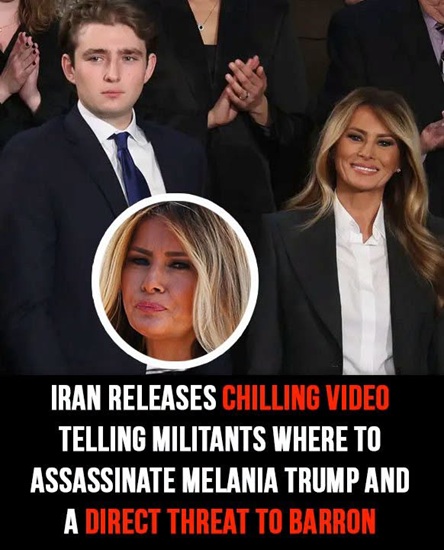
A recently published video attributed to Tasnim News Agency, a media organization affiliated with Iran’s Islamic Revolutionary Guard Corps (IRGC), has attracted widespread international attention after it contained threatening rhetoric directed at U.S. First Lady Melania Trump. According to multiple news reports, the video also included a threatening reference to Barron Trump, prompting renewed discussion about the safety of public officials and their families during periods of heightened geopolitical tension.
The video’s publication has been widely reported by international media and has generated strong reactions because it targeted family members rather than focusing solely on political leaders. Reports indicate that the video featured graphics and narration focusing on Melania Trump’s public appearances and movements. It reportedly claimed to analyze publicly available information regarding locations she has visited in New York City while presenting hostile messaging directed toward her.
News organizations have reported that the video’s narration contained English subtitles and included statements that have been widely condemned because they promoted violence. The authenticity of every claim made within the video’s narration has not been independently verified by U.S. authorities, and several reported assertions appear to rely on publicly available information rather than verified confidential sources.
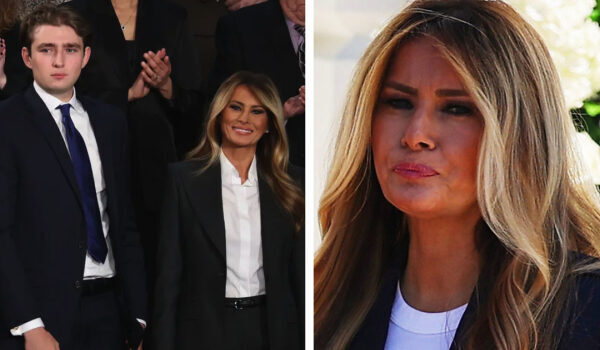
According to published reports, the video suggested that Melania Trump’s interest in fashion made her vulnerable during visits to luxury shopping districts. It referenced well-known retail locations in Manhattan and claimed that these public venues could present security challenges. Security experts generally note, however, that high-profile public figures are protected through extensive advance planning, coordinated law enforcement efforts, and specialized protective procedures that are not fully visible to the public. Public speculation about security arrangements should therefore be viewed cautiously.
Several reports also noted that the video made references to protective measures allegedly associated with official visits, including claims regarding security preparations in surrounding areas. While public officials often receive extensive security planning before attending events, there has been no independent confirmation supporting many of the specific operational claims presented within the video’s narration. Responsible reporting requires distinguishing between publicly verified information and unverified assertions contained in propaganda or political messaging.
One aspect that received particularly strong attention was the reported closing message directed toward Barron Trump. News organizations covering the story highlighted that the video’s concluding statement referenced him directly, expanding the scope of the threatening rhetoric beyond political leadership. Threats directed toward family members of public officials are widely condemned regardless of political affiliation, and government agencies generally treat such communications seriously while assessing potential security implications.
The publication of the video occurred during a period of already heightened tensions between the United States and Iran. Relations between the two countries have remained strained amid ongoing military, diplomatic, and regional disputes. Against that broader backdrop, inflammatory messaging released through state-affiliated or politically connected media outlets can receive significant international attention because it may contribute to already elevated concerns surrounding regional security and diplomatic relations.
Security specialists often explain that threatening propaganda serves multiple purposes beyond the immediate content itself. Such material may be intended to influence public perception, generate international headlines, or reinforce political messaging directed toward specific audiences. At the same time, authorities responsible for protecting public officials routinely evaluate public threats while distinguishing between propaganda, online rhetoric, and information suggesting a credible operational threat. Those assessments involve intelligence and law enforcement agencies rather than public speculation.
Because of the seriousness of any threat involving nationally protected individuals, incidents of this nature frequently receive attention from security agencies responsible for evaluating risks. Public officials generally do not disclose details of protective operations, and investigations involving threats often remain confidential while assessments are underway. As a result, many operational details are unavailable to the public, and official responses may be limited while security reviews continue.
The publication of the video has therefore become part of a broader international discussion about political rhetoric, state-affiliated media, and the responsibilities of governments and organizations to discourage incitement to violence. While disagreements between nations frequently produce sharp political messaging, threats directed toward individuals or their family members are broadly condemned under international norms. As events continue to develop, attention remains focused on official responses, diplomatic developments, and any verified information released by the relevant authorities.
The reported publication of the video has drawn renewed attention to the broader issue of threats directed at public officials and their families. Security experts have long noted that high-profile political figures often become targets of hostile rhetoric during periods of international tension. While many public threats are intended to attract attention or spread propaganda, authorities generally evaluate every credible report carefully. Government agencies responsible for protecting national leaders typically avoid discussing operational details publicly, but they routinely monitor situations that could affect the safety of protected individuals.
According to publicly available reporting, the video was released during a period of heightened geopolitical tensions between the United States and Iran. Relations between the two countries have remained strained due to a series of military, diplomatic, and regional disputes. In that environment, statements issued by state-affiliated media organizations often receive significant international attention because they can influence diplomatic discussions, public perception, and security assessments. Analysts frequently caution that such material should be viewed within the broader context of political messaging rather than as independently verified factual reporting.
Several media organizations also reported that the video contained references to publicly known aspects of Melania Trump’s schedule and public appearances. Security specialists generally emphasize that many details about public figures—such as attendance at official events or visits to well-known locations—are already widely available through news coverage and public records. However, they also stress that protective security planning involves numerous confidential measures that are not visible to the public, making it inappropriate to draw conclusions about actual security arrangements based solely on publicly available information.
The reported inclusion of Barron Trump in the video’s closing message attracted particularly strong public attention. Regardless of political affiliation or policy disagreements, threats directed toward the family members of public officials are broadly condemned by governments, security professionals, and international observers. Public discourse surrounding political issues is generally expected to remain within lawful and peaceful boundaries, while rhetoric encouraging or appearing to encourage violence is widely rejected.
International relations experts often explain that state-affiliated media can serve multiple purposes beyond traditional journalism. Depending on the country and political environment, such outlets may communicate official narratives, reinforce domestic messaging, or express broader political positions during times of conflict. At the same time, researchers caution against assuming that every statement published by state-linked media necessarily reflects official government policy unless confirmed through formal government channels. Careful distinction between media messaging and official policy remains an important principle of responsible reporting.
The incident has also prompted renewed discussion about the challenges faced by security agencies responsible for protecting nationally prominent individuals. Organizations such as the United States Secret Service continually assess publicly available information, online communications, and reported threats as part of their ongoing protective responsibilities. Because these evaluations involve sensitive security matters, officials rarely disclose investigative methods or protective measures while assessments are ongoing. This approach helps preserve operational effectiveness and the safety of protected individuals.
Media ethics experts likewise encourage responsible reporting whenever stories involve threats or extremist rhetoric. Rather than repeating graphic language or detailed violent content, journalists are generally encouraged to focus on verified facts, official responses, and the broader public interest. This approach informs readers about significant developments while reducing the risk of unintentionally amplifying harmful messaging. Many major news organizations have adopted similar editorial standards when covering incidents involving threats against public figures.
The broader context surrounding the reported video also reflects the continuing complexity of international diplomacy. Relations between governments are influenced by military developments, diplomatic negotiations, economic policies, intelligence assessments, and regional security concerns. Individual media reports often represent only one part of a much larger geopolitical picture. As a result, analysts generally recommend evaluating new developments alongside official government statements and reporting from multiple reliable news organizations.
At the time of reporting, many questions surrounding the video’s publication, its intended audience, and any official responses remained the subject of ongoing public reporting. As with many international security matters, additional verified information may become available over time through official investigations or government announcements. Until then, responsible journalism requires distinguishing confirmed facts from speculation and avoiding conclusions that are not supported by reliable evidence.
Ultimately, this incident highlights the importance of accurate reporting, careful verification, and responsible public discussion during periods of international tension. While political disagreements between nations can produce intense rhetoric, threats directed toward individuals or their families are widely condemned and should be addressed through lawful security measures and diplomatic channels. Focusing on verified information, avoiding speculation, and relying on credible sources allows readers to better understand complex international events while supporting informed and responsible public discourse.
