
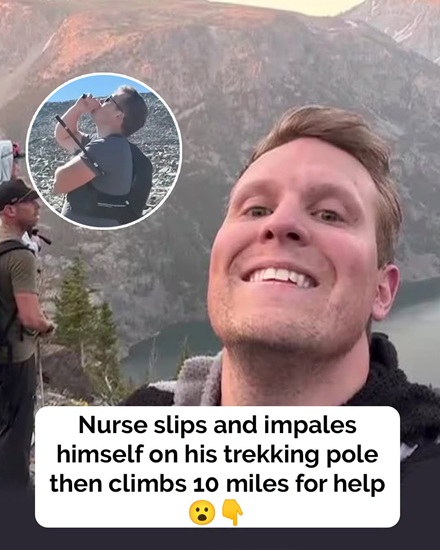
For many outdoor enthusiasts, climbing Granite Peak, the highest mountain in Montana, represents both an exciting adventure and a demanding physical challenge. The route requires endurance, careful planning, and the ability to navigate rugged terrain that includes steep slopes, loose rock, snowfields, and boulder crossings. Even experienced hikers understand that mountain conditions can change quickly, making preparation and sound decision-making essential.
Despite careful planning, however, accidents can still occur unexpectedly, reminding hikers that nature always demands respect. On July 20, what began as an ordinary hiking trip for David Cifaldi, a 32-year-old emergency room nurse from Billings, Montana, quickly turned into a remarkable survival story. Cifaldi had set out with two close friends to climb Granite Peak, expecting a challenging but rewarding day in the mountains. Approximately ten miles into the hike, the group encountered difficult terrain where loose rocks required careful footing.
According to Cifaldi’s public account, one misplaced step changed the course of the entire day. Speaking to KTMF, Cifaldi explained that he slipped on a small loose rock, causing him to fall while carrying trekking poles commonly used by hikers for balance and stability. During the fall, one of the poles reportedly penetrated his back and side, creating a serious injury in an instant. Freak accidents involving hiking equipment are extremely uncommon, making the incident all the more extraordinary. Despite the severity of the injury, Cifaldi remained conscious and immediately began evaluating his condition.
Rather than allowing panic to take over, Cifaldi later explained that his years of working in emergency medicine immediately influenced his response. As an experienced emergency room nurse, he was trained to remain calm under pressure and assess injuries systematically. In interviews after the incident, he said his professional instincts quickly became active. Instead of focusing on fear, he concentrated on determining whether the injury posed an immediate threat to his life.
“I think my nurse brain clicked on,” Cifaldi told KTMF. According to his account, he carefully evaluated his breathing, his level of pain, and whether he was experiencing symptoms that might indicate damage to major organs or severe blood loss. After performing this initial self-assessment, he concluded that although the injury was serious, it did not appear immediately life-threatening. That evaluation would become one of the most important decisions of the entire ordeal.
Before attempting to leave the mountain, Cifaldi paused to assess whether the trekking pole had punctured his chest cavity or injured one of his lungs. Speaking with Backpacker Magazine, he explained that he believed the injury was limited primarily to soft tissue rather than involving critical organs. Because the pole remained lodged in place, removing it on the mountain could have increased the risk of severe bleeding. Leaving the object undisturbed while seeking medical care is a principle commonly taught in emergency first aid for impaled injuries unless immediate danger requires otherwise.
To better understand the extent of the injury, Cifaldi’s friends photographed the wound so he could inspect it himself. According to publicly shared accounts, the trekking pole had passed completely through his latissimus dorsi muscle, commonly known as the lat muscle. His friend Jesse Ross later wrote on a public GoFundMe page that the pole extended through both sides of the muscle, leaving approximately eight inches between the entrance and exit wounds. The images helped Cifaldi make a more informed assessment while still on the mountain.
Ross explained that Cifaldi remained remarkably composed throughout the situation. According to his account, Cifaldi confirmed that he was not experiencing symptoms commonly associated with severe blood loss or major internal injury. He reportedly had no significant external bleeding, no dizziness, no loss of consciousness, and no signs suggesting immediate damage to vital organs. Based on those observations and his medical knowledge, he decided that attempting to walk back to safety offered the best chance of receiving definitive medical treatment.
The decision was far from simple. The group remained deep in mountainous terrain, separated from the trailhead by approximately ten miles of demanding hiking. The route included rocky sections, uneven ground, snowfields, and long descents that would challenge even an uninjured hiker. Search and rescue personnel were reportedly available if conditions deteriorated, but after evaluating the circumstances, Cifaldi believed he could safely continue under his own power while being closely monitored by his companions throughout the journey.
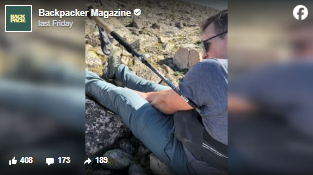
Before beginning the long hike back, Cifaldi improvised a practical solution to stabilize the protruding trekking pole. According to Backpacker Magazine, he used the chest strap from his running vest as a makeshift sling to help support the pole and reduce unnecessary movement while walking. His companions stayed close, watching carefully for any signs that his condition might worsen. Their teamwork, combined with Cifaldi’s calm medical judgment, became essential as they prepared for the difficult six-and-a-half-hour journey toward safety.
Once David Cifaldi and his friends made the decision to begin the return trip, the focus shifted entirely from reaching the summit to getting safely back to the trailhead. Every step required careful attention because the trekking pole remained lodged through the muscle in his back. According to his public interviews, maintaining a steady pace while avoiding unnecessary movement became essential. Although the injury was painful, Cifaldi continued monitoring himself for any changes that might suggest internal bleeding or other serious complications.
The route back was physically demanding even under normal circumstances. Granite Peak’s terrain includes rocky trails, uneven boulder fields, steep sections, and seasonal snow crossings that require careful footing. Carrying an impaled trekking pole while navigating those conditions presented an extraordinary challenge. Throughout the hike, Cifaldi’s companions stayed close beside him, observing his condition and prepared to request emergency assistance if his symptoms suddenly changed.
According to Backpacker Magazine, Cifaldi used the chest strap from his running vest to help stabilize the trekking pole during the hike. This improvised support reduced unnecessary movement and made walking somewhat more manageable. Meanwhile, one of his hiking partners remained directly behind him, watching for any signs of increased bleeding or changes in his physical condition. Their teamwork demonstrated the importance of staying together and communicating clearly during emergencies in remote environments.
Despite the seriousness of the situation, Cifaldi later recalled that maintaining a positive attitude helped everyone remain focused. As the group gradually realized they were making steady progress toward safety, moments of humor naturally emerged. During interviews, Cifaldi shared that they even joked about the unusual circumstances, explaining that lighthearted conversation helped reduce stress during an otherwise extremely difficult experience. His friends later described him as remaining in remarkably good spirits throughout the long descent.
Jesse Ross also noted another thoughtful moment during the journey. As they approached areas where other hikers might be encountered, Cifaldi reportedly suggested that one member of the group walk ahead and quietly inform people about the injury. According to Ross, his concern was that young children or other hikers would not unexpectedly encounter the graphic wound. Even while coping with his own injury, Cifaldi remained mindful of how the situation might affect others on the trail.
After approximately six and a half hours, the group finally reached the trailhead. From there, Cifaldi was transported for medical evaluation before later being transferred to Intermountain Health in Billings for specialized treatment. According to publicly available reports, physicians safely removed the trekking pole and began treating the injury. Ross later shared that Cifaldi continued receiving medical care during his recovery and that additional procedures remained possible depending on his progress.
Reflecting on the accident afterward, Cifaldi acknowledged how fortunate the outcome had been. In interviews with KTMF, he explained that only a small difference in the angle of the fall could have produced a far more serious result. His comments highlight the unpredictable nature of accidents in remote environments, where even experienced hikers can encounter unexpected hazards despite careful preparation. The incident serves as a reminder that outdoor recreation always involves some degree of risk.
Medical professionals frequently emphasize that injuries involving impaled objects require immediate professional evaluation. In many situations, first responders advise not removing an impaled object unless necessary to address an immediate life-threatening danger, because the object may help limit bleeding until proper medical treatment is available. Every emergency is unique, and decisions should always be based on the circumstances and guidance from trained medical personnel whenever possible.
The experience has also highlighted the value of preparation before entering remote wilderness areas. Experienced hikers often recommend carrying first-aid supplies, emergency communication devices where available, sufficient food and water, appropriate clothing, and hiking with companions rather than alone. While no amount of preparation can prevent every accident, planning ahead can significantly improve safety and increase the likelihood of receiving timely assistance when unexpected situations occur.
Remarkably, the accident did not diminish Cifaldi’s enthusiasm for hiking. According to his public interviews, he hopes to return to Granite Peak in the future to complete the climb that was interrupted by the accident. His story has attracted attention not only because of the unusual nature of the injury but also because of the calm decision-making, teamwork, and resilience displayed throughout the ordeal. It serves as a powerful example of how professional medical knowledge, careful judgment, and the support of trusted companions contributed to a successful outcome after an extraordinarily rare mountain accident.

