
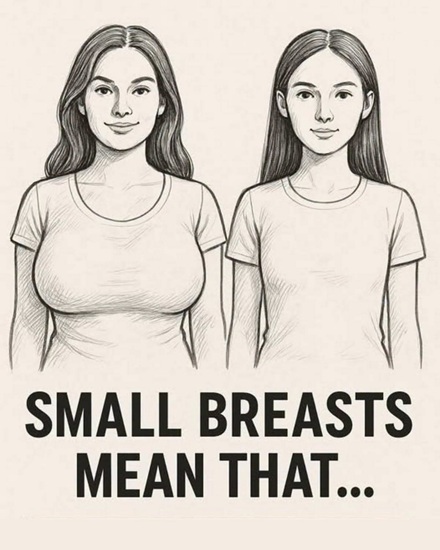
For many years, one of the most common misconceptions about women’s health has been the belief that breast size reveals important information about hormone levels. This idea has circulated through popular culture, social media, and everyday conversations, leading many women to question whether their physical appearance reflects their overall hormonal health. Medical experts, however, consistently emphasize that this belief is not supported by scientific evidence.
While hormones play an important role during breast development, breast size by itself is not a reliable indicator of estrogen levels, fertility, or reproductive health. Understanding how the breasts develop helps explain why this myth continues to persist. During puberty, the body undergoes significant hormonal changes.
Estrogen stimulates the growth of breast tissue, while progesterone contributes to the development of the milk-producing glands and supports normal breast maturation. These hormones work together during adolescence, allowing the breasts to develop as part of normal female growth. However, once breast development is complete, adult breast size is influenced by many additional biological factors rather than ongoing estrogen production alone. One of the strongest influences on breast size is genetics.
Medical researchers have found that inherited traits play a major role in determining the shape, size, and composition of breast tissue. Just as genetics influence a person’s height, eye color, facial features, and body frame, they also help determine natural breast size. Women from the same family often share similar body characteristics, although natural variation exists even among close relatives. Because genetics differ from person to person, there is no single “normal” breast size.
Another important factor is body composition, particularly the amount and distribution of body fat. Breasts contain both glandular tissue and fatty tissue, and the proportion of these tissues varies among individuals. Since fatty tissue makes up a substantial part of the breast, changes in body weight may lead to noticeable changes in breast size. Weight gain can increase fullness in some women, while weight loss may reduce breast volume. These changes are often completely normal and do not necessarily indicate any change in hormone production.
Age also influences breast appearance throughout life. During adolescence, the breasts continue developing as puberty progresses. During pregnancy, hormones stimulate significant enlargement and prepare the breasts for breastfeeding. After childbirth and breastfeeding, breast tissue often changes again as milk production ends. Menopause introduces another stage of natural hormonal transition, during which breast tissue may gradually become less dense as glandular tissue decreases and fatty tissue becomes more prominent. These are expected biological changes rather than signs of disease.
Throughout the menstrual cycle, many women notice temporary differences in how their breasts feel. Fluctuating hormone levels before menstruation may cause mild swelling, increased fullness, tenderness, or sensitivity. Healthcare providers explain that these monthly changes are a normal physiological response to hormonal cycling. Once the menstrual period begins, these temporary symptoms often improve naturally. Because these changes occur regularly, they should not be confused with permanent changes in breast size or long-term hormonal disorders.
Medical specialists also stress that women with very different breast sizes may have nearly identical hormone levels. Likewise, women with similar breast sizes may have completely different body compositions, genetics, and hormonal profiles. Modern endocrinology relies on laboratory testing, medical history, physical examination, and clinical evaluation—not external appearance—to assess hormone function. Visual appearance alone simply cannot provide accurate information about the complex endocrine system.
This distinction is especially important because many women unnecessarily worry that having smaller breasts means they have low estrogen levels or reduced fertility. Current scientific evidence does not support that conclusion. Women with naturally small breasts can have completely normal menstrual cycles, healthy pregnancies, normal reproductive function, and balanced hormone levels. Likewise, women with larger breasts are not automatically producing higher amounts of estrogen. Breast size and hormone levels do not have the direct relationship that many popular myths suggest.
Researchers also note that breast tissue changes naturally throughout adulthood for many reasons unrelated to disease. Pregnancy, breastfeeding, aging, changes in physical activity, nutritional status, medications, and body weight may all influence breast appearance over time. These normal life changes vary considerably between individuals, reinforcing the fact that healthy bodies naturally come in many different shapes and sizes. Comparing one’s body to others is rarely a meaningful way to assess overall health.
Rather than focusing on appearance, healthcare professionals encourage women to become familiar with what is normal for their own bodies. Understanding normal breast texture, shape, and appearance makes it easier to recognize changes that may require medical evaluation. Routine breast awareness, regular medical checkups, and age-appropriate screening recommendations remain the most effective ways to support long-term breast health. Instead of relying on myths or visual assumptions, evidence-based medical guidance provides the most reliable information for understanding hormonal and overall health.
One of the most important messages healthcare professionals continue to share is that true hormonal imbalances rarely present with breast size alone. The endocrine system is responsible for regulating many essential body functions, including metabolism, reproduction, mood, sleep, and energy levels. When hormone levels become significantly abnormal, the body usually produces a combination of symptoms rather than a single physical characteristic. For this reason, physicians evaluate the entire clinical picture instead of relying on appearance.
Doctors commonly recommend further evaluation when hormonal symptoms become persistent or interfere with daily life. Depending on the individual, these symptoms may include irregular or absent menstrual periods, unexplained infertility, severe acne that develops during adulthood, unusual hair growth patterns, persistent fatigue, sudden weight changes, hot flashes outside their expected life stage, or significant mood changes. These symptoms do not automatically indicate a hormonal disorder, but they are often more meaningful indicators than body shape or breast size alone.
Modern medicine offers accurate ways to evaluate hormone function when clinically appropriate. A healthcare professional may begin by reviewing a patient’s medical history, discussing symptoms, performing a physical examination, and ordering laboratory tests if necessary. Blood tests can measure hormones such as estrogen, progesterone, thyroid hormones, prolactin, follicle-stimulating hormone (FSH), luteinizing hormone (LH), and others depending on the individual’s symptoms. These objective medical evaluations provide far more reliable information than visual appearance ever could.
Breast health itself is another area where medical experts encourage education rather than fear. Every woman’s breasts have their own normal appearance and texture, and these characteristics naturally differ from person to person. Becoming familiar with what is normal for your own body allows you to recognize changes more easily. This approach, often referred to as breast awareness, helps individuals notice new or persistent changes that should be discussed with a healthcare provider without creating unnecessary anxiety over normal anatomical differences.
Healthcare professionals generally recommend seeking medical evaluation if certain warning signs appear. These may include a newly discovered lump that persists, unexplained nipple discharge (particularly if bloody), skin dimpling, persistent redness, thickening of the skin, unexplained swelling, nipple inversion that develops suddenly, or breast pain that does not improve or has no clear explanation. While many breast changes turn out to be non-cancerous, medical assessment is important because only proper examination and, when necessary, imaging studies can determine the underlying cause.
Routine screening recommendations vary depending on age, personal medical history, and family history. Many countries have established evidence-based guidelines regarding mammography and other screening methods for individuals at average risk. Women with a strong family history of breast cancer or inherited genetic conditions may require earlier or more specialized screening based on recommendations from their healthcare providers. Personalized medical advice remains the most appropriate approach because every individual’s risk factors are different.
Another important point emphasized by specialists is the impact of body image on emotional well-being. Social media, advertising, entertainment, and unrealistic beauty standards can sometimes create unnecessary pressure to compare physical appearance with others. Medical experts encourage people to remember that healthy bodies naturally vary in shape, size, and proportion. Physical appearance alone should never be viewed as a measure of health, femininity, or overall well-being. Scientific evidence consistently supports the idea that normal human variation is both expected and healthy.
Researchers also continue studying the many factors that influence breast development throughout life. Genetics remain the strongest determinant of natural size, while age, pregnancy, breastfeeding, menopause, body weight, and certain medications can all contribute to changes over time. These biological processes occur gradually and differently for every individual. Understanding these normal variations can help reduce unnecessary worry and encourage a more accurate understanding of how the human body changes across different life stages.
Ultimately, the most reliable approach to hormonal health is evidence-based medical care rather than assumptions based on appearance. Breast size cannot determine estrogen levels, fertility, reproductive health, or overall hormonal balance. Only qualified healthcare professionals can evaluate hormone function using appropriate clinical assessments and diagnostic testing when medically indicated. Replacing myths with scientifically supported information allows people to make informed decisions about their health while avoiding unnecessary concern caused by common misconceptions.
The central message supported by current medical research is both reassuring and empowering: there is no “correct” breast size that defines health. Human bodies naturally come in a wide variety of shapes, and those differences are usually the result of genetics, body composition, and normal life changes—not evidence of hormonal problems. By focusing on overall wellness, paying attention to genuine symptoms, attending recommended medical checkups, and consulting trusted healthcare professionals when concerns arise, individuals can make decisions based on accurate medical information rather than long-standing myths.

