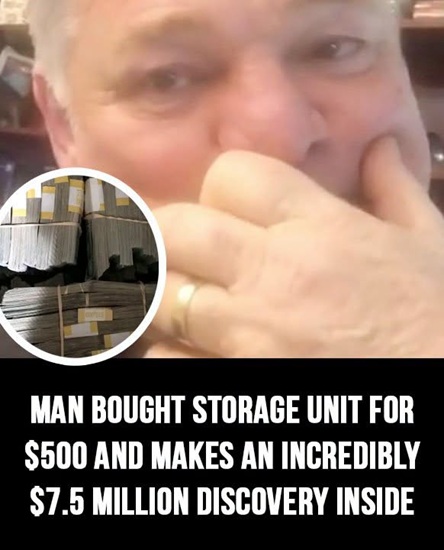
For many people, purchasing an abandoned storage unit is a gamble driven by curiosity and the possibility of discovering forgotten valuables. Most buyers expect to find used furniture, household items, clothing, old collectibles, or personal belongings left behind after storage fees go unpaid. While valuable discoveries occasionally make headlines, stories involving extraordinary amounts of money are exceptionally rare. One of the most widely discussed examples came from an account shared by Dan Dotson, who described an auction that reportedly resulted in the discovery of millions of dollars hidden inside a safe.
Dotson, who has spent decades conducting storage auctions across the United States, shared the story during a public event and later in media interviews. According to his account, a family friend purchased an abandoned storage unit that had previously been auctioned for approximately $500. Like most buyers participating in storage auctions, the individual had no knowledge of what was inside before placing the winning bid. The purchase was simply another opportunity to search through the contents in hopes of finding items with resale value.
After taking possession of the storage unit, the buyer reportedly began sorting through the belongings inside. Among the ordinary items was a large safe that immediately attracted attention. Safes occasionally appear in abandoned storage units, but they are often empty or contain personal documents, jewelry, or other household valuables. Curious about what might be inside, the new owner arranged to have the safe opened. According to Dotson’s account, the discovery that followed exceeded anything anyone involved had anticipated.

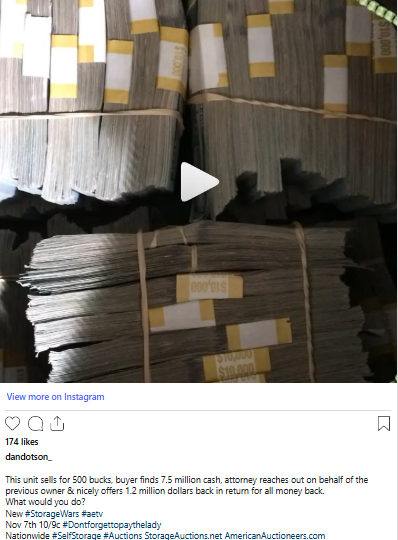
Rather than finding family keepsakes or financial documents, the buyer reportedly discovered $7.5 million in cash inside the safe. Dotson described the moment as one of the most extraordinary stories he had encountered during his career as an auctioneer. News of the reported discovery quickly spread among storage auction enthusiasts and later attracted widespread media attention because of the unusually large amount involved.
Although stories of valuable discoveries in abandoned storage units occasionally surface, experts note that they represent the exception rather than the rule. Most abandoned units contain everyday household possessions with relatively modest resale value. Professional buyers often spend considerable time cleaning, organizing, and selling items individually, understanding that many purchases produce only small profits. Discoveries involving large collections, antiques, or significant sums of money are extremely uncommon.
Storage auctions themselves operate under legal procedures that vary by jurisdiction but generally follow similar principles. When rental fees remain unpaid for an extended period, storage facility operators may obtain the legal authority to auction the contents of a unit in order to recover outstanding costs. Buyers typically bid based only on what is visible from the doorway after the unit is opened. They are generally not permitted to inspect sealed boxes, containers, or hidden areas before bidding, making each purchase an exercise in both experience and chance.
According to Dotson, the remarkable discovery was only the beginning of the story. Before long, the buyer reportedly received an unexpected communication through legal representatives connected to the original owners of the safe. Publicly shared accounts state that an attorney contacted the buyer with an offer intended to recover the money discovered inside the storage unit. The reported proposal introduced a difficult decision that involved financial considerations, legal questions, and practical concerns about what course of action would be most appropriate.
Dotson explained that the initial reported offer totaled $600,000 in exchange for returning the money. According to his account, the buyer declined that proposal. Later, a second reported offer increased the amount to $1.2 million, significantly improving the compensation being offered while still allowing the original owners to recover the majority of the cash reportedly found inside the safe. Faced with that decision, the buyer ultimately agreed to the revised arrangement.
The reported agreement has generated considerable discussion because it raises broader questions about legal ownership, abandoned property, and the responsibilities that can arise after unusual discoveries. While storage auction laws establish procedures for selling abandoned property, situations involving large sums of cash or other extraordinary assets may involve additional legal complexities depending on the circumstances and applicable laws. Because the full legal details surrounding this particular case have not been publicly disclosed, many questions remain unanswered.
Beyond the legal aspects, the story has also captured public attention because of its remarkable improbability. Stories involving abandoned storage units often inspire curiosity about hidden treasures, but experienced auction professionals consistently emphasize that such extraordinary outcomes are exceptionally rare. For every widely reported success story, countless other storage units contain only ordinary household belongings with limited financial value. Even so, accounts like this continue to capture the imagination of buyers who enjoy the unpredictability of storage auctions.
According to Dan Dotson’s public account, the situation changed dramatically after the reported discovery of $7.5 million inside the safe. Rather than celebrating the unexpected find, the buyer was reportedly contacted by an attorney representing the individuals believed to have owned the safe before the storage unit was auctioned. The communication introduced an entirely new dimension to the story, transforming what initially appeared to be an extraordinary financial discovery into a matter involving legal negotiations and practical decision-making.
Dotson stated that the attorney initially offered the buyer $600,000 in exchange for returning the money. According to the account, that proposal was declined. A subsequent offer reportedly increased the amount to $1.2 million, providing substantially greater compensation while allowing the original owners to recover the cash. Publicly available reports indicate that the buyer ultimately accepted the revised agreement. Beyond those reported details, no additional information has been publicly released explaining the specific legal arrangements between the parties.
Although some observers questioned why someone would voluntarily return such a large sum of money, Dotson suggested that accepting the settlement may have been a sensible decision. According to his comments, the buyer considered not only the financial offer but also the uncertainty surrounding the origin of the cash and the possibility of lengthy legal proceedings. Without publicly available documentation explaining how the money came to be stored in the safe, the circumstances remained unclear, making the reported agreement a practical resolution from the buyer’s perspective.
One of the most enduring mysteries surrounding the story is the origin of the reported $7.5 million. Neither Dotson nor publicly available reports have identified why such a significant amount of cash was allegedly stored inside a safe located in a storage unit. As a result, numerous questions remain unanswered. Because no official explanation has been released publicly, responsible reporting requires avoiding speculation regarding the source of the money or the reasons it remained inside the abandoned unit.
The story also highlights how storage auctions operate under established legal procedures. Storage facilities generally have the legal authority to auction abandoned units after customers fail to pay rental fees for an extended period and after applicable legal requirements have been satisfied. Buyers accept a significant amount of uncertainty because they typically cannot examine the contents in detail before bidding. That uncertainty creates both the possibility of valuable discoveries and the risk of purchasing units containing items with little or no resale value.
Experienced storage auction buyers often emphasize that patience and realistic expectations are essential. While television programs and extraordinary news stories sometimes focus on remarkable discoveries, the overwhelming majority of purchased units contain ordinary household possessions rather than rare collectibles or valuable assets. Successful buyers usually earn profits through careful sorting, cleaning, and reselling everyday items instead of relying on exceptional finds like those described in Dotson’s account.
Legal experts have also noted that unusual discoveries involving cash, financial records, or potentially valuable assets can present complex legal questions. Applicable laws vary depending on the jurisdiction and the specific circumstances of each case. Questions involving ownership, abandoned property, contractual obligations, and other legal issues may require professional legal guidance. Because every situation is different, no single storage auction story should be viewed as representative of all similar cases.
Beyond the legal discussion, the reported events have remained popular because they illustrate the unpredictability associated with abandoned storage auctions. Stories like this capture public imagination precisely because they are so uncommon. For most buyers, the appeal lies not in expecting extraordinary wealth but in the excitement of uncovering forgotten personal belongings, historical artifacts, vintage collectibles, or items that provide a glimpse into someone else’s past.
Dan Dotson has spent many years conducting storage auctions and has shared numerous stories involving unusual discoveries. Even so, he has described this reported case as one of the most memorable experiences associated with his career. Whether viewed as an extraordinary example of chance or as an illustration of the unexpected situations that occasionally arise during storage auctions, the story continues to generate interest among viewers and collectors alike.
Ultimately, the reported discovery serves as a reminder that extraordinary stories often attract widespread attention precisely because they are so rare. According to the publicly available account, a storage unit purchased for $500 reportedly led to the discovery of millions of dollars, followed by negotiations that concluded with the reported return of the money in exchange for compensation. While many aspects of the story remain unexplained publicly, it continues to be one of the most frequently discussed anecdotes associated with the world of storage auctions, illustrating both the excitement and the unpredictability of buying abandoned units.
