
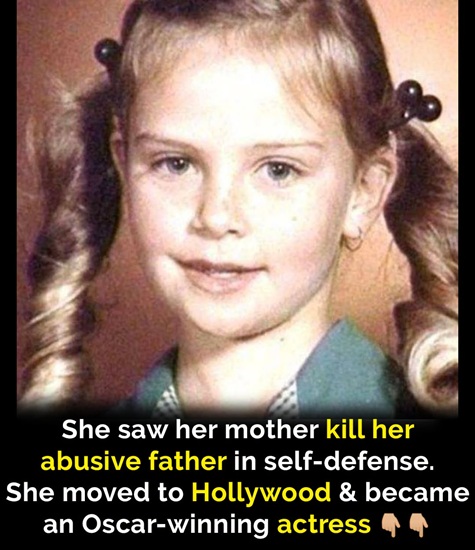
Few actors have experienced a journey as extraordinary as Charlize Theron’s. Today, she is recognized around the world as an Academy Award-winning actress, producer, and one of Hollywood’s most accomplished performers. Her career spans critically acclaimed dramas, blockbuster action films, and award-winning performances that have earned the respect of audiences and fellow actors alike. Behind that remarkable success, however, lies a childhood shaped by personal hardship, resilience, and determination that would ultimately influence both her life and her career.
Born on August 7, 1975, in Benoni, South Africa, Charlize Theron grew up in an Afrikaner family whose ancestry traces back to early Dutch, French Huguenot, and German settlers in southern Africa. Her parents, Charles Theron and Gerda Maritz, worked in the road construction business, and Charlize spent much of her childhood on the family’s farm outside Johannesburg. Afrikaans was her first language, while English became increasingly important as she pursued an international career years later.
Although the family enjoyed a relatively comfortable lifestyle, Theron has spoken openly about the serious challenges that existed inside the home. In numerous interviews throughout her career, she has described growing up with a father who struggled with alcoholism. Charlize has emphasized that addiction affected the entire family, creating an unpredictable environment that shaped many of her earliest memories. Rather than hiding those experiences, she has chosen to discuss them publicly in hopes of helping others understand the long-term impact addiction can have on families.

Away from home, Charlize also experienced difficulties during her early school years. In interviews with People magazine and other publications, she has recalled feeling awkward and out of place as a child. Because she had significant vision problems, she wore thick prescription glasses, which became a source of teasing from classmates. She has also described being self-conscious about her appearance and feeling excluded from the popular social groups during primary school. Those experiences affected her confidence but also taught her resilience at an early age.
Looking back, Theron has acknowledged that childhood bullying was painful, particularly between the ages of seven and twelve. She has explained that she often admired classmates who seemed confident and socially accepted, while she struggled to feel she belonged. Despite those challenges, she later said that by the time she reached high school, she had developed greater confidence and had become less affected by the opinions of others. Those formative experiences would later influence her empathy toward people facing adversity.
The defining event of Charlize Theron’s childhood occurred on June 21, 1991, when she was fifteen years old. According to Theron’s own public accounts, her father returned home intoxicated and became violent. Charlize and her mother retreated into a bedroom while attempting to prevent him from entering. During interviews with NPR and other media outlets, Theron has recalled that her father fired multiple shots through the bedroom door. Remarkably, neither she nor her mother was struck by the gunfire.

Faced with an immediate threat, Charlize’s mother, Gerda, used her own firearm and fatally shot her husband. South African authorities later determined that the shooting was an act of lawful self-defense, and no criminal charges were filed against her. Although the legal process concluded that the shooting was justified, the emotional consequences remained profound. Charlize has repeatedly explained that the trauma extended far beyond that single night and reflected years of living in a household affected by addiction.
Throughout adulthood, Theron has spoken candidly about the importance of discussing family violence and addiction without shame. She has emphasized that many families experience similar struggles, often in silence, and believes open conversations can reduce feelings of isolation among survivors. Rather than allowing those experiences to define her future, she has described working intentionally to understand their impact and to build a healthy life despite the difficulties she experienced during childhood.
Following high school, Charlize pursued another lifelong passion: dance. She trained extensively as a ballet student and hoped to build a professional career in classical dance. During her teenage years she studied seriously, eventually receiving opportunities to continue training internationally. However, a knee injury ultimately ended her hopes of becoming a professional ballet dancer. While disappointing at the time, that unexpected setback encouraged her to consider new opportunities within the entertainment industry.

At the age of nineteen, Theron moved to Los Angeles with the goal of pursuing acting. She arrived with limited financial resources, few professional contacts, and no established career in Hollywood. According to the story she has shared publicly for many years, an argument with a bank employee over a check eventually led to an introduction to talent agent John Crosby, who recognized her potential and helped open the first doors into the film industry. That unexpected opportunity marked the beginning of a career that would eventually make Charlize Theron one of the most respected actresses of her generation.
After arriving in Los Angeles, Charlize Theron understood that success would require patience, persistence, and continuous improvement. Like many aspiring actors, she attended auditions, worked on developing her craft, and accepted that rejection was a normal part of the profession. Although opportunities did not come immediately, she remained committed to building a long-term career rather than searching for overnight success. Those early years laid the foundation for the professionalism that would later define her reputation in Hollywood.
Her first major breakthrough came in 1997 with The Devil’s Advocate, where she appeared alongside Keanu Reeves and Al Pacino. The film introduced Theron to a much wider international audience and demonstrated that she could hold her own among established actors. Critics and filmmakers began recognizing not only her screen presence but also her emotional range and dedication to each role. The performance marked an important turning point, opening the door to increasingly challenging projects.
Over the next several years, Theron carefully expanded her career by choosing roles across different genres rather than remaining limited to one type of character. She appeared in dramas, romantic films, and action productions, steadily earning a reputation for versatility. Colleagues frequently praised her preparation, professionalism, and willingness to transform herself physically and emotionally whenever a role required it. Those qualities helped distinguish her from many other performers of her generation.
The defining achievement of her early career arrived in 2003 with the film Monster, in which she portrayed convicted serial killer Aileen Wuornos. To prepare for the role, Theron underwent a remarkable physical transformation, gaining weight, wearing prosthetic makeup, and setting aside the glamorous image that audiences had come to associate with her. More importantly, she focused on understanding the psychological complexity of the character while avoiding a simplistic portrayal. Her performance received widespread critical acclaim and demonstrated her commitment to serious dramatic acting.
Theron’s portrayal earned her the Academy Award for Best Actress, making her the first South African-born performer to receive an acting Oscar. Film critics praised both the depth of her performance and the extraordinary transformation she achieved. Among those offering high praise was renowned film critic Roger Ebert, who described her work as one of the finest performances in cinema. The award established Charlize Theron as one of Hollywood’s leading dramatic actresses and significantly expanded the range of projects available to her.
Despite achieving one of the industry’s highest honors, Theron continued seeking roles that challenged both herself and audiences. She appeared in films spanning historical drama, science fiction, comedy, and action, demonstrating an ability to adapt to widely different storytelling styles. In addition to acting, she became an accomplished producer, helping develop projects that created stronger and more complex opportunities for women in film. Her work behind the camera reflected a growing commitment to influencing the industry beyond her performances alone.
Another defining chapter of her career arrived with Mad Max: Fury Road in 2015, where she portrayed Imperator Furiosa. The character became one of the film’s central figures and was praised for courage, intelligence, and determination. Both critics and audiences recognized Furiosa as one of the most memorable action protagonists of the decade. The performance reinforced Theron’s reputation as an actress capable of excelling in physically demanding productions while maintaining emotional depth and authenticity.
Beyond filmmaking, Charlize Theron has devoted considerable time to humanitarian and charitable work. Through the Charlize Theron Africa Outreach Project, established in 2007, she has supported programs focused on improving the health, education, and well-being of young people in southern Africa. The organization partners with local community groups to address issues including HIV prevention, youth development, and educational opportunities. Her philanthropic efforts demonstrate a long-term commitment to creating positive change beyond the entertainment industry.
Throughout her career, Theron has also continued speaking openly about growing up in a household affected by alcoholism and domestic violence. She has consistently emphasized that discussing these experiences is not about seeking sympathy but about helping reduce stigma for others facing similar circumstances. In interviews, she has explained that sharing her story may encourage people to seek support and remind survivors that they are not alone. Mental health professionals often note that open conversations about trauma can contribute to greater public understanding and awareness.
Reflecting on her life, Charlize Theron has frequently acknowledged that while childhood experiences shaped her, they did not determine her future. Through determination, hard work, and resilience, she built a career recognized around the world while using her platform to advocate for meaningful causes. Her journey illustrates that personal adversity and professional achievement can coexist, and that difficult beginnings do not prevent people from building fulfilling lives. Today, she remains respected not only for her award-winning performances but also for her honesty, perseverance, and enduring contributions to cinema and humanitarian work.

