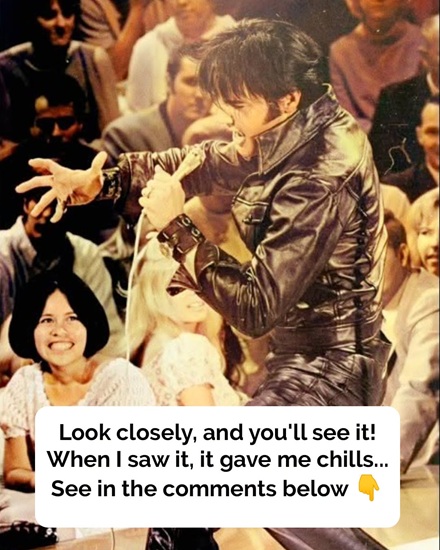
Nearly five decades after his death, Elvis Presley remains one of the most influential entertainers in modern music history. His recordings continue to reach new generations of listeners, while documentaries, books, and archival releases regularly offer fresh perspectives on his remarkable career. Among the recent projects exploring his legacy is Netflix’s documentary Return of the King: The Fall & Rise of Elvis Presley, which examines one of the most significant turning points in his life—the celebrated 1968 Comeback Special that reshaped both his career and his public image.
Rather than presenting only the familiar story of Elvis’ success, the documentary focuses on a period when his future in the entertainment industry appeared increasingly uncertain. By the late 1960s, Presley remained internationally famous, but many critics believed his artistic momentum had slowed. Although his films continued attracting audiences, both Elvis and many observers had grown frustrated with the repetitive formula that had come to define much of his Hollywood work. The documentary explores how this period of uncertainty ultimately became the catalyst for one of the most memorable comebacks in television and music history.
Director Jason Hehir explains that he wanted to examine the moment when Presley decided to return to live performance after several years away from the concert stage. According to Hehir, 1968 represented a defining crossroads in Elvis’ personal and professional life. Rather than simply celebrating the finished television special, the documentary explores the doubts, pressures, and difficult decisions that preceded it. Through archival footage and interviews, viewers gain insight into the determination required for Presley to reinvent himself during a rapidly changing era in popular music.
One of the documentary’s strengths is its inclusion of previously unseen material together with interviews from people who knew Elvis personally. Among those featured are Priscilla Presley, his former wife, and longtime friend and business associate Jerry Schilling, both of whom provide firsthand perspectives on his state of mind during this challenging period. Their reflections help illustrate that the comeback special was far more than another television appearance—it represented a deeply personal effort by Elvis to reconnect with the kind of performer he believed he had always wanted to be.
During the documentary, Presley openly reflects on his growing dissatisfaction with the public image created during his Hollywood years. In archival recordings, he explains that he increasingly felt trapped by expectations that no longer reflected his artistic ambitions. According to Elvis, the image developed through many of his later films failed to represent how he saw himself as an entertainer. Those comments reveal an artist struggling to balance commercial success with the desire for more meaningful creative expression.
Throughout the 1960s, Elvis starred in numerous feature films that achieved varying levels of commercial success. While many audiences enjoyed the lighthearted musicals, Presley reportedly hoped to pursue more dramatic acting opportunities similar to those earned by performers he admired, including James Dean and Marlon Brando. Instead, many of his later film projects followed similar storylines built around musical performances, romantic plots, and predictable formulas. Over time, the repetition reportedly left him increasingly disappointed with the direction of his acting career.
The documentary also revisits one particularly emotional moment involving the 1967 film Double Trouble. While watching archival footage of Elvis performing the children’s song “Old MacDonald Had a Farm,” Priscilla Presley expresses sadness over what she believed the performance represented. According to her comments in the documentary, she felt Elvis had been placed in situations that did not reflect his extraordinary musical abilities or artistic potential. Her reaction illustrates the frustration shared by people close to him who believed his talents deserved stronger creative opportunities.
Jason Hehir similarly describes how the disappointment surrounding Elvis’ film career extended beyond ordinary professional frustration. In interviews discussing the documentary, Hehir explains that Presley wanted greater artistic challenges and believed his acting career had not developed as he had once imagined. According to Hehir, Elvis admired accomplished dramatic actors and hoped to demonstrate broader acting abilities, but the opportunities available to him during those years rarely allowed him to expand beyond the established Hollywood formula that had proven commercially successful.
By 1968, Presley faced an important decision about the future of his career. Popular music had evolved considerably during the years he had focused primarily on filmmaking. New artists and musical styles had transformed the industry, and many wondered whether Elvis could successfully reconnect with live audiences after seven years away from regular concert performances. The comeback special therefore represented more than a television program—it became an opportunity to rediscover the confidence, authenticity, and musical energy that had first made him an international star.
Despite his legendary status, the documentary reveals that Elvis experienced significant anxiety before returning to the stage. According to Jason Hehir, Presley had long struggled with stage fright, even during the height of his early success. He reportedly worried about audience expectations and questioned whether he could still deliver the level of performance people remembered from earlier years. Those concerns reflected not a lack of talent but the pressure that often accompanies performers returning after an extended absence.
For viewers, these moments provide a more personal understanding of Elvis Presley than many previous biographies. Rather than portraying an entertainer whose success came effortlessly, the documentary presents an artist confronting uncertainty while remaining determined to rediscover his passion for live performance. It is this combination of vulnerability, perseverance, and commitment to his craft that sets the stage for one of the most celebrated moments in music and television history.
As production of the 1968 Comeback Special moved forward, Elvis Presley and the creative team recognized that the television event needed to feel different from anything audiences had recently seen. Rather than simply repeating familiar performances, the goal was to present Elvis as an artist reconnecting with the music that had first established his career. Producer Steve Binder encouraged a more relaxed and authentic atmosphere, allowing Presley to perform with confidence while highlighting his natural stage presence and connection with fellow musicians.
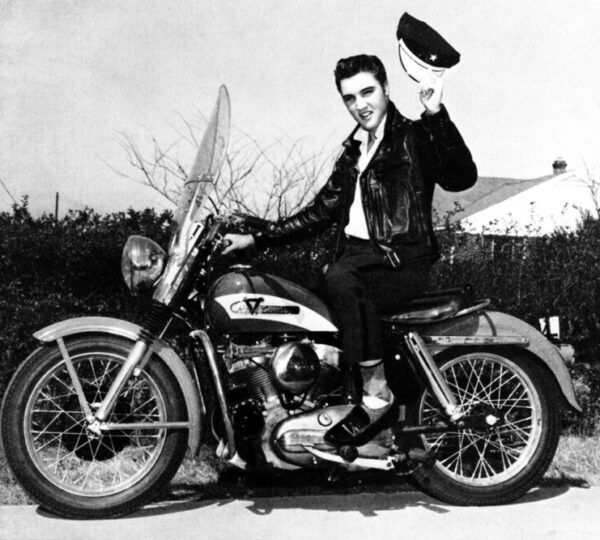
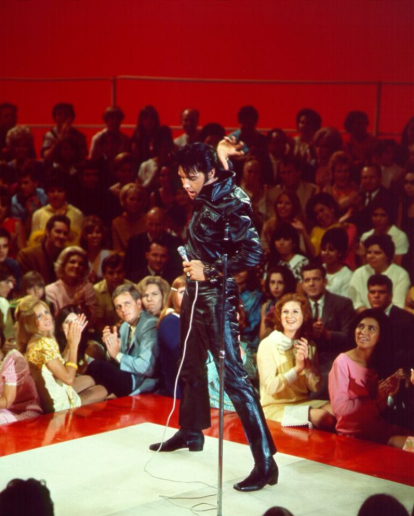
One of the most recognizable elements of the special became Elvis’ now-famous black leather outfit. According to widely documented accounts, Binder drew inspiration from a photograph showing Presley wearing leather clothing while sitting on a motorcycle. Costume designer Bill Belew developed that inspiration into a custom stage outfit that balanced a modern appearance with Elvis’ unmistakable style. The finished design became one of the defining visual images of the comeback special and remains closely associated with that performance decades later.
Belew reportedly considered several costume concepts before the final design was selected. Early ideas included more elaborate stage clothing inspired by historical military fashion, but discussions with Presley ultimately led to a simpler look centered on black leather, complemented by silk shirts and a scarf. The understated design allowed the audience to focus on Elvis’ performance rather than elaborate costumes, reinforcing the documentary’s central theme that the comeback was about musical authenticity rather than spectacle.
Filming under powerful television studio lights presented practical challenges, particularly because leather retained heat during long recording sessions. Even so, Presley completed the performances with remarkable energy and professionalism. Behind-the-scenes accounts describe him remaining fully committed to delivering the strongest performance possible despite the demanding production schedule and physically uncomfortable conditions inside the studio.
The documentary also explores how the comeback special represented far more than a successful television broadcast. It marked Elvis’ return to live performance after approximately seven years during which his career had focused primarily on filmmaking. During that time, the music industry had changed considerably, with new artists, evolving musical styles, and shifting audience expectations reshaping popular entertainment. Returning successfully required Presley to demonstrate not only his vocal ability but also his capacity to reconnect with audiences in a new era.
One of the program’s most memorable moments featured the informal “sit-down” performance, where Elvis appeared with members of his original band in an intimate setting. Rather than relying on elaborate choreography or large production numbers, these performances emphasized spontaneity, musicianship, and conversation between songs. Many historians and music critics have since described these segments as among the most authentic televised performances of Presley’s career because they highlighted his natural charisma and enjoyment of performing live.
When the special aired on NBC on December 3, 1968, it received strong audience interest and positive critical attention. Publicly available records show that the program attracted substantial viewership, while its accompanying soundtrack performed successfully on the Billboard 200 chart. Although the commercial results did not match the extraordinary record sales of Presley’s earliest career, the broadcast successfully reestablished him as one of the leading live performers of his generation.
Jason Hehir notes in the documentary that Presley was returning to an entertainment landscape very different from the one he had left several years earlier. The teenagers who had enthusiastically followed his earliest television appearances had grown older, while a new generation had emerged with different musical influences. Even so, the comeback special demonstrated that Elvis’ stage presence, vocal ability, and connection with audiences remained exceptionally powerful despite the changing cultural environment.
The renewed confidence generated by the special directly influenced the next chapter of Presley’s career. Following its success, he resumed regular live performances, including his celebrated engagement in Las Vegas, where he performed to audiences from around the world. Those concerts introduced his music to new listeners while allowing longtime fans to experience his return to the stage after years devoted primarily to film work. Historians generally view this period as one of the most important revivals in modern entertainment history.
Although the comeback restored Elvis’ standing as a live performer, the documentary suggests that his disappointment with aspects of his Hollywood career never completely disappeared. Jason Hehir reflects that Presley possessed ambitions as an actor that were never fully realized because many of the opportunities available during his film career emphasized commercial formulas rather than dramatic development. As a result, questions remain about what kinds of roles Elvis might have pursued under different circumstances.
Today, the 1968 Comeback Special continues to be celebrated not only as a landmark television event but also as a powerful example of artistic renewal. It reminds audiences that even globally recognized performers can experience periods of uncertainty, creative frustration, and self-doubt. Through determination, collaboration, and a renewed commitment to his greatest strengths, Elvis Presley transformed a pivotal moment in his career into one of the defining achievements of his legacy. More than half a century later, the special remains an enduring testament to his musicianship, resilience, and lasting influence on popular music around the world.
