
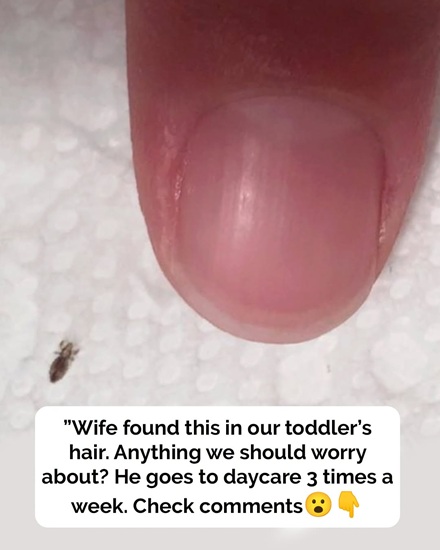
For many families, few school-related concerns are as frustrating as discovering that a child has head lice. Although head lice are not known to spread disease, they can cause significant discomfort, itching, and anxiety for both children and parents. Once one child in a classroom develops an active infestation, it is common for schools and families to encourage careful monitoring so that additional cases can be identified early.
While dealing with head lice can be inconvenient, health experts emphasize that they are a common childhood condition and should not be viewed as a sign of poor hygiene or inadequate parenting. Head lice are tiny parasitic insects that live on the human scalp and survive by feeding on small amounts of blood several times each day. They are specially adapted to grasp human hair with their claw-like legs, allowing them to move efficiently from strand to strand.
Adult lice are generally about 2 to 3 millimeters long and may appear grayish, tan, brown, or darker depending on lighting and whether they have recently fed. Because they move quickly and avoid light, they are often difficult to see during a routine glance at the hair.
Children between the ages of approximately 3 and 11 years experience head lice more frequently than adults, largely because they spend considerable time in close contact with classmates, friends, siblings, and teammates. Activities such as playing together, reading side by side, taking group photographs, or participating in sleepovers create opportunities for direct head-to-head contact, which is the primary way lice spread from one person to another. Schools, daycare centers, summer camps, and after-school activities are therefore common settings where transmission may occur.
Contrary to several long-standing myths, head lice cannot jump, hop, or fly. They do not possess wings, nor are they capable of leaping from one person to another. Instead, they spread by crawling directly from one person’s hair to another during close contact. Public health experts also note that although it is theoretically possible for lice to be transferred through shared hats, scarves, pillows, hairbrushes, or headphones, this type of transmission appears to be much less common than direct head-to-head contact because lice survive only a limited time away from the human scalp.
One of the earliest and most common symptoms of an active lice infestation is persistent itching of the scalp. This itching is not caused by the insects themselves moving through the hair but rather by the body’s allergic reaction to substances in the lice’s saliva after repeated bites. Interestingly, itching may not begin immediately. For someone experiencing lice for the first time, symptoms may take four to six weeks to develop because the immune system needs time to recognize the reaction. During that period, a person may unknowingly carry and spread lice without realizing they are present.
Not everyone with head lice experiences itching. Some children and adults have few or no noticeable symptoms, particularly during the early stages of infestation. Others may report a tickling sensation, difficulty sleeping because lice are often more active in darkness, or irritation caused by frequent scratching. In cases where scratching becomes excessive, small sores may develop on the scalp, increasing the risk of minor bacterial skin infections. For this reason, early identification and appropriate treatment are important.
The most reliable way to check for head lice is by carefully examining the hair and scalp under good lighting while using a fine-toothed lice comb. Experts generally recommend slightly dampening the hair before combing, then dividing it into small sections and slowly combing from the scalp outward toward the ends of the hair. After each pass, the comb should be inspected for live lice or eggs, often called nits. Because lice move quickly, repeated combing may be necessary to identify them successfully.
Lice eggs are often easier to find than the insects themselves. Female lice attach their eggs firmly to individual hair shafts close to the scalp using a sticky, glue-like substance that cannot be brushed away easily. Newly laid eggs are usually yellowish or brown before hatching, while empty egg cases often appear white or transparent after the young louse has emerged. Unlike dandruff or hair products, lice eggs remain firmly attached to the hair and do not fall off when the hair is shaken or gently brushed.
Medical experts recommend confirming the presence of live lice before beginning treatment. Finding only empty egg cases does not necessarily mean that an active infestation still exists. Because hair continues to grow, empty eggshells may remain attached to the hair long after successful treatment. Beginning unnecessary treatment without evidence of living lice may expose children to medications they do not need while creating unnecessary stress for the entire household.
Although head lice can be frustrating, healthcare professionals consistently emphasize that they do not reflect poor cleanliness. Lice can infest clean hair just as easily as unwashed hair because they feed on blood rather than dirt or oil. Families sometimes feel embarrassed when lice are discovered, but public health authorities encourage open communication with schools and caregivers so that additional cases can be recognized promptly. Early detection, appropriate treatment, and careful follow-up are the most effective ways to reduce further spread while allowing children to return to their normal routines as quickly as possible.
Once live head lice have been confirmed, health professionals generally recommend beginning treatment promptly while carefully following the instructions provided with the selected product or the advice of a healthcare provider. A variety of approved treatment options are available, including over-the-counter and prescription medications, depending on the person’s age, medical history, and the presence of treatment-resistant lice in the community. Choosing the appropriate treatment and using it correctly are important steps in successfully eliminating an active infestation.
One of the most important parts of treatment is careful combing with a fine-toothed lice comb. Even after medication has been applied, combing helps remove live lice as well as attached eggs from the hair. Because lice eggs are firmly attached to individual hairs, removing them often requires patience and repeated combing over several days. Many healthcare providers recommend checking the hair regularly during the weeks following treatment to ensure that no newly hatched lice remain.
Many parents have heard suggestions involving household products such as mouthwash, vinegar, mayonnaise, olive oil, or other home remedies. However, major medical organizations have not established these methods as proven treatments for eliminating head lice. While some substances may loosen debris or make combing easier, there is insufficient scientific evidence to confirm that they reliably kill lice or their eggs. For that reason, healthcare professionals generally recommend relying on treatments that have been evaluated for safety and effectiveness rather than unproven home remedies.
Similarly, there is no strong scientific evidence that spraying mouthwash, perfume, or strongly scented products onto a child’s hair prevents lice from spreading. Although many home remedies continue to circulate online and through word of mouth, experts caution that preventive claims should be viewed carefully unless supported by reliable clinical research. Parents are encouraged to follow recommendations issued by trusted healthcare organizations instead of relying solely on anecdotal advice.
Fortunately, preventing head lice does not require complicated routines. Because lice spread primarily through direct head-to-head contact, encouraging children to avoid prolonged hair-to-hair contact during play may reduce the risk of transmission. While children should continue enjoying school activities, sports, and time with friends, reminding them to avoid pressing heads together during photographs, games, or screen time can be a practical preventive measure without creating unnecessary fear.
If one member of the household develops head lice, it is also sensible to examine other family members who have had close contact. Public health experts recommend treating only individuals with confirmed live lice rather than automatically treating everyone in the home. This approach helps avoid unnecessary medication while ensuring that active infestations receive prompt attention. Families should also notify schools or childcare providers when appropriate so that other parents can monitor their own children for symptoms.
Cleaning the home after discovering lice does not usually require extensive or expensive measures. Because head lice survive only a short period away from the human scalp, health authorities generally recommend washing recently used pillowcases, hats, towels, and bedding in hot water and drying them using high heat when appropriate for the fabric. Items that cannot be washed may simply be sealed in a plastic bag for the recommended period or set aside until any lice naturally die. Routine vacuuming of furniture and carpets is generally sufficient, and the use of insecticide sprays inside the home is not recommended.
Another common misconception is that children with head lice should remain out of school for extended periods. Many pediatric organizations now advise that children who have been diagnosed with head lice can usually return to school after appropriate treatment has begun. Modern recommendations recognize that “no-nit” exclusion policies often result in unnecessary missed classroom time without significantly reducing transmission. Schools and parents can work together to manage cases responsibly while minimizing disruption to a child’s education.
Parents should also remember that discovering head lice is not a reflection of parenting ability, personal hygiene, or family cleanliness. Head lice are an extremely common condition affecting millions of children around the world each year. Because lice feed on human blood rather than dirt or hair products, they are equally capable of living in clean hair. Removing unnecessary stigma allows families to seek advice, begin treatment promptly, and communicate openly with schools and caregivers without embarrassment.
Although dealing with head lice can be time-consuming, the condition is generally manageable with patience, appropriate treatment, and careful follow-up. Early identification, accurate diagnosis, and adherence to evidence-based recommendations remain the most effective approach for eliminating active infestations while reducing the chance of reinfestation. Families who continue to find live lice after treatment should consult a healthcare professional, as alternative treatment options or additional evaluation may be necessary.
Ultimately, the experience of managing head lice serves as a reminder that common childhood health issues can often be addressed successfully through reliable information, practical care, and cooperation between parents, healthcare providers, and schools. While the process may require persistence, following evidence-based guidance helps families respond calmly and effectively. With prompt treatment, regular monitoring, and continued communication, most children can quickly return to their normal routines while minimizing the spread of head lice to others.

