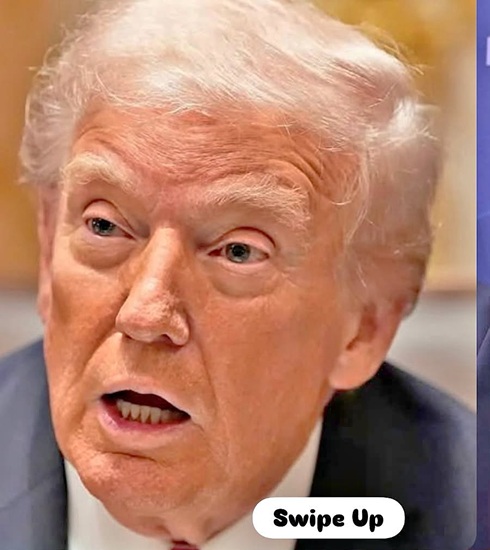
President Donald Trump found himself at the center of widespread public attention following a series of remarks made during press conferences at the NATO summit in Ankara, Turkey. Several comments delivered during appearances alongside international leaders quickly spread across social media platforms, prompting discussion among journalists, political analysts, elected officials, and members of the public. While supporters argued that the remarks were isolated verbal slips made during a demanding schedule, critics described them as significant mistakes that deserved closer scrutiny.
The contrasting reactions highlighted how closely every public statement from a sitting U.S. president is examined, particularly during high-profile international events. The NATO summit itself focused primarily on security cooperation, defense spending, ongoing military conflicts, and the alliance’s future strategy. Leaders from numerous member nations gathered to discuss shared security priorities while also holding bilateral meetings on regional and global issues.
As is often the case during major diplomatic gatherings, the formal agenda was accompanied by extensive media availability, where world leaders answered questions from reporters representing outlets across the globe. These unscripted exchanges frequently produce headlines because they offer opportunities for spontaneous comments that are not part of prepared speeches.
One of the moments that generated the greatest attention occurred when President Trump appeared to mistakenly refer to Iran as the “Islamic Republic of Japan” while discussing missile attacks that he said had targeted a U.S. aircraft carrier. Video clips of the remark quickly circulated online, with many viewers interpreting it as an obvious verbal mix-up. News organizations from multiple countries reported the incident, and the phrase soon became one of the most widely discussed moments from the summit. The White House did not indicate that the statement reflected an intentional description, and most reports characterized it as a verbal error.
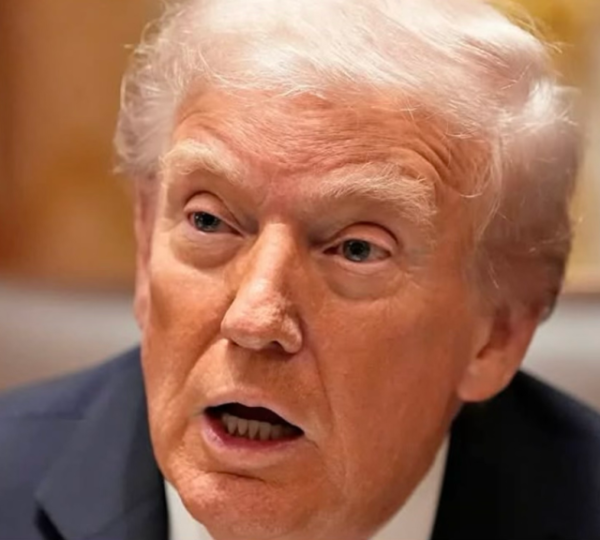
During the same appearance, another exchange also attracted attention when Trump appeared to invite questions for “President Putin” while standing beside Ukrainian President Volodymyr Zelenskyy. Within moments, he clarified that he meant he could pass questions along if he later spoke with Russian President Vladimir Putin. Even though he immediately attempted to explain the statement, the clip spread rapidly across television broadcasts and social media platforms, where it became another widely shared moment from the day’s events.
Political opponents responded quickly. Several Democratic officials and conservative critics of the president argued that the mistakes reflected poorly on the United States during an important international gathering. Senate Minority Leader Chuck Schumer criticized Trump’s performance, while former Republican Congressman Joe Walsh and members of the Lincoln Project also expressed concern about the president’s remarks. Their comments reflected longstanding political disagreements and continued debates about presidential communication rather than any official medical determination regarding the president’s health.
Social media users also weighed in from across the political spectrum. Some users created memes and jokes centered on the phrase “Islamic Republic of Japan,” while others compared the incident with verbal mistakes made by previous presidents. Supporters of President Trump argued that every president occasionally misspeaks during lengthy public appearances and that the attention given to the remarks was disproportionate. Critics, meanwhile, argued that the comments deserved significant media coverage because they occurred during an important international summit involving national security issues. These contrasting reactions demonstrated how political audiences often interpret identical events very differently depending on their perspectives.
The White House strongly defended the president’s overall performance throughout the summit. Press Secretary Karoline Leavitt stated that President Trump completed several lengthy public appearances, answered numerous unscripted questions, and maintained an active schedule during the gathering. She argued that the administration viewed the summit as successful, emphasizing discussions with allied leaders and describing the president as energetic and fully engaged throughout the event. The administration maintained that isolated verbal slips should not overshadow the broader diplomatic objectives achieved during the meetings.
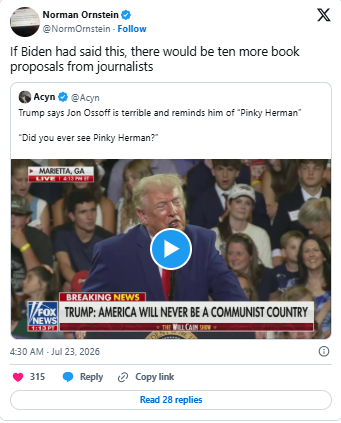
Another moment that received attention later the same day occurred when President Trump referred to the social media platform TikTok as “Tic Tac,” apparently confusing the platform’s name with the popular mint candy. The remark generated another wave of online commentary, with many users creating humorous posts about the slip. While relatively minor compared with the earlier exchanges, the incident contributed to a broader discussion about the president’s communication during the summit and ensured that media coverage continued well beyond the conclusion of the day’s official events.
The discussion surrounding President Trump’s remarks also renewed a broader conversation that has appeared repeatedly during recent election cycles: how the public evaluates the age, communication style, and performance of national leaders. Both President Trump and former President Joe Biden have faced questions over verbal slips at different points in their public careers. Political observers noted that these conversations often become highly partisan, with supporters of each leader tending to minimize mistakes made by their preferred candidate while emphasizing those made by political opponents. This pattern has become increasingly common in the era of instant social media reactions, where short video clips frequently receive millions of views within hours of being posted.
Media organizations covering the summit presented the events in different ways depending on their editorial focus. Some outlets concentrated primarily on the diplomatic outcomes of the NATO meetings, including discussions involving defense cooperation, military assistance, and international security. Others devoted greater attention to the president’s unscripted exchanges with reporters, arguing that presidential communication itself remains an important part of international diplomacy. As a result, audiences often encountered significantly different headlines despite reading reports about the same series of events, illustrating how editorial priorities can influence the overall emphasis of news coverage.
Political analysts also observed that verbal mistakes by high-profile leaders are not uncommon during lengthy press conferences. International summits often require heads of state to participate in multiple meetings, bilateral discussions, formal speeches, and extended question-and-answer sessions within a short period. Such demanding schedules naturally increase the possibility of misspeaking or accidentally using incorrect names or terminology. While some commentators viewed the remarks as ordinary human errors made during a busy diplomatic agenda, others argued that even isolated mistakes deserve careful attention because of the responsibilities associated with the presidency.
The White House continued defending President Trump’s overall performance throughout the summit. Administration officials emphasized that he participated in numerous meetings with allied leaders, addressed a wide range of international policy issues, and answered many unscripted questions from journalists. According to the administration, the summit strengthened cooperation among NATO members and advanced several U.S. foreign policy objectives. Officials argued that focusing exclusively on a handful of verbal slips ignored the broader substance of the president’s diplomatic engagements and policy discussions during the gathering.
Meanwhile, critics maintained that presidential communication carries exceptional importance because statements made by world leaders can influence international perception, financial markets, diplomatic relationships, and public confidence. Several commentators argued that precision in language is especially valuable during discussions involving military alliances and global security matters. Others countered that isolated verbal errors should be evaluated within the context of hours of public appearances rather than judged solely through short video clips shared repeatedly on social media.
The online reaction demonstrated once again how quickly modern political moments spread across digital platforms. Short excerpts from press conferences were viewed, shared, and discussed by millions of users across multiple social media networks within hours. Supporters defended the president, critics questioned his performance, comedians created satirical posts, and journalists analyzed the remarks from multiple perspectives. The speed with which these conversations unfolded reflected the increasingly immediate relationship between political events and online public discourse, where even a few seconds of video can become the defining image of an entire news cycle.
Communication experts have frequently noted that brief clips circulating online rarely capture the complete context of lengthy public appearances. Full press conferences often last considerably longer than the excerpts most widely shared across social media. For that reason, many media organizations encourage audiences to review complete transcripts or extended recordings before reaching conclusions about complex political events. Examining the broader context can provide additional insight into how remarks were made, how they were clarified, and how they fit within the overall discussion taking place during the event.
As debate continues, the differing reactions illustrate the deeply divided nature of modern American politics. Supporters and critics often interpret identical events through very different political perspectives, leading to sharply contrasting conclusions about the significance of the same remarks. Regardless of political viewpoint, the NATO summit once again demonstrated that every public appearance by a U.S. president receives extensive international attention. As future diplomatic meetings and press conferences take place, public scrutiny of presidential communication is likely to remain an important part of political reporting, with both supporters and critics continuing to closely examine every public statement made by the nation’s highest elected official.
