
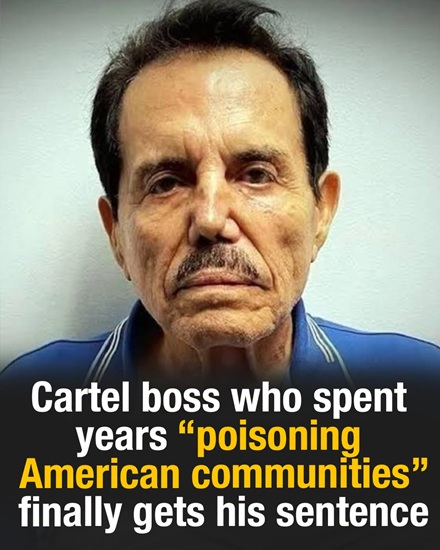
Ismael “El Mayo” Zambada Garcia, one of the most influential figures in the history of Mexico’s Sinaloa Cartel, was sentenced to life in federal prison on July 20, 2026. The sentence was imposed in federal court in Brooklyn after Zambada pleaded guilty in August 2025 to leading a continuing criminal enterprise and participating in racketeering. The court also entered a $15 billion forfeiture judgment connected to proceeds attributed to the organization’s drug-trafficking operations.
The life sentence marked the conclusion of a decades-long effort by United States authorities to prosecute a man they described as a principal leader of one of the world’s most powerful drug-trafficking organizations. Zambada had remained beyond the direct reach of U.S. law enforcement for many years, even as numerous associates, relatives, and senior figures connected to the Sinaloa Cartel were arrested, extradited, convicted, or killed. His ability to avoid capture contributed to his reputation as a cautious and highly influential cartel strategist.
Zambada was 76 when he was sentenced, according to the Department of Justice announcement issued on the day of the hearing. Prosecutors said he had exercised leadership over the Sinaloa Cartel for nearly four decades and had participated in a criminal enterprise responsible for transporting enormous quantities of illegal drugs into the United States and other countries. The organization’s activities involved cocaine, heroin, methamphetamine, fentanyl, and additional controlled substances.
Unlike Joaquín “El Chapo” Guzmán Loera, whose prison escapes and highly publicized prosecution attracted worldwide attention, Zambada generally maintained a lower public profile. He was often described as an organizational figure who relied on personal relationships, regional influence, corruption, and alliances to maintain the cartel’s operations. That distinction did not make his admitted conduct less serious, and prosecutors portrayed him as a central decision-maker within the organization rather than a distant or symbolic leader.
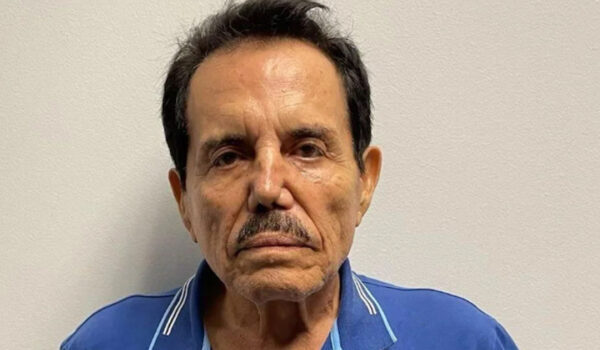
The Sinaloa Cartel developed into a far-reaching criminal network with operations extending beyond the Mexican state from which it took its name. According to U.S. prosecutors, the organization coordinated the production, acquisition, transportation, and distribution of illegal drugs across international borders. It also relied on money laundering, bribery, armed enforcement, and violence to defend its routes, personnel, profits, and territorial influence.
At his guilty-plea hearing in August 2025, Zambada admitted that he had been a principal leader of the cartel’s continuing criminal enterprise. He also pleaded guilty to a racketeering charge connected to the organization’s activities. The Department of Justice said the admitted conduct extended across decades and involved drug trafficking, corruption, and violence carried out to protect and expand the cartel’s operations.
The guilty plea eliminated the need for a lengthy federal trial in which prosecutors would otherwise have presented witnesses, documentary evidence, intercepted communications, financial information, and testimony concerning the cartel’s activities. By pleading guilty, Zambada accepted responsibility for the two federal counts at issue in the plea proceedings. The plea also meant that the central question at the later hearing would be the sentence and financial judgment rather than whether he had committed those offenses.
Federal law required a life sentence for the continuing criminal enterprise count to which Zambada pleaded guilty. As a result, the judge’s discretion was significantly limited. The sentence was not merely the result of a general recommendation from prosecutors; it followed from the statutory consequences attached to the admitted leadership role and the offenses covered by the plea agreement.
The court also ordered Zambada to forfeit $15 billion, an amount prosecutors calculated as proceeds associated with the cartel’s trafficking operations under his leadership. A forfeiture judgment establishes a legal financial obligation tied to criminal proceeds. It does not necessarily mean that authorities have already located or seized the full amount, and reports following the sentencing indicated that the government had not recovered assets approaching the total value of the judgment.
Prosecutors characterized the scale of the criminal enterprise as exceptionally large. They said Zambada participated in the trafficking of immense quantities of drugs and oversaw an organization that generated billions of dollars. The Department of Justice described the Sinaloa Cartel as both powerful and violent, with an international supply network capable of moving narcotics through multiple countries before they reached wholesale distributors and local markets.
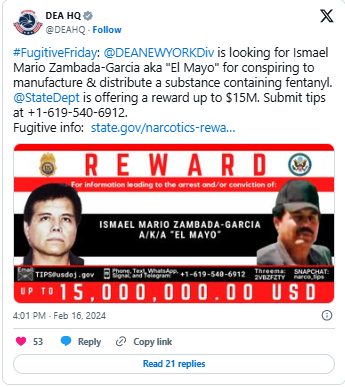
The sentencing announcement stated that Zambada’s organization trafficked tons of fentanyl, cocaine, and other drugs into the United States. Prosecutors connected those activities to widespread addiction, overdose deaths, family disruption, and community harm. Such official descriptions represent the government’s assessment of the consequences of the cartel’s operations, while broader public-health outcomes involve many suppliers, criminal groups, markets, and social factors.
Zambada’s admitted criminal conduct was not limited to the transportation and sale of drugs. Prosecutors said the cartel used armed personnel and assassins to attack, torture, intimidate, or kill people considered threats to the organization. These targets could include competitors, suspected informants, disobedient associates, and others whose actions were viewed as interfering with cartel business.
The Department of Justice also said Zambada admitted directing violence during his years in leadership. At his 2025 plea hearing, he acknowledged ordering armed men under his control to kill rivals and others. He further recognized that innocent people died as a result of the violence associated with the criminal organization.
One case referenced by prosecutors involved Eliseo Imperial Castro, also known as “Cheyo Ántrax,” who was Zambada’s nephew. Authorities attributed Castro’s killing to violence ordered within the cartel structure. Because cartel cases often involve cooperating witnesses, confidential sources, and evidence gathered across several jurisdictions, the full factual record behind individual killings is not always made publicly available in a single court document.
Prosecutors further alleged and Zambada acknowledged that corruption played a significant role in sustaining the organization. According to the Justice Department, cartel funds were used to bribe officials and obtain protection, information, or assistance. Corruption can allow trafficking groups to avoid inspections, receive warnings about law-enforcement activity, influence local institutions, and preserve transportation routes that would otherwise be vulnerable to disruption.
It is important to distinguish between Zambada’s admitted responsibility and claims that remain disputed or based on one party’s account. His role in the continuing criminal enterprise and racketeering organization was established through his guilty pleas. By contrast, the precise circumstances under which he entered the United States in July 2024 remained the subject of competing public descriptions.
On July 25, 2024, Zambada and Joaquín Guzmán López, one of Joaquín “El Chapo” Guzmán’s sons, arrived aboard a small aircraft near El Paso, Texas. Federal agents took both men into custody. The Justice Department publicly confirmed their arrests that day and identified them as alleged senior leaders connected to the Sinaloa Cartel.
Zambada later said he had not voluntarily surrendered. In a statement released after his arrest, he claimed that Guzmán López had invited him to a meeting, that armed men ambushed him, and that he was forced onto an aircraft bound for the United States. His attorney similarly characterized the incident as a kidnapping. Reuters reported these statements while also noting that differing accounts had circulated regarding how the flight was arranged.
Other reports, citing current and former U.S. officials, said Guzmán López had deceived Zambada into boarding the aircraft and intended to surrender to American authorities. According to that version, Zambada believed the flight concerned a property visit in northern Mexico before the plane instead crossed into the United States. Because these details came from unnamed officials and interested parties, responsible reporting should attribute them rather than present every element as an independently proven fact.
The United States government did not initially provide a complete public account explaining every step that led to the aircraft’s arrival. Mexican officials also requested information about the operation and investigated claims that Zambada had been abducted from Mexican territory. The uncertainty surrounding the transfer became diplomatically sensitive because an involuntary removal across an international border can raise serious legal and sovereignty concerns.
Whatever the circumstances of the flight, Zambada was formally brought before U.S. courts after his arrest. He initially pleaded not guilty to the pending charges and was ordered detained. In September 2024, he was arraigned in Brooklyn on an indictment that included accusations involving a continuing criminal enterprise, drug conspiracies, money laundering, murder-related conduct, and the manufacture and distribution of fentanyl.
The indictment had been expanded in February 2024 to extend the alleged end dates of several conspiracies through January of that year. Prosecutors said this reflected Zambada’s continued leadership and the cartel’s increasing involvement in fentanyl trafficking. The charges built upon earlier federal cases that had accumulated over a long period while he remained outside U.S. custody.
His arrest occurred five years after Joaquín “El Chapo” Guzmán was sentenced in the same federal district. Guzmán received life imprisonment plus an additional 30 years in July 2019 following his conviction on charges that included operating a continuing criminal enterprise and participating in drug-trafficking and murder conspiracies.
Zambada continued to exercise influence within the cartel after Guzmán’s removal, although the organization was not a single unified hierarchy controlled without challenge. The Sinaloa Cartel has long been described as containing multiple factions, family networks, regional commanders, and alliances. Zambada’s faction and groups associated with Guzmán’s sons operated under the broader cartel name while also pursuing their own interests.
The arrival of Zambada and Guzmán López in the United States intensified tensions between those factions. Reports linked the disputed transfer to later violence in the Mexican state of Sinaloa, where armed groups associated with competing cartel networks fought for influence. While Zambada’s arrest was a major law-enforcement development, removing one leader did not automatically dismantle the criminal organization or eliminate competition among those seeking to control its operations.
Cartel structures frequently survive the arrest or death of senior figures because their activities involve decentralized cells, local alliances, replacement leaders, financial networks, corrupt relationships, and established trafficking routes. A high-profile conviction may weaken parts of an organization, but it can also create power struggles or encourage rival groups to compete for territory. These consequences make it difficult to measure the long-term impact of a single prosecution solely by the importance of the individual sentenced.
During the year following his arrest, Zambada’s attorneys and federal prosecutors negotiated the case that ultimately resulted in his guilty plea. In August 2025, he appeared before the court and admitted his role in the criminal enterprise. The Justice Department stated that he had accepted responsibility for leadership of the Sinaloa Cartel and for racketeering conduct connected to its operations.
The plea agreement also contemplated the $15 billion forfeiture judgment and a mandatory life sentence. It therefore left little uncertainty about the principal punishment he would receive. The sentencing hearing nevertheless remained important because it allowed prosecutors, defense attorneys, the judge, and Zambada himself to address the harm caused by the enterprise and the circumstances the court should consider.
Defense attorneys argued that the guilty plea provided practical benefits by avoiding the disclosure and testimony of potential witnesses. A cartel trial involving allegations of murder, corruption, and international drug trafficking could expose witnesses to significant safety concerns and require extensive protective measures. Avoiding a trial could also reduce the burden on victims, witnesses, investigators, and the court.
However, reports indicated that Zambada did not become a cooperating government witness in the conventional sense. A guilty plea and cooperation are legally distinct. A defendant may admit responsibility and waive a trial without providing substantial assistance against other individuals. The Associated Press reported after the sentencing that Zambada had not cooperated with investigations in the way some observers had speculated.
The sentence therefore should not be described simply as a reduced punishment in exchange for extensive cooperation. Life imprisonment was mandatory under the count to which he pleaded guilty. Although his decision to accept responsibility may have spared witnesses from appearing at trial, it did not result in his release, a short prison term, or an opportunity to return to Mexico.
The death penalty was also discussed in connection with the case. Federal prosecutors had previously considered whether capital punishment could be pursued for eligible conduct, but the plea agreement resolved the prosecution without a death-penalty trial. Saying that cooperation alone “spared” him from execution would oversimplify the legal process, because the final outcome resulted from the charges, prosecutorial decisions, negotiations, and the terms of the accepted plea.
By the time he appeared for sentencing in July 2026, the legal outcome was largely expected. The central question was not whether he would receive life imprisonment but how the court would describe the seriousness of the admitted conduct and what additional orders would accompany the sentence. Judge Brian Cogan imposed the mandatory life term and entered the multibillion-dollar forfeiture judgment.
The sentencing placed Zambada alongside Guzmán as another Sinaloa Cartel co-founder condemned to spend the remainder of his life in the U.S. federal prison system. The two cases followed different paths—Guzmán was extradited, tried, and convicted by a jury, while Zambada arrived under disputed circumstances and later pleaded guilty—but both ended with life sentences in Brooklyn federal court.
For prosecutors, the judgment represented the culmination of investigations conducted across multiple decades and jurisdictions. The FBI, Drug Enforcement Administration, Homeland Security Investigations, federal prosecutors, and international partners had worked on cases related to Zambada and the Sinaloa Cartel long before his 2024 arrest. The prosecution relied on the accumulated legal record of an organization whose operations crossed borders and involved numerous separate criminal cases.
For communities affected by addiction and cartel violence, however, the sentence cannot reverse the deaths, injuries, intimidation, corruption, and social harm already caused. A life sentence incapacitates one senior leader and establishes legal accountability for his admitted conduct. It does not by itself end illegal drug markets, eliminate cartel recruitment, resolve corruption, or provide complete recovery for victims.
The case is therefore both historically significant and limited in what it can accomplish. It removes a highly influential cartel co-founder from active leadership and closes a major federal prosecution. At the same time, drug-trafficking organizations remain adaptive, and the conditions supporting their operations extend beyond any single defendant.
During the sentencing hearing, federal prosecutors argued that the punishment reflected the extraordinary scale of the criminal enterprise that Zambada admitted helping lead for decades. According to the U.S. Department of Justice, the organization was responsible for trafficking enormous quantities of illegal narcotics into the United States and other countries while relying on violence, intimidation, corruption, and financial resources to maintain its operations. Prosecutors described the case as one involving one of the most influential criminal organizations ever prosecuted in the federal court system.
In announcing the sentence, U.S. Attorney Joseph Nocella Jr. stated that Zambada had spent decades directing a criminal organization that distributed illegal drugs while ordering violence against people viewed as obstacles to the cartel’s activities. Prosecutors said the life sentence reflected both the admitted drug-trafficking offenses and the extensive violence connected to the organization. Those statements formed part of the government’s explanation of why it believed the mandatory punishment was appropriate under federal law.
Additional officials involved in the prosecution emphasized that the investigation required years of cooperation among multiple law-enforcement agencies. Federal investigators, prosecutors, intelligence analysts, and international partners collected evidence across numerous jurisdictions before the case ultimately reached federal court. Complex international investigations involving organized crime often require extensive coordination because financial transactions, communications, transportation routes, and alleged criminal activities may cross national borders.
Court records show that, before receiving his sentence, Zambada addressed the court personally. According to reports covering the hearing, he acknowledged responsibility for his criminal decisions and expressed regret for the harm caused by the organization he admitted leading. He stated that he had grown up in an environment where violence and organized crime appeared normal but said that those circumstances did not excuse the choices he later made. His remarks became part of the official sentencing proceedings.
According to reporting from the hearing, Zambada also recognized what he described as the human consequences of the violence connected to the criminal organization. He apologized to people who had suffered because of his actions and encouraged younger generations to avoid involvement in organized crime. Those statements reflected his own comments during sentencing and should not be interpreted as changing the legal findings already established through his guilty plea.
Defense attorneys asked the court to consider several factors before imposing sentence. They argued that their client’s guilty plea avoided the need for a lengthy public trial that could have required testimony from numerous witnesses. By eliminating the trial, they said, witnesses would not need to appear publicly, and the government would avoid additional litigation involving evidence collected over many years. These arguments were presented as part of the normal sentencing process but did not alter the mandatory life sentence required by federal law.
The defense also presented information regarding Zambada’s age and health. Public court filings and reporting indicated that his attorneys argued those personal circumstances should be considered when determining any additional aspects of the sentence. Nevertheless, because he pleaded guilty to operating a continuing criminal enterprise carrying a mandatory life sentence, the court’s discretion regarding imprisonment was significantly limited. The judge therefore imposed the sentence required under the applicable federal statute.
Along with life imprisonment, the court entered a forfeiture judgment totaling 15 billion dollars. Under United States federal law, criminal forfeiture is intended to deprive convicted defendants of proceeds connected to criminal activity. A forfeiture judgment represents a legal financial obligation entered by the court. It does not necessarily indicate that authorities have already located or recovered assets equal to the full amount ordered. This distinction is important because large forfeiture judgments frequently exceed assets immediately available for seizure.
The Department of Justice also stated that Zambada had been convicted of numerous federal criminal violations connected to the criminal enterprise. Those convictions reflected years of investigation into activities involving drug trafficking, racketeering, and related offenses. The case became one of the most significant prosecutions involving the Sinaloa Cartel since the conviction and sentencing of Joaquín “El Chapo” Guzmán several years earlier.
Although the sentencing concludes one of the highest-profile criminal cases involving the cartel, specialists in organized crime have frequently noted that transnational criminal organizations rarely depend entirely upon a single individual. Such organizations often consist of multiple regional groups, financial networks, transportation systems, and leadership structures capable of adapting after arrests or leadership changes. Consequently, law-enforcement actions against senior leaders can significantly affect an organization without necessarily eliminating it altogether.
Following Zambada’s arrest in 2024, several reports described increased instability among factions associated with the Sinaloa Cartel. Public reporting linked those tensions to disputes over leadership and operational control after one of the organization’s longest-serving leaders entered U.S. custody. Authorities in both Mexico and the United States have continued monitoring developments involving organized criminal groups operating in the region, although individual investigations remain separate from Zambada’s concluded federal prosecution.
The broader significance of the case extends beyond one individual defendant. The prosecution demonstrates how investigations involving organized crime frequently require cooperation among multiple countries, extensive financial investigations, intelligence gathering, witness testimony, forensic analysis, and years of legal preparation before reaching a final judgment. Such cases often involve thousands of pages of evidence, multiple indictments, and coordination among prosecutors, investigators, and international law-enforcement agencies.
The case also illustrates the distinction between criminal prosecution and broader public-health challenges. While courts determine criminal responsibility for specific defendants based on evidence and applicable law, issues such as illegal drug markets, addiction, overdose deaths, organized crime, and corruption involve numerous social, economic, public-health, and law-enforcement factors extending beyond a single prosecution. A life sentence can permanently remove one admitted criminal leader from active operations, but it does not by itself resolve every problem associated with international drug trafficking.
For victims, families, and communities affected by organized crime and illegal drug distribution, legal proceedings often represent only one part of a much longer process of recovery. Criminal convictions establish legal accountability under the justice system, but they cannot fully reverse the personal, financial, and emotional consequences experienced by individuals harmed over many years. Courts determine criminal responsibility, while recovery from the effects of organized crime frequently requires continued work by healthcare providers, community organizations, law-enforcement agencies, and public institutions.
With the sentence now imposed, Ismael “El Mayo” Zambada Garcia is expected to spend the remainder of his life in the federal prison system. His guilty plea, mandatory life sentence, and multibillion-dollar forfeiture judgment conclude one of the most significant federal prosecutions involving the Sinaloa Cartel. The case closes a major chapter in the legal proceedings against one of the organization’s longtime leaders while leaving broader efforts against international organized crime to continue through separate investigations and future prosecutions.

