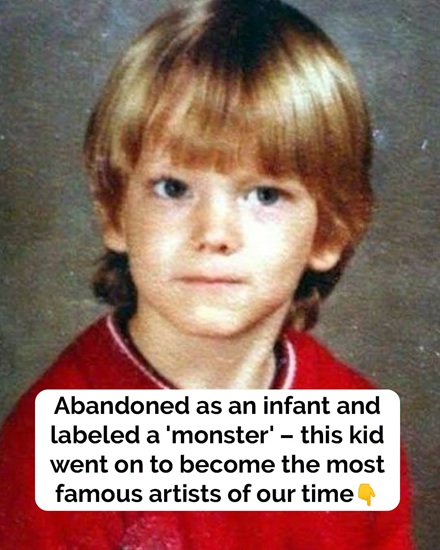
Marshall Bruce Mathers III, known professionally as Eminem, is widely regarded as one of the most influential rappers in modern music history. Throughout a career spanning more than three decades, he has earned worldwide recognition for his lyrical ability, storytelling, technical skill, and willingness to write openly about personal struggles. His music has reached audiences across generations, and his influence extends far beyond hip-hop.
While his success is extraordinary, the path that led him there was marked by hardship, instability, and experiences that he later described in interviews, documentaries, and many of his songs. Eminem was born on October 17, 1972, in St. Joseph, Missouri, to Deborah R. Nelson and Marshall Bruce Mathers Jr. His parents separated when he was very young, and his father left the family during Eminem’s infancy.
According to Eminem, he had little or no meaningful relationship with his father while growing up. In interviews over the years, he said that although letters were occasionally sent, they never developed the close father-son relationship he had hoped for as a child. His father later lived separately from the family and died in 2019.
Growing up, Eminem and his mother frequently moved between Missouri and Michigan before eventually settling primarily in the Detroit metropolitan area. Because of their financial difficulties, they often lived in modest housing and changed neighborhoods repeatedly. Those frequent moves meant that Marshall regularly found himself as the new student at unfamiliar schools. Constantly adapting to new classmates made it difficult to build lasting friendships, and he has described those years as some of the most challenging periods of his childhood.
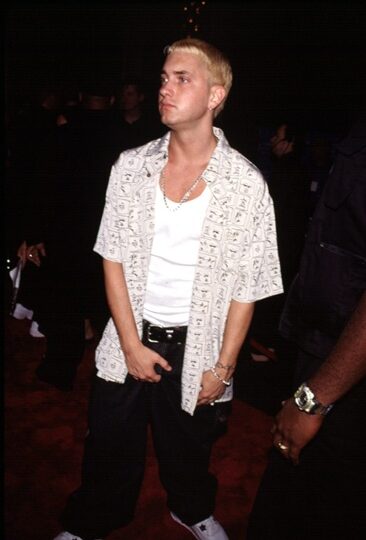
In several interviews, including conversations with Rolling Stone, Eminem recalled being bullied throughout his school years. He described incidents in which he was pushed into lockers, physically assaulted, and targeted simply because he was the new student. Court records from the early 1980s document that his mother filed a lawsuit against the Detroit public school system after an incident in which Marshall suffered serious injuries during an assault by another student. The lawsuit alleged that the school failed to provide adequate supervision. Although the case was eventually dismissed, the incident became one of the defining events he has referenced when discussing his childhood.
Medical reports connected to that incident indicated that he suffered a concussion and temporary vision problems after being struck during the altercation. In later interviews, Eminem explained that experiences like these left lasting emotional effects. Rather than focusing only on the physical injuries, he often described the isolation, anxiety, and uncertainty that accompanied constantly changing schools and trying to fit into unfamiliar environments. Those memories would later become recurring themes throughout his songwriting.
Another frequently discussed aspect of Eminem’s early life involves his complicated relationship with his mother. Throughout his career, Eminem publicly accused her of neglect, substance abuse, and creating an unstable home environment. Many of those allegations appeared in interviews and were also reflected in songs such as “Cleanin’ Out My Closet.” However, Deborah Nelson consistently rejected many of those accusations, publicly denying that she abused her son and disputing his characterization of their relationship. Their long-running conflict eventually led to legal proceedings after she filed a defamation lawsuit related to statements made about her.

The legal dispute attracted widespread media attention during Eminem’s rise to international fame. Reports at the time noted that Deborah Nelson sought significant financial damages, arguing that statements made about her reputation were false and harmful. The lawsuit was ultimately resolved with a much smaller financial award than originally requested. Despite the legal outcome, the disagreement remained one of the most widely discussed family conflicts in modern popular music and continued to influence public discussion surrounding Eminem’s personal life.
It is important to distinguish between documented events and artistic expression. Eminem has often used his music as a deeply personal form of storytelling, blending factual experiences, emotional memories, satire, fictional characters, and exaggerated narratives. Music critics have frequently pointed out that his songs should not always be interpreted as literal autobiographical accounts. Nevertheless, many of his lyrics clearly draw inspiration from genuine experiences that shaped his childhood and adolescence.
During his teenage years, Eminem developed a passion for hip-hop after becoming fascinated by the technical artistry of rap lyrics. He spent countless hours studying rhyme patterns, writing verses, participating in rap battles, and refining his ability to tell stories through music. Although he struggled academically and eventually left high school without graduating, he remained determined to pursue a career as a rapper despite the significant obstacles facing an unknown artist attempting to establish himself within Detroit’s competitive underground hip-hop scene.
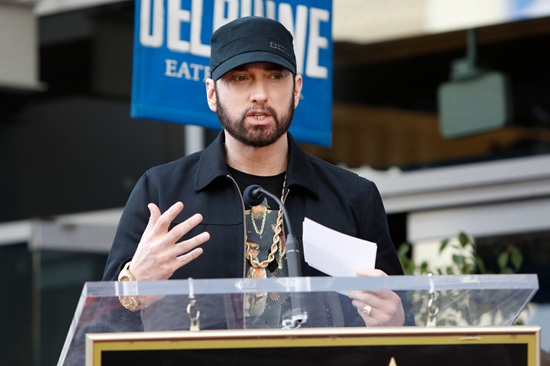
At the time, Eminem faced additional challenges because he was a white rapper performing in a genre that had developed primarily within Black communities. Rather than avoiding that reality, he openly acknowledged it and worked to earn respect through lyrical ability, freestyle performances, and relentless dedication. Fellow artists and producers later recalled that he regularly participated in local rap competitions where technical skill mattered more than popularity or background. Those early years became essential in shaping the confident stage presence audiences would later recognize around the world.
In 1995, Eminem became a father when his daughter Hailie Jade Scott was born. Fatherhood became one of the most important influences in his personal life and artistic career. In numerous interviews, he explained that becoming a parent motivated him to work harder and provided a powerful reason to continue pursuing music despite financial uncertainty and professional setbacks. Songs dedicated to Hailie would later become some of the most emotional and widely recognized tracks in his catalog.
Although success did not arrive immediately, Eminem continued writing music while balancing difficult jobs and financial pressures. He recorded independent material, performed whenever opportunities became available, and gradually built a reputation within Detroit’s underground rap community. Every setback strengthened his determination to improve as a lyricist, laying the foundation for the breakthrough that would eventually introduce his music to audiences around the globe.
Eminem’s career changed dramatically in the late 1990s when his independent work attracted the attention of legendary producer Dr. Dre. After hearing The Slim Shady EP, Dr. Dre invited the young rapper to California, where the two began working together on what would become The Slim Shady LP. Released in 1999, the album introduced Eminem to a global audience and quickly became both a commercial and critical success. Songs such as “My Name Is” showcased his distinctive storytelling, complex rhyme schemes, and unique blend of humor, satire, and personal reflection.
The success of The Slim Shady LP marked the beginning of one of the most successful careers in modern music. The album earned Eminem his first Grammy Award and established him as one of hip-hop’s most recognizable new artists. Rather than being viewed as a temporary success, he continued building on that momentum with The Marshall Mathers LP in 2000. The record became one of the fastest-selling hip-hop albums in history and further demonstrated his technical ability as a lyricist and storyteller.
Throughout his career, Eminem has often drawn inspiration from his own experiences. Songs such as “The Way I Am,” “Mockingbird,” “Cleaning Out My Closet,” and “Headlights” explore different periods of his life and relationships from varying perspectives. While some songs express anger, frustration, or disappointment, others reflect growth, regret, reconciliation, and personal reflection. Because his music combines factual experiences with artistic storytelling, listeners and critics generally distinguish between documented events and the creative expression typical of songwriting.
One of the defining moments of Eminem’s career came in 2002 with the release of 8 Mile, a drama loosely inspired by elements of his early life in Detroit. Although the film is not a direct biography, it reflects many themes that appeared throughout his music, including poverty, determination, family struggles, and the challenge of pursuing artistic ambitions despite repeated setbacks. Eminem starred in the leading role and received widespread praise for his performance.
The film’s soundtrack produced “Lose Yourself,” a song that became one of the most successful recordings of his career. In 2003, the track won the Academy Award for Best Original Song, making Eminem the first hip-hop artist to receive that honor in the category. The song’s message about perseverance, preparation, and making the most of opportunities resonated with audiences worldwide and continues to be recognized as one of the defining songs of the 21st century.
Despite extraordinary professional success, Eminem has spoken openly about personal challenges, including struggles with prescription medication addiction during the mid-2000s. Following a serious overdose in 2007, he entered recovery and later described that experience in interviews as a turning point in his life. His return to music with albums such as Relapse (2009) and Recovery (2010) reflected both personal resilience and renewed creative energy. Recovery became one of the best-selling albums of the year and introduced inspirational songs including “Not Afraid.”
Family has remained an important theme throughout Eminem’s life. In interviews over many years, he has repeatedly expressed his desire to provide his children with stability, love, and opportunities that he believes were limited during his own childhood. Alongside his biological daughter Hailie Jade, Eminem also helped raise Alaina Marie Scott and Stevie Laine Scott. While he generally keeps his family life private, he has often emphasized the importance of being present as a father rather than allowing professional success to replace meaningful relationships.
As his career progressed, Eminem gradually reduced the number of public appearances outside music. Unlike many global celebrities, he has maintained a relatively private lifestyle away from major entertainment events. Instead, he has focused primarily on recording music, collaborating with other artists, and supporting projects connected to his record label. This approach has allowed him to maintain a level of privacy while continuing to influence the music industry through new releases and occasional performances.
Over the years, Eminem has received numerous honors recognizing both his commercial success and artistic influence. He has earned multiple Grammy Awards, an Academy Award, MTV Video Music Awards, and numerous other international music honors. Industry analysts regularly cite his record sales, chart performance, lyrical complexity, and influence on later generations of rappers when discussing his place among the most significant artists in hip-hop history.
Music critics have frequently highlighted Eminem’s technical abilities, including his intricate rhyme structures, storytelling techniques, wordplay, and rapid delivery. Songs such as “Rap God,” “Without Me,” “Stan,” “‘Till I Collapse,” and “Sing for the Moment” continue to be studied by musicians and writers because of their lyrical craftsmanship. His ability to combine personal experiences with fictional narratives and social commentary has contributed to his lasting popularity across different generations of listeners.
In later years, Eminem’s relationship with his mother became a subject of renewed public discussion after the release of “Headlights” in 2013. Unlike several earlier songs that expressed anger, this recording adopted a more reflective tone, acknowledging the complexity of family relationships while expressing regret for some of the pain that had become public over the years. Although it did not erase decades of conflict, many observers viewed the song as evidence of personal growth and emotional maturity.
Marshall Mathers’ story demonstrates that difficult circumstances do not necessarily determine a person’s future. His childhood included instability, financial hardship, frequent school changes, and personal challenges that he has discussed throughout his career. Rather than allowing those experiences to define him completely, he transformed many of them into artistic expression that resonated with millions of listeners around the world. While every individual’s journey is different, his career illustrates how creativity, determination, and persistence can play an important role in overcoming adversity.
Today, Eminem is widely recognized as one of the most influential figures in the history of hip-hop. His albums have sold millions of copies worldwide, his songs continue to reach new audiences through streaming platforms, and his influence can be heard in the work of countless younger artists. More than three decades after he began performing in Detroit’s underground rap scene, he remains one of the genre’s most respected lyricists and one of the defining voices of contemporary popular music.
His legacy extends beyond awards and commercial success. Through his willingness to discuss personal struggles, artistic ambition, family relationships, addiction recovery, and perseverance, Eminem has created a body of work that continues to inspire discussion among fans, musicians, and critics alike. Whether viewed as a technically gifted lyricist, a groundbreaking performer, or an influential cultural figure, Marshall Mathers’ journey from a difficult childhood to international recognition remains one of the most remarkable stories in modern music.
