
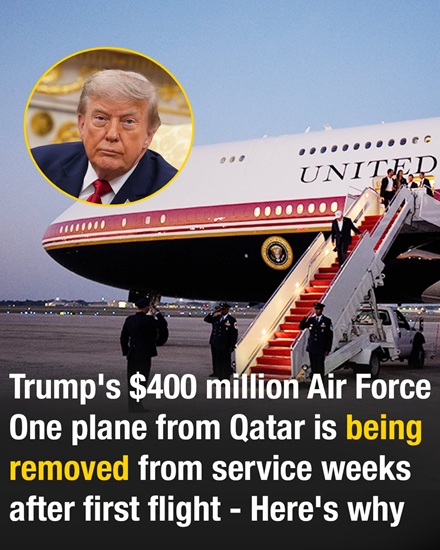
The aircraft currently serving as President Donald Trump’s interim Air Force One is expected to undergo another round of upgrades after entering service earlier this month, according to statements from the White House. The Boeing 747 has attracted significant public attention because of both its luxury configuration and the discussion surrounding the modifications required for presidential operations. While the aircraft has already been adapted for official use, administration officials have said additional work is planned to ensure it meets the highest operational and security standards expected of a presidential aircraft.
The scheduled upgrades have become a major topic of discussion among aviation observers, government officials, and political commentators. The aircraft first drew widespread attention after President Trump used it during a trip to North Dakota on July 1, where he attended the dedication of the Theodore Roosevelt Presidential Library.
Before boarding the aircraft, Trump spoke enthusiastically about the flight, describing the Boeing 747 as one of the greatest commercial aircraft ever built. He also expressed excitement about making its first official presidential journey, noting that although the library dedication was an important event, experiencing the aircraft’s inaugural trip was personally meaningful. His remarks were widely reported by national media covering the event.
According to White House officials, the aircraft is intended to serve as an interim presidential transport while work continues on Boeing’s long-delayed next-generation Air Force One program. The existing VC-25 aircraft currently associated with Air Force One have served for decades, leading to growing discussions about modernization, maintenance, and replacement. Aviation experts have noted that replacing or significantly upgrading aircraft used for presidential travel involves years of engineering, testing, communications integration, and security certification because of the unique mission requirements involved.
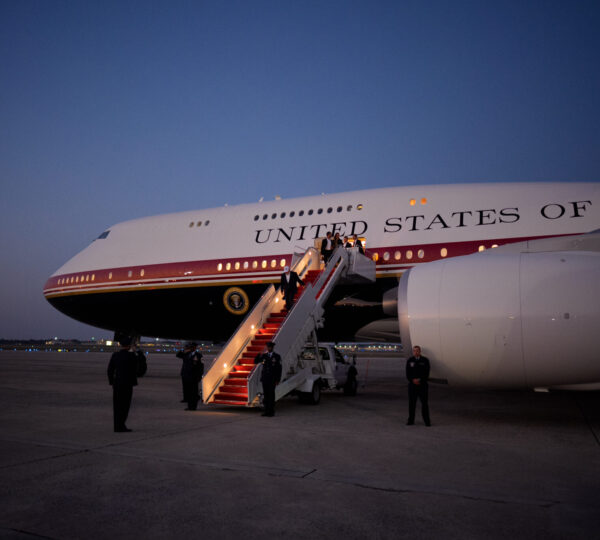
Following the aircraft’s first weeks in service, questions emerged regarding the level of defensive equipment installed on board. Some media reports suggested that additional security systems normally associated with presidential aircraft would still need to be incorporated. In response, White House Press Secretary Karoline Leavitt stated that the aircraft is considered safe for presidential travel and explained that the planned work represents part of a broader process of enhancing its capabilities rather than correcting an immediate safety concern. Officials emphasized that presidential aircraft routinely undergo maintenance and modernization throughout their operational lifetimes.
President Trump also addressed the subject after returning to Washington following the FIFA World Cup Final. Responding to questions from reporters about reports concerning defensive systems, he stated that the aircraft already possessed substantial capabilities but would soon undergo another phase of upgrades. According to his remarks, the aircraft is expected to be “maxed out” with additional enhancements during the upcoming modification period. Trump indicated that the work could take approximately one month before the aircraft returns to presidential service.
During the period when the Boeing 747 is undergoing further modifications, the President is expected to resume using one of the previously operating Air Force One aircraft for official travel. Such transitions are not unusual during maintenance periods involving specialized government aircraft. Presidential transportation is supported by extensive planning, multiple backup aircraft, and specialized military personnel responsible for ensuring continuity of operations regardless of which aircraft is assigned to a particular mission.
The aircraft has also attracted public attention because reports have described it as a gift accepted from the government of Qatar for interim presidential use. That aspect of the arrangement has generated discussion among lawmakers, constitutional scholars, and political commentators. Some critics have questioned whether accepting such an aircraft raises ethical or constitutional issues, while others have argued that using the aircraft temporarily provides a practical solution as the long-running replacement program for the presidential fleet continues to face delays. These differing perspectives reflect an ongoing public debate rather than established legal conclusions.
Aviation specialists note that presidential aircraft differ substantially from commercial passenger jets despite sharing the same basic airframe. Extensive modifications are typically required to integrate secure communications, classified systems, defensive technologies, command-and-control capabilities, medical facilities, and other equipment necessary for transporting the President of the United States safely around the world. Much of this work occurs over extended periods and involves multiple government agencies as well as specialized aerospace contractors.
Because of those unique requirements, additional upgrades after an aircraft enters service are not uncommon. Large government aircraft frequently undergo scheduled modernization as new technologies become available or operational requirements evolve. Officials have indicated that the upcoming work is intended to further enhance the aircraft before it resumes regular presidential duties. The precise technical details of many presidential aircraft systems are generally not disclosed publicly for security reasons, but the administration has stated that the objective is to ensure the aircraft ultimately meets the highest standards expected for presidential transportation.
The discussion surrounding the aircraft has extended beyond aviation because Air Force One represents far more than a means of transportation. Every presidential aircraft functions as a secure mobile workplace, allowing the President to communicate with government officials, military leaders, and international partners while traveling. For that reason, any aircraft selected for presidential service must meet exceptionally demanding operational, communications, and security requirements before it can be relied upon for official missions around the world.
Although the Boeing 747 had already undergone extensive modifications before entering service, White House officials explained that additional upgrades are part of an ongoing process designed to further strengthen its capabilities. Government aircraft often receive phased improvements over time as specialized equipment is installed, tested, and certified. Aviation experts note that complex systems—including secure communications, defensive technologies, and mission-specific hardware—frequently require careful integration before becoming fully operational.
President Trump addressed the planned modifications after returning to Washington following the FIFA World Cup Final, where he had attended the championship match alongside numerous international guests. Speaking with reporters, he said the aircraft already possessed significant capabilities but would soon be sent for additional work to “max out” its systems. According to his comments, the modification process was expected to last approximately one month, after which the aircraft would return to service.
During that period, presidential travel is expected to continue using one of the previously operating Air Force One aircraft. The United States maintains multiple aircraft capable of supporting presidential transportation, ensuring official travel can continue without interruption while maintenance or upgrades are performed on another aircraft. Aviation planners routinely coordinate such transitions well in advance to maintain operational readiness and scheduling flexibility.
The aircraft has also remained at the center of public discussion because reports indicate it was accepted as an interim gift from the government of Qatar while the next-generation Air Force One program continues to experience delays. That arrangement has prompted debate among legal scholars, lawmakers, and policy analysts. Some have raised questions regarding ethics and constitutional considerations, while others have argued that the aircraft provides a practical temporary solution until the long-planned replacement fleet becomes available. These differing viewpoints reflect ongoing public debate rather than established legal findings.
Meanwhile, Boeing’s replacement Air Force One program has continued to face schedule challenges that have been widely reported over recent years. The project involves converting commercial Boeing 747 aircraft into highly specialized presidential transports through extensive engineering and testing. Because the aircraft must satisfy unique military, communications, and security requirements, the work is significantly more complex than producing a standard commercial airliner. Government officials have repeatedly acknowledged that these technical requirements contribute to lengthy development timelines.
Aviation analysts frequently emphasize that presidential aircraft undergo continuous maintenance throughout their service lives. Unlike ordinary passenger aircraft, these planes operate under highly specialized mission requirements and must remain prepared for domestic travel, international diplomacy, and emergency situations at any time. Routine inspections, software updates, structural improvements, and equipment modernization are considered normal components of long-term fleet management rather than unusual developments.
The recent attention surrounding the aircraft also illustrates how closely presidential transportation is followed by both the public and the media. Because Air Force One is one of the world’s most recognizable aircraft, changes involving its appearance, technology, or operational status often generate significant interest. At the same time, officials generally avoid discussing many specific security features in detail, citing operational security considerations and the need to protect sensitive information.
Beyond the public discussion, the upcoming maintenance period is expected to focus on preparing the aircraft for continued presidential use. While many technical aspects of the modifications have not been disclosed publicly, administration officials have stated that the goal is to ensure the aircraft satisfies the high standards expected for presidential operations. Once the work is completed, the aircraft is expected to resume official duties, while the broader Air Force One modernization program continues.
As developments continue, attention is likely to remain focused on both the interim aircraft and Boeing’s next-generation replacement program. Until new presidential aircraft are fully completed and delivered, updates regarding maintenance schedules, certification milestones, and modernization efforts will continue to be of interest to aviation observers and the general public.
At present, the confirmed information remains that the interim Boeing 747 is scheduled for additional upgrades, presidential travel will continue using existing aircraft during that period, and officials maintain that the planned work is part of ensuring the aircraft meets the operational standards required for presidential service.

