
Every so often, an old household object resurfaces and captures the attention of thousands of people online. Whether discovered in a forgotten kitchen drawer, an attic filled with family keepsakes, or a box of antiques, these unusual items often inspire curiosity and encourage people to learn more about everyday life in earlier generations. Many objects that once seemed ordinary have gradually disappeared from modern homes, leaving younger generations wondering what they were used for and why they were designed in such unusual ways.
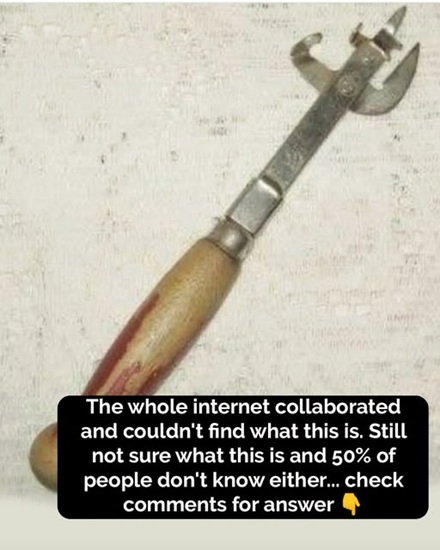
One recent example involved a small metal tool that was discovered while someone was cleaning out their grandmother’s home. At first glance, the object appeared difficult to identify. It featured a sharp metal point, a sturdy handle, and an unusual hooked shape that resembled a compact hand tool rather than a familiar kitchen utensil. Because its purpose was not immediately obvious, the person who found it shared a photograph online and asked others if they recognized it. The simple question quickly attracted widespread attention.
The discovery sparked an enthusiastic discussion among internet users from different backgrounds and generations. Some people immediately recognized the object because they had used one themselves many years ago. Others admitted they had never seen anything similar before and offered creative guesses about its original purpose. Suggestions ranged from camping equipment and fishing tools to military gear and antique household devices. The variety of responses reflected how quickly once-common objects can become unfamiliar as technology continues to evolve.

Several people who remembered using the tool identified it as an early manual can opener. Unlike the smooth, rotating handheld openers commonly found in kitchens today, this older design required users to pierce the metal lid before carefully working their way around the edge of the can. The process demanded patience, steady hands, and a certain amount of physical effort. While effective for its time, it required considerably more skill than modern designs.
As additional comments appeared, many individuals began sharing personal memories of using similar can openers while growing up. Some remembered seeing them in their parents’ or grandparents’ kitchens, while others recalled helping prepare meals using the sturdy metal tool. For many families, it represented an ordinary part of daily life during an era when convenience appliances were far less common than they are today. Although the design now appears primitive by modern standards, it once served an important purpose in millions of households.
Several contributors also remembered that using the vintage opener required caution. Because the sharp blade pierced the metal lid directly, rough edges could easily form around the opening. If the tool slipped during use, there was a possibility of minor cuts or scratches. These experiences became part of many people’s childhood memories, with several individuals recalling moments when they accidentally nicked a finger while helping open canned food. Such stories illustrated how household tasks have gradually become safer through improved product design.
Despite these memories, many people also expressed admiration for the durability of the old tool. Unlike many modern kitchen gadgets that rely on moving gears or complex mechanisms, the early can opener consisted of only a few solid metal components. With proper care, it could remain functional for decades. Some families passed these tools from one generation to the next, not because they were valuable antiques, but because they continued to work reliably year after year.
The online discussion eventually turned toward the history of canned food itself. Before can openers were invented, opening preserved food containers required entirely different methods. Early metal food cans were thick, heavy, and often lacked any built-in opening mechanism. Instructions printed on some early products even recommended using a hammer and chisel to access the contents. While practical for preserving food, these containers were not especially convenient for everyday use.
The invention of canned food transformed food storage during the nineteenth century. Advances in preservation made it possible to transport food over long distances and store it safely for extended periods. This proved especially valuable for military campaigns, long sea voyages, and communities where fresh food was not always readily available. However, the development of food preservation advanced more rapidly than the tools designed to open the containers, creating a need for more efficient solutions.
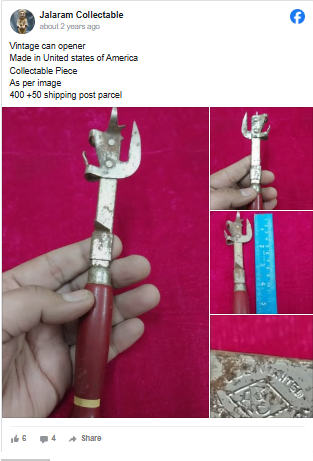
In 1858, American inventor Ezra Warner patented one of the first can openers specifically designed for metal food cans. His invention featured a sharp blade that pierced the lid while another component helped stabilize the tool as it moved around the edge of the container. Although effective, Warner’s design required careful handling and was used primarily by the military and commercial suppliers rather than ordinary households. It represented an important technological step but was not yet the convenient kitchen tool most families desired.
Over the following years, inventors continued searching for ways to improve the design. The growing popularity of canned food created demand for openers that required less effort and reduced the likelihood of injury. Engineers experimented with different blade shapes, rotating mechanisms, and cutting wheels, gradually introducing improvements that made opening cans faster and more comfortable. These innovations reflected the broader industrial changes taking place during the late nineteenth century as household tools became more specialized and user-friendly.
One of the most influential developments came in 1870 when inventor William Lyman introduced a rotary-style can opener. Instead of relying solely on repeated punctures around the lid, his design used a rotating cutting wheel that traveled around the top of the can. Although still requiring some practice, the mechanism represented a significant improvement over earlier models. Many historians consider Lyman’s invention the foundation upon which most modern manual can openers were later developed.
As canned food became increasingly common during the twentieth century, manufacturers continued refining both cans and the tools used to open them. Some products introduced built-in keys that allowed users to roll back thin metal lids without separate equipment. Others focused on improving manual openers by adding more comfortable handles, smoother gears, and stronger cutting wheels. Each generation of improvements made kitchen work simpler while reducing the physical effort required for everyday cooking.
The recent online discussion surrounding the mysterious kitchen tool demonstrates how everyday household objects can become fascinating historical artifacts over time. What was once considered a routine utensil is now unfamiliar to many younger people who have grown up using safer and more efficient kitchen equipment. Yet these older designs remain important reminders of how practical inventions evolve through decades of innovation, gradually improving comfort, safety, and convenience for future generations.
Although today’s can openers may appear simple, they represent more than a century of engineering improvements inspired by the changing needs of households around the world. Behind every modern kitchen tool lies a long history of experimentation, problem-solving, and creative design. The rediscovered vintage opener serves as a small but meaningful example of how ordinary objects can tell extraordinary stories about everyday life in the past.
As household technology continued to improve throughout the twentieth century, the humble can opener evolved alongside changing lifestyles. Manufacturers carefully studied how people used kitchen tools and looked for ways to make everyday tasks safer, faster, and more comfortable. Improvements in metal production, engineering, and industrial manufacturing allowed companies to redesign can openers with smoother cutting mechanisms, stronger gears, and handles that required less effort. What had once been considered a demanding task gradually became something that could be completed in just a few seconds.
One of the most significant improvements involved reducing the sharp edges created after opening a can. Earlier tools often left rough metal surfaces that required careful handling to avoid accidental cuts. Newer cutting wheels and improved blade positioning helped produce cleaner openings while reducing the amount of exposed metal. These developments not only made food preparation easier but also reflected a broader emphasis on household safety that became increasingly important during the twentieth century.
By the middle of the century, ergonomic handheld can openers had become common in many homes. These models featured comfortable handles, reliable turning mechanisms, and cutting wheels that required far less physical strength than earlier designs. Families appreciated the convenience, especially as canned foods became a regular part of grocery shopping. Vegetables, soups, fruits, beans, sauces, and seafood were now widely available in cans, making a dependable opener one of the most frequently used tools in the kitchen.
Electric can openers later introduced another level of convenience. Instead of manually rotating a handle around the lid, users could simply position the can beneath the cutting mechanism and allow the appliance to perform most of the work automatically. While electric models occupied more counter space, they proved especially helpful for individuals with reduced hand strength or limited mobility. Their popularity reflected the growing demand for kitchen appliances that simplified everyday household tasks.
Despite these technological advances, many experienced cooks continued to keep older manual openers in their kitchens. Vintage designs earned a reputation for durability because they were built almost entirely from solid metal components. Unlike some modern products containing plastic parts or complex mechanisms, older tools could often remain functional for decades with only minimal maintenance. Many owners appreciated their reliability and preferred them for certain types of cans or outdoor use.
Collectors of vintage kitchen equipment have also contributed to preserving the history of early can openers. Antique stores, flea markets, museums, and private collections frequently include examples from different periods, allowing people to observe how the design changed over time. These collections demonstrate that even simple household tools reflect broader developments in manufacturing, engineering, and everyday life. Objects once used without much thought now provide valuable insight into how previous generations prepared meals and managed household responsibilities.
The renewed interest generated by the online discussion illustrates how digital communities can help preserve practical knowledge that might otherwise disappear. Younger generations who had never encountered an early can opener were able to learn directly from individuals who had used one many years earlier. In this way, the internet became a place where personal memories, historical information, and practical experience came together to solve an everyday mystery.
Many participants in the discussion recalled that using the vintage opener required patience and attention. Unlike today’s rotating models, which usually guide themselves around the edge of a can, earlier versions depended heavily on the user’s technique. Developing confidence with the tool often came through repeated use. Families who relied on these openers became familiar with their operation through everyday experience, while newcomers sometimes found them challenging at first.
Several people also reflected on the sense of nostalgia inspired by the rediscovered tool. Household objects often become closely connected with memories of childhood, family meals, grandparents’ kitchens, or holiday gatherings. Seeing a familiar utensil can remind people of routines that once seemed ordinary but have gradually disappeared as technology changed. In that sense, the old can opener represented more than a kitchen tool—it became a reminder of family traditions and earlier ways of life.
The history of the can opener also demonstrates an important principle of innovation. Many inventions develop gradually rather than appearing fully formed. Designers identify problems, test possible solutions, improve existing ideas, and continue refining products over many decades. The can opener followed this same path, evolving from a basic piercing device into the efficient and safe kitchen utensil found in most homes today. Each generation of improvements built upon earlier inventions while responding to changing consumer needs.
Today, consumers can choose from a wide variety of can openers designed for different preferences and situations. Manual rotary models remain popular because they are compact, affordable, and dependable. Electric versions provide additional convenience, while safety openers that cut beneath the lid reduce exposure to sharp metal edges. Specialty openers have also been developed for people with arthritis or limited hand mobility, demonstrating how thoughtful design continues to improve accessibility for users with different needs.
Although modern technology has transformed countless aspects of everyday life, simple mechanical tools continue to hold an important place in many kitchens. Their effectiveness often lies in straightforward engineering rather than electronic components. The continued popularity of manual can openers shows that practical, well-designed tools can remain useful even as newer technologies emerge. Reliability, durability, and ease of maintenance continue to make these devices valuable household items.
The online mystery that began with a forgotten object inside a kitchen drawer ultimately became an educational journey through the history of food preservation and household innovation. What initially appeared to be an unfamiliar metal gadget turned out to represent more than a century of practical problem-solving. Thousands of people not only learned the identity of the tool but also discovered the historical context behind its creation and the important role it once played in everyday cooking.
Looking back, it is remarkable how a single household object inspired conversations among people of different ages and backgrounds. Some recognized it immediately from personal experience, while others encountered it for the first time through photographs shared online. Their combined knowledge transformed an ordinary discovery into an opportunity to appreciate the creativity behind one of the kitchen’s most familiar inventions.
The vintage can opener reminds us that even the simplest everyday tools often have rich histories waiting to be explored. Behind every practical invention lies the work of designers, engineers, manufacturers, and generations of users whose experiences contributed to continuous improvement. Whether displayed in a museum, preserved in a family kitchen drawer, or still used on occasion, the classic can opener remains a lasting symbol of practical innovation and the enduring value of thoughtful design.

