
Few criminal investigations in California history have generated as much attention as the case involving Randy Steven Kraft. For more than a decade, authorities across several jurisdictions investigated a series of killings that appeared to follow similar patterns. The investigation required cooperation among multiple law enforcement agencies, forensic specialists, prosecutors, and investigators who worked for years to determine whether the crimes were connected.
The case remains one of the most extensively documented serial homicide investigations in the state’s history and continues to be referenced in discussions about criminal profiling, forensic science, and multi-agency investigations. Randy Steven Kraft was born on March 19, 1945, in Long Beach, California, after his family relocated from Wyoming. Public records describe his upbringing as relatively ordinary, with his parents working to provide stability for their children during the post-World War II period.
Friends, neighbors, and teachers later described him as intelligent, organized, and polite. Those who knew him during childhood generally remembered a quiet young man who performed well academically and rarely attracted negative attention. Nothing in his public image during those early years appeared to suggest that he would later become associated with one of California’s most notorious criminal cases.
As a student, Kraft earned a reputation for academic ability and discipline. Former classmates described him as serious, respectful, and highly intelligent. He participated in student activities, developed an interest in politics, and later enrolled at Claremont Men’s College, where he studied economics. During his university years he became active in political organizations and campus discussions, reflecting the highly polarized social climate of the 1960s in the United States. According to historical accounts, his political views evolved over time as American society underwent significant cultural and political change.
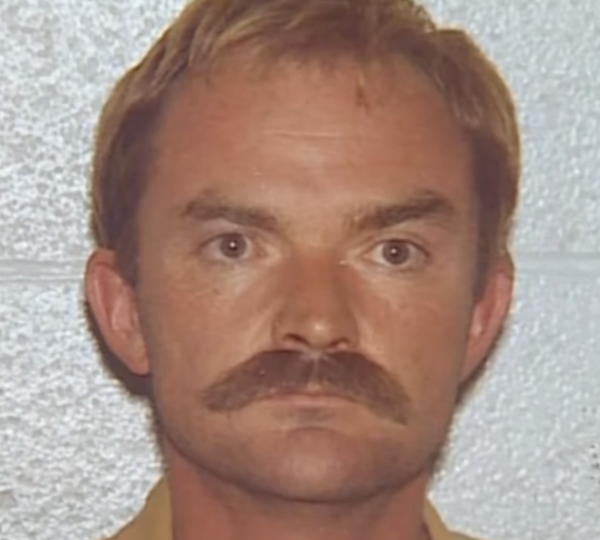
Following college, Kraft worked a variety of jobs before establishing himself as a computer programmer, a profession that was becoming increasingly important as technology advanced during the 1970s. Friends and coworkers often described him as articulate, dependable, and well spoken. He maintained employment, lived independently, and appeared to lead an ordinary life. Investigators later noted that his ability to maintain a normal public image made the investigation particularly challenging because there was little outward behavior that immediately drew law enforcement attention.
According to historical reports, one of the earliest known encounters between Kraft and law enforcement occurred in 1970, when a teenage runaway reported being drugged and sexually assaulted after accepting help from an older man. Police identified Kraft as a suspect during that investigation, and officers recovered evidence while searching his apartment. However, because legal procedures concerning the search became an issue, that evidence was ultimately ruled inadmissible in court. As a result, prosecutors were unable to pursue the case successfully at that time. Investigators would later view this incident as an important early event in the broader timeline of the investigation.
During the early 1970s, authorities in Southern California began investigating a growing number of homicide cases involving young male victims. Although each investigation initially proceeded independently, detectives gradually noticed similarities in victim profiles, methods, and locations where bodies were discovered. Because the incidents occurred across several counties and different law enforcement jurisdictions, recognizing the broader pattern required years of cooperation among investigators. At that stage, police had not yet identified a specific suspect, but they increasingly believed they were searching for a single offender.
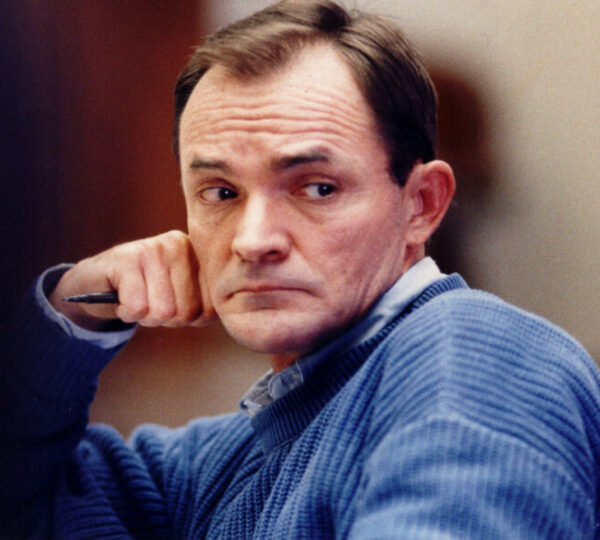
As forensic evidence accumulated and investigators compared reports from different jurisdictions, detectives began assembling a clearer picture of the crimes. The investigation relied on witness interviews, autopsy findings, crime scene analysis, missing person reports, and information shared between agencies throughout California. This collaborative approach, while common today, was far more difficult during the 1970s because computerized information-sharing systems were still limited. Detectives often relied on extensive manual record reviews and direct communication between departments to identify possible connections.
The investigation became increasingly complex as additional victims were identified over the years. Law enforcement agencies devoted substantial resources to reviewing evidence, interviewing witnesses, and attempting to reconstruct timelines that sometimes stretched back several years. Families of the victims waited for answers while investigators worked to determine whether the individual cases formed part of a larger pattern. The lengthy nature of the investigation reflected both the complexity of the evidence and the difficulties involved in connecting crimes committed across different jurisdictions over an extended period.
Everything changed during the early morning hours of May 14, 1983, when two California Highway Patrol officers stopped a vehicle traveling on Interstate 405 near Mission Viejo. According to court records, officers observed signs that the driver appeared impaired. During the traffic stop they discovered the body of Terry Gambrel, a 25-year-old U.S. Marine, inside the passenger compartment. That discovery immediately transformed what began as a routine traffic stop into one of the most significant criminal investigations in California history.
Following Kraft’s arrest, investigators obtained search warrants for his residence and vehicle. Court records indicate that detectives recovered numerous items that prosecutors later presented during trial, including photographs, personal property associated with victims, documents, and a handwritten list containing dozens of short coded entries. Investigators believed the list represented references connected to victims or crime scenes, although many entries have never been fully explained. The document became widely known as the “scorecard” and has remained one of the most discussed pieces of evidence associated with the case.
The evidence collected during the investigation formed the foundation of an extensive criminal prosecution. Over several years, prosecutors and defense attorneys examined thousands of pages of evidence, forensic reports, witness testimony, and investigative records. The legal proceedings would ultimately become one of the longest and most expensive murder trials ever conducted in Orange County, reflecting both the complexity of the evidence and the seriousness of the charges.
After Randy Kraft’s arrest in 1983, investigators from multiple California law enforcement agencies continued reviewing evidence gathered over many years. Detectives compared forensic reports, witness statements, missing-person records, and physical evidence collected from numerous crime scenes. Because several investigations had originally been handled by different police departments and sheriff’s offices, bringing together all of the available information required extensive coordination. Prosecutors spent years organizing the evidence before the case eventually proceeded to trial.
The prosecution argued that the evidence presented during the proceedings demonstrated a consistent pattern linking Kraft to the murders for which he was charged. During the trial, prosecutors introduced physical evidence, forensic findings, photographs, witness testimony, and investigative records collected throughout the lengthy investigation. Defense attorneys challenged the prosecution’s interpretation of that evidence and maintained that the case did not prove Kraft’s guilt beyond a reasonable doubt. As in every criminal trial, the jury was instructed to evaluate only the evidence presented in court and to apply the legal standard required under California law.
One of the most widely discussed pieces of evidence was a handwritten document investigators later referred to as the “scorecard.” The document contained dozens of short coded entries that investigators believed might correspond to victims, locations, or events connected to the broader investigation. Although prosecutors presented their interpretation of portions of the document during trial, many of the entries have never been conclusively explained. Over the years, investigators have continued examining the list while comparing it with unsolved homicide cases, but many questions remain unanswered.
The prosecution also presented evidence recovered through court-authorized searches following Kraft’s arrest. According to court records, investigators recovered photographs, personal property, documents, and other items that prosecutors argued connected the defendant to the charged offenses. The defense disputed aspects of the prosecution’s interpretation and argued that the evidence did not establish criminal responsibility in the manner alleged. These competing arguments formed a central part of the lengthy proceedings that unfolded before the jury.
Following months of testimony and deliberation, the jury convicted Randy Kraft in 1989 of 16 counts of murder, together with additional related offenses presented during the case. The court subsequently imposed a sentence of death under California law as it existed at that time. Before sentencing, Kraft maintained that he had not committed the crimes. Throughout the years since his conviction, he has continued to deny responsibility. His conviction and sentence were later reviewed through the appellate process, and the California Supreme Court upheld the judgment in 2000.
The conclusion of the trial provided a measure of legal resolution, but it did not answer every question investigators believed still remained. Law enforcement officials have continued to state publicly that they suspect Kraft may have been connected to additional unsolved homicide cases. Those suspicions are based on investigative analysis rather than additional convictions, and many of those cases remain officially unresolved. Detectives have periodically revisited evidence as forensic science has advanced, hoping that modern techniques might help identify victims or clarify outstanding investigative questions.
For many families affected by the investigation, the passage of time has not diminished the emotional impact of the crimes. Some relatives have publicly spoken about the importance of remembering the victims rather than focusing solely on the individual convicted. Others have expressed appreciation for the investigators who devoted years to examining evidence and pursuing answers across multiple jurisdictions. Their experiences illustrate the lasting human consequences that violent crime can have long after court proceedings have concluded.
Criminal justice researchers frequently cite the Kraft investigation as an example of the importance of cooperation among law enforcement agencies. During the years when the crimes occurred, information sharing between departments was far more limited than it is today. Advances in computerized databases, forensic science, DNA analysis, and interagency communication have significantly improved investigators’ ability to compare evidence across jurisdictions. Many experts believe that these developments have strengthened the ability of modern investigators to identify patterns that might previously have gone unnoticed.
The case has also been studied in academic and professional settings because it demonstrates the complexity of large-scale homicide investigations. Detectives, forensic specialists, prosecutors, and medical examiners each played important roles in assembling evidence over many years. Rather than relying on a single piece of evidence, investigators built their case through the careful examination of numerous independent sources of information. This methodical approach continues to influence investigative practices in complex criminal cases today.
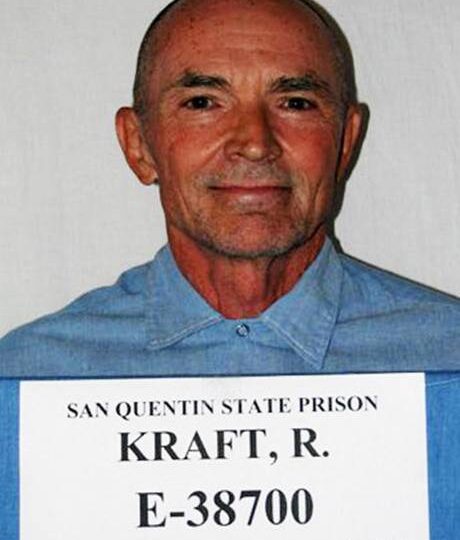
As of the latest publicly available information, Randy Kraft remains incarcerated within the California prison system while continuing to deny responsibility for the crimes of which he was convicted. Investigators have stated that they remain interested in resolving outstanding unidentified victim cases where evidence may still exist. For many families, the hope of obtaining additional answers remains an important part of the continuing effort to understand events that occurred decades ago.
Ultimately, the Kraft case is remembered not only because of the criminal proceedings themselves but also because it highlighted the importance of persistent investigation, careful forensic analysis, and cooperation between multiple law enforcement agencies. While many aspects of the broader investigation continue to be examined by researchers and investigators, the legal record clearly distinguishes between the murders for which Kraft was convicted and additional cases that remain matters of investigative suspicion rather than judicial determination. Remembering that distinction is essential to presenting the history of the case accurately and responsibly.
