

Social media has transformed the way people communicate, learn, and share ideas with one another. Every day, millions of videos, photographs, and short clips are uploaded to online platforms where they can reach audiences around the world within minutes. This rapid exchange of information has created many positive opportunities, from educational content and creative entertainment to community support and public awareness campaigns.
However, experts also point out that the same technology can sometimes contribute to the rapid spread of unsafe trends or misleading challenges, particularly when children and teenagers attempt to imitate videos without fully understanding the potential risks involved. Over the past several years, safety organizations, educators, and healthcare professionals have repeatedly encouraged parents to remain aware of online trends that involve potentially dangerous activities.
While many social media challenges are harmless or simply intended for entertainment, others involve the misuse of everyday household items or consumer products in ways that were never intended by their manufacturers. Officials emphasize that children and younger teenagers may not always recognize the risks associated with copying viral videos, making adult supervision and open communication especially important.
One recent example that has drawn attention from emergency officials involves NeeDoh Cubes, a popular sensory toy designed to be squeezed and manipulated with the hands. These toys are marketed as stress-relief and sensory products that slowly return to their original shape after being compressed. Their soft texture and simple design have made them popular among children and adults alike. When used according to the manufacturer’s instructions, they are intended to provide a safe sensory experience. However, authorities say problems can arise when the product is intentionally misused.

According to public safety warnings issued by fire officials, some social media videos have encouraged users to place NeeDoh Cubes inside microwave ovens in an attempt to make the toys softer or produce unusual visual effects. Emergency officials warn that this practice is extremely dangerous because the product was never designed to withstand high temperatures. Heating the toy can cause pressure to build inside the material, increasing the risk that it may suddenly rupture and release extremely hot contents capable of causing serious burn injuries.
The product packaging itself includes safety instructions advising consumers not to heat, microwave, freeze, or otherwise expose the toy to extreme temperatures. Manufacturers include these warnings because altering the product’s intended use can create hazards that are not present during normal play. Safety experts frequently remind consumers that warning labels are an important part of product safety and should always be followed carefully, particularly when children are involved.
Fire officials in Nassau County, New York, publicly described the reported social media trend as extremely dangerous and urged parents and caregivers to prevent children from attempting the activity. In public statements, officials explained that several burn injuries associated with the alleged misuse of the product had been reported. They emphasized that kitchens contain many potential hazards even for adults, making close supervision especially important whenever children are present near cooking appliances or other sources of heat.
Healthcare professionals have also expressed concern about the broader issue of online challenges involving household products. Pediatric emergency physicians note that children often act out of curiosity and may imitate behaviors they see online without fully appreciating the possible consequences. Medical experts therefore encourage parents to discuss internet safety with their children, explain why some online videos should not be copied, and remind them that popularity on social media does not necessarily mean an activity is safe or appropriate.
Public reports have also highlighted individual families who described injuries allegedly connected to the misuse of heated sensory toys. Such accounts have received widespread media attention because they illustrate how quickly a seemingly harmless object can become dangerous when used in a way that contradicts manufacturer instructions. While every reported incident is unique, safety professionals consistently emphasize the same message: products should always be used only as directed on their packaging.
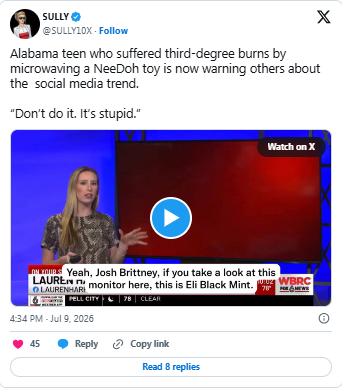
The manufacturer of NeeDoh products, Schylling, has also addressed the issue publicly. Company representatives have stated that consumer safety remains a top priority and reiterated that NeeDoh toys are not intended to be microwaved, heated, frozen, or exposed to extreme temperatures. The company expressed disappointment that videos demonstrating misuse of the product have circulated online and reminded consumers that ignoring the safety instructions may increase the risk of injury.
Safety experts say this situation serves as another reminder that online trends should always be approached with caution. Before attempting activities shown on social media, especially those involving heat, electricity, chemicals, or household appliances, families are encouraged to consider whether the activity follows manufacturer guidance and basic safety principles. Taking a few moments to verify information and discuss potential risks can help prevent accidents while allowing children to enjoy toys safely and responsibly.
The discussion surrounding the reported misuse of NeeDoh Cubes has become part of a much broader conversation about online safety and the influence of social media trends. Experts explain that the internet allows creative ideas and educational content to spread quickly, but it can also amplify activities that involve unnecessary risks. A short video lasting only a few seconds can be viewed by millions of people within hours, making it especially important for viewers to think critically before attempting to copy what they see. Safety professionals encourage families to remember that not every popular online activity has been created with safety in mind.
Child development specialists note that younger children often learn through observation and imitation. Because of this natural curiosity, they may assume that if an activity appears in a widely viewed online video, it must be safe. However, videos frequently show only a small portion of what actually happened and may omit important details, safety precautions, or negative outcomes. This is one reason educators and healthcare professionals recommend teaching children to ask questions and consult a trusted adult before attempting activities involving household appliances, heat, or consumer products.
Medical professionals also emphasize that burn injuries can occur very quickly and may require immediate evaluation depending on their severity. While every situation is different, healthcare providers encourage families to seek appropriate medical advice whenever a significant burn occurs rather than relying solely on information found online. Prompt medical assessment can help ensure that injuries receive appropriate care and reduce the risk of complications. Preventing accidents through safe product use remains the most effective approach whenever possible.
Fire safety officials regularly remind families that kitchens contain many potential hazards beyond cooking equipment alone. Microwaves, ovens, stovetops, and heated containers are designed for preparing food and should not be used with products that are not specifically intended for heating. Consumer products include instructions for a reason, and those directions are developed through testing designed to help reduce unnecessary risks. Following those instructions carefully is one of the simplest and most effective ways to promote safety at home.
The manufacturer, Schylling, has publicly reaffirmed that NeeDoh sensory toys should be used only as directed. Company representatives have stated that the toys are not designed to be microwaved, frozen, or exposed to extreme temperatures. By repeating these recommendations, the company aims to reinforce the importance of proper product use and reduce the possibility of injuries resulting from activities that differ from the intended purpose of the toy. Manufacturers across many industries routinely encourage consumers to read warning labels before using any product.
Parents and caregivers can also play an important role by maintaining open conversations about digital media. Rather than simply discouraging children from using social media, many experts recommend discussing how online content is created, why some videos may encourage risky behavior for entertainment or attention, and how to evaluate information responsibly. Teaching digital literacy helps children develop the ability to distinguish between creative entertainment and activities that should not be copied in real life.
Another valuable strategy involves encouraging children to share interesting online videos with trusted adults before attempting them. This creates opportunities for discussion while helping children learn how to evaluate potential risks. Families can use these conversations to reinforce broader lessons about critical thinking, responsible decision-making, and respecting safety instructions provided by manufacturers and public officials. Building these habits early may help children make safer choices both online and offline as they grow older.
Safety organizations frequently stress that responsible social media use is a shared responsibility. Content creators, parents, educators, manufacturers, and viewers all contribute to creating a safer digital environment. When potentially dangerous activities are identified, timely public warnings from emergency officials, healthcare providers, and companies can help raise awareness and encourage safer behavior. These collaborative efforts aim to reduce preventable accidents while allowing people to continue enjoying the positive aspects of online communities.
Although incidents involving product misuse often receive significant public attention, they also provide opportunities for education. By understanding why certain products should only be used according to their instructions, families can better appreciate the purpose of warning labels and safety guidance. Everyday precautions, such as supervising younger children in the kitchen, storing potentially hazardous items responsibly, and discussing online trends openly, can contribute to a safer home environment without reducing children’s opportunities for play and creativity.
Ultimately, the reported NeeDoh Cube incidents serve as a reminder that even ordinary household products can become hazardous when used in unintended ways. Following manufacturer instructions, encouraging thoughtful online behavior, and maintaining open communication within families remain among the most effective ways to reduce unnecessary risks. As technology continues connecting people across the world, combining curiosity with careful judgment can help ensure that online inspiration leads to safe and positive experiences rather than preventable accidents.

