
Public figures often share only a small portion of their private lives, yet there are moments when personal experiences become part of wider public conversation. One such story is that of Spanish actress, television presenter, and writer Ana Obregón, whose life changed dramatically after the death of her only son, Aless Lequio. In the years that followed, Ana spoke openly about grief, family, and a deeply personal decision that attracted international attention while prompting conversations about ethics, assisted reproduction, and the many different ways people cope with profound loss.
For decades, Ana Obregón has been a familiar figure in Spanish entertainment. Throughout her career she worked as an actress, television host, screenwriter, and public personality, appearing in numerous television productions and becoming one of Spain’s most recognizable celebrities. Although her professional achievements brought widespread recognition, Ana has repeatedly explained in interviews that her greatest source of happiness came from being the mother of her only child, Aless Lequio.
Aless, whose full name was Aless Lequio Obregón, was the son of Ana Obregón and Italian aristocrat and television personality Alessandro Lequio. As he grew older, Aless established his own professional career while remaining close to both of his parents. Family photographs and public appearances frequently reflected their strong relationship, and Ana often described motherhood as the most important role in her life. Their close bond became even more evident after Aless was diagnosed with cancer at a young age.

According to public reports, Aless was diagnosed with an aggressive form of cancer in 2018 when he was only twenty-five years old. The diagnosis marked the beginning of an extended period of medical treatment that included care in both Spain and the United States. During those difficult years, Ana stepped away from many professional commitments in order to remain beside her son throughout his treatment. She later explained that supporting him during every stage of his illness became her absolute priority.
Despite receiving specialized medical care, Aless died in May 2020 at the age of twenty-seven. His death prompted an outpouring of sympathy from colleagues, fans, and members of the Spanish public. For Ana, however, the loss represented something far deeper than public tragedy. In numerous interviews over the following years, she described the experience as life-changing, explaining that the death of a child is a form of grief unlike any other. She has consistently emphasized that such a loss is not something a parent simply overcomes but rather something they gradually learn to live with.
Ana has spoken candidly about the emotional consequences of losing her son. In interviews published after his death, she explained that everyday routines became extremely difficult and that she struggled to find meaning in ordinary life. She has described herself during that period as emotionally disconnected, explaining that although time continued moving forward, her own sense of purpose had largely disappeared. Her willingness to discuss grief publicly has resonated with many families who have experienced similar losses, encouraging broader conversations about bereavement and emotional healing.
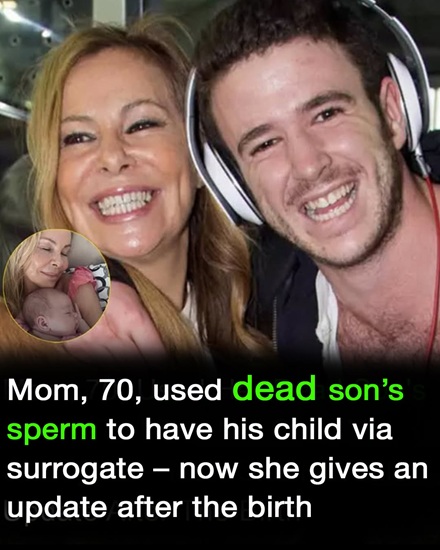
In 2023, Ana again became the focus of international media attention after announcing the arrival of a baby born through gestational surrogacy in the United States. Initial media reports led many people to believe that Ana had become a mother once again. Shortly afterward, however, she clarified that the child was not her daughter but her granddaughter, conceived using sperm that had been preserved by Aless before his death. Ana explained publicly that fulfilling what she described as her son’s wish to become a father had been an important factor in her decision.
In interviews with the Spanish magazine ¡Hola!, Ana stated that she intends to tell her granddaughter about her father when she is old enough to understand. She has spoken respectfully about preserving Aless’ memory within the family while emphasizing the importance of honesty regarding the child’s origins. According to Ana, she hopes her granddaughter will grow up knowing who her father was and understanding the love her family continues to hold for him.
The circumstances surrounding Anita’s birth also attracted legal and ethical discussion because commercial surrogacy is not legally permitted in Spain. The child was born in the United States, where the legal framework differs from Spanish legislation. Following the birth, Ana completed the legal procedures necessary under Spanish law to become the child’s legal guardian through adoption. Legal experts noted that the case highlighted differences between reproductive laws in various countries rather than changing Spain’s existing legislation.
The story prompted widespread public discussion across Spain and internationally. Some commentators expressed support for Ana’s decision, viewing it as a deeply personal response to extraordinary grief and a way of honoring what she described as her son’s wishes. Others raised ethical, legal, and philosophical questions regarding posthumous reproduction, surrogacy, and the responsibilities involved in raising a child under such unique circumstances. These differing perspectives reflected broader societal conversations rather than a single universally accepted viewpoint.
Throughout these discussions, Ana consistently returned to one central theme: the enduring love between a parent and child. Regardless of differing opinions surrounding surrogacy or reproductive law, she has repeatedly explained that her decisions were shaped by profound personal loss and by her desire to preserve her son’s memory within the family. Her public statements have focused less on controversy and more on describing the emotional reality of grief, remembrance, and continuing to find purpose after experiencing one of life’s most devastating losses.
As time has passed, Ana Obregón has continued to speak openly about life after the loss of her son, offering a deeply personal perspective on grief and resilience. Rather than suggesting that grief ever disappears completely, she has consistently explained that it becomes something a person gradually learns to live alongside. Her interviews have resonated with many families who have experienced bereavement because they reflect emotions that grief counselors and mental health professionals often describe: the understanding that healing does not necessarily mean forgetting, but instead finding a way to continue living while carrying the memory of a loved one.
In several interviews published after Anita’s birth, Ana described how the atmosphere inside her home had changed. She explained that everyday life once again included children’s toys, storybooks, stuffed animals, and the joyful routines that accompany caring for a young child. According to her own words, the house became filled with laughter and activity in ways she had not experienced since Aless was alive. Although she has acknowledged the physical demands of raising a young child later in life, she has also said those daily moments have brought renewed purpose to her routine.
Ana has spoken candidly about the realities of becoming the primary caregiver for a young child at the age of seventy. She has remarked with humor that lifting Anita has become more physically demanding as the little girl grows stronger and more active. At the same time, she has emphasized that spending time playing, reading, and caring for her granddaughter brings a sense of fulfillment that outweighs many of the practical challenges. Her comments reflect the realities faced by many older caregivers who balance the joys of family life with the natural changes that accompany aging.
At the same time, Ana has never suggested that Anita replaced Aless or erased the pain of losing him. On the contrary, she has repeatedly explained that those are two entirely different relationships. In interviews marking Anita’s birthdays and other family milestones, she has stated that the loss of a child is something a parent never truly accepts or overcomes. Instead, she says, people gradually learn to continue living while keeping that love and memory present in their everyday lives. Her reflections emphasize that grief and happiness can exist together rather than canceling each other out.
One of the reasons Ana’s story has attracted international attention is that it intersects with several complex subjects, including assisted reproduction, surrogacy, inheritance, family law, and bioethics. Different countries maintain different legal frameworks regarding these issues, and regulations vary considerably around the world. Consequently, legal experts, ethicists, and policymakers have discussed the case from multiple perspectives, often focusing on existing legislation rather than on Ana herself. These conversations illustrate how advances in reproductive medicine continue to raise new legal and ethical questions for societies worldwide.
The public response has likewise reflected a wide range of viewpoints. Some individuals have expressed admiration for Ana’s openness in discussing grief and her determination to honor what she described as her son’s wishes. Others have questioned aspects of posthumous reproduction or surrogacy, citing ethical, legal, or personal concerns. Such differing opinions are common whenever complex family, medical, and legal issues intersect. Throughout these discussions, Ana has generally emphasized that her decisions were deeply personal and rooted in the unique circumstances surrounding her family’s experience.
Beyond the legal and ethical debate, Ana’s interviews have also contributed to broader conversations about parental grief. Mental health professionals frequently explain that every individual experiences bereavement differently and that there is no single “correct” path through mourning. Some people find comfort in family, others through community, work, faith, creative expression, or charitable activities. Ana’s experience represents one personal journey rather than a universal model, illustrating how different families seek meaning after profound loss in different ways.
Throughout her public statements, Ana has consistently expressed her desire for Anita to grow up knowing about her father. She has said that she plans to share stories about Aless, describe the values he represented, and explain how deeply he was loved by his family. In doing so, she hopes to preserve family history while ensuring that future generations understand the people who came before them. Many family historians and psychologists recognize storytelling as an important way of maintaining connections across generations and preserving personal memories.
Today, Ana continues balancing public life with her responsibilities as Anita’s legal guardian. While she occasionally gives interviews discussing motherhood, grief, and family, she has also emphasized the importance of providing Anita with a loving, stable, and supportive environment. Her public comments generally focus on everyday family life rather than controversy, reflecting her desire to concentrate on raising her granddaughter while continuing to honor Aless’ memory with dignity and respect.
Ultimately, Ana Obregón’s story extends beyond celebrity news. It raises thoughtful questions about love, loss, memory, family, medical advances, and the many ways people respond to extraordinary circumstances. Regardless of differing opinions surrounding the legal or ethical aspects of her decision, the story illustrates the enduring bond between a parent and child and the deeply personal nature of grief. As Ana herself has repeatedly explained, although the pain of losing Aless remains, she continues moving forward one day at a time while cherishing both his memory and the new responsibilities that have become part of her life.

