
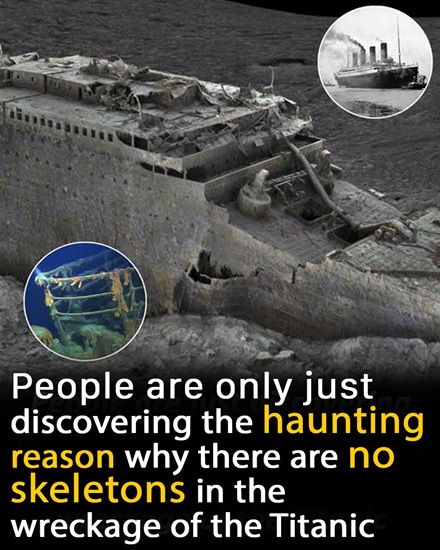
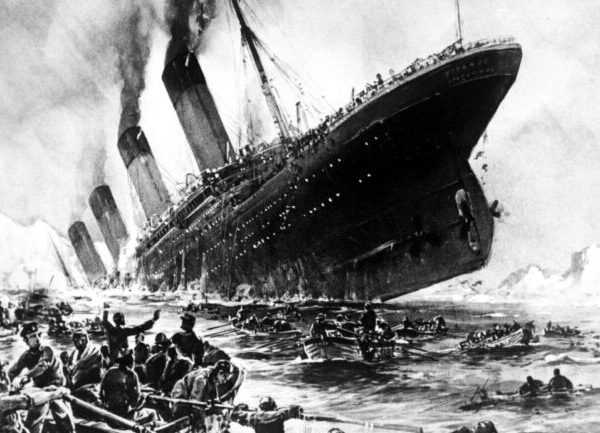
More than a century after the sinking of the RMS Titanic, the disaster continues to be one of the most extensively studied maritime tragedies in history. The ship departed Southampton, England, on April 10, 1912, on its maiden voyage to New York City. Designed by Harland & Wolff for the White Star Line, Titanic was among the largest and most technologically advanced passenger liners of its time. Although it incorporated numerous safety features considered impressive for the early twentieth century, the ship struck an iceberg late on the evening of April 14, 1912, and sank during the early hours of April 15.
More than 1,500 passengers and crew members lost their lives, making it one of the deadliest peacetime maritime disasters in history. In the decades that followed, the tragedy became the subject of extensive historical research, survivor testimonies, engineering investigations, documentaries, books, and scientific expeditions. While many aspects of the sinking have been carefully documented, one question continues to capture public attention: why have explorers found so few human remains at the wreck site despite the enormous loss of life?
The answer is not the result of a single factor but rather a combination of recovery efforts in 1912, deep-ocean conditions, marine biology, chemistry, and the passage of more than one hundred years. For many decades, the exact location of Titanic remained unknown despite numerous attempts to find it. Although investigators had a general idea of where the ship had gone down based on distress signals and survivor accounts, the North Atlantic covers an enormous area, and the wreck rested at an extraordinary depth of approximately 12,500 feet (about 3,800 meters).
Locating a vessel that had broken apart during its descent required technology that simply did not exist during much of the twentieth century. Advances in underwater imaging, remotely operated vehicles, and deep-sea exploration eventually made such a search possible.
On September 1, 1985, an expedition led by oceanographer Robert Ballard and French researcher Jean-Louis Michel successfully located the wreck approximately 400 miles (640 kilometers) southeast of Newfoundland, Canada. Rather than searching directly for the ship itself, Ballard’s team followed a debris trail scattered across the ocean floor, a technique previously used in locating other deep-sea wrecks. This approach ultimately led the expedition to the bow section of Titanic, marking one of the most significant discoveries in maritime archaeology.
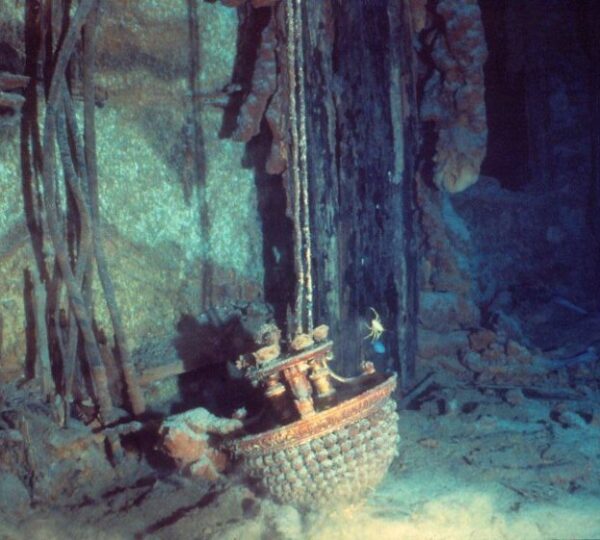
The discovery revealed that the ship had separated into two major sections during its descent. The bow remained relatively intact compared with the stern, which suffered extensive structural damage as it descended toward the seabed. Between the two sections lay a vast debris field covering several square miles. Thousands of objects—including dishes, bottles, luggage, furniture, personal belongings, machinery, and fragments of the ship’s structure—had settled across the ocean floor. These artifacts provided historians with valuable insight into both the ship’s construction and the experiences of those aboard.
One observation quickly attracted worldwide attention. Despite the extensive debris field and the enormous number of people who perished, explorers found remarkably few visible human remains. Instead, they frequently encountered personal items such as shoes, boots, clothing, eyeglasses, suitcases, and other belongings resting quietly on the seabed. In some locations, pairs of shoes remained positioned close together, leading researchers to believe they may mark places where human remains once existed before natural decomposition processes occurred over many decades.
This absence has sometimes been misunderstood as mysterious, but marine scientists explain that it is consistent with known biological and chemical processes occurring in the deep ocean. After the sinking, many victims either remained on the ocean surface, where recovery ships searched for survivors and bodies, or eventually descended to the seabed. Historical records indicate that recovery vessels, including the cable ship Mackay-Bennett and several others, recovered 337 bodies in the days following the disaster. Some were buried at sea because preservation at the time was limited, while many others were transported to Halifax, Nova Scotia, for identification and burial. Hundreds of additional victims, however, were never recovered during those initial efforts.
For those who eventually reached the ocean floor, the environment surrounding the wreck differed dramatically from conditions near the surface. At depths approaching 3,800 meters, sunlight never penetrates, temperatures remain only slightly above freezing throughout the year, and water pressure exceeds 5,500 pounds per square inch (about 380 atmospheres). These conditions support specialized marine ecosystems composed of bacteria, crustaceans, fish, worms, and other deep-sea organisms adapted to surviving in complete darkness. Although this environment appears quiet and lifeless to human observers, it remains biologically active.
Marine organisms contribute to the gradual breakdown of organic material that reaches the seabed. Soft tissues naturally decompose through biological processes involving bacteria and scavenging organisms. Over many decades, these processes remove much of the organic material while leaving behind more durable objects such as leather shoes, glass bottles, ceramics, and metal artifacts. The continued presence of shoes near portions of the wreck has therefore been interpreted by researchers as indirect evidence that human remains may once have been present before natural decomposition occurred.
Another important scientific explanation involves the chemistry of deep seawater. Robert Ballard and other oceanographers have explained that Titanic lies below what scientists call the calcium carbonate compensation depth (CCD). Below this depth, seawater contains relatively low concentrations of dissolved calcium carbonate compared with shallower environments. Because human bones consist largely of mineral compounds that include calcium phosphate and interact with surrounding seawater chemistry over long periods, exposed skeletal material may gradually deteriorate under these deep-ocean conditions after soft tissues have disappeared. This process, combined with biological activity and the passage of more than one hundred years, helps explain why intact skeletons are rarely observed at the wreck site.
These scientific findings have been supported by decades of deep-sea exploration conducted by research institutions and experienced submersible teams. Explorers, including filmmaker James Cameron, who has participated in numerous expeditions to Titanic, have consistently reported observing clothing, footwear, and personal belongings but not intact human remains during their documented dives. Their observations align with current scientific understanding of decomposition and preservation within the extreme environment of the North Atlantic deep ocean.
Rather than diminishing the significance of the tragedy, these discoveries have reinforced the importance of treating the wreck as both a historical site and a maritime memorial. Researchers generally approach the area with considerable respect, recognizing that it represents the final resting place of more than 1,500 people. Modern expeditions emphasize documentation, archaeological study, and conservation while carefully considering the ethical responsibilities associated with exploring one of history’s most well-known shipwrecks.
Since its discovery in 1985, the RMS Titanic has become one of the most extensively studied shipwrecks in the world. Numerous scientific expeditions have returned to the site using advanced deep-sea technology, including remotely operated vehicles (ROVs), autonomous underwater vehicles (AUVs), and specialized submersibles capable of operating nearly 4,000 meters below the ocean’s surface. These missions have allowed researchers to document the ship’s condition in remarkable detail while improving our understanding of deep-ocean archaeology and marine science.
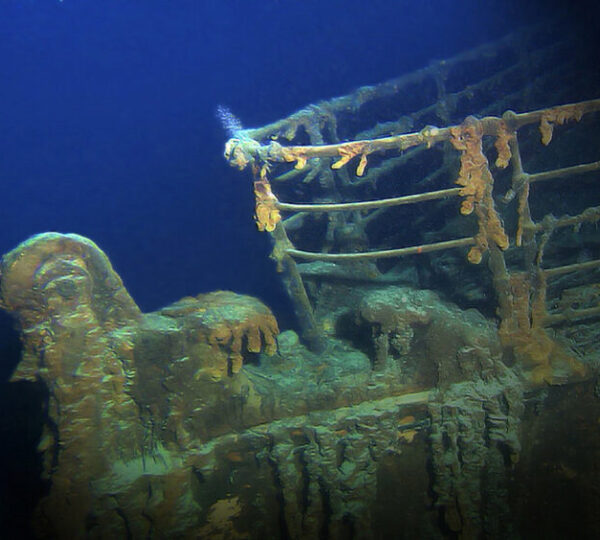
One of the most significant findings from these expeditions is that the wreck continues to change over time. Although the bow remains recognizable, many sections of the ship have gradually weakened after more than a century beneath the Atlantic Ocean. Exposure to saltwater, immense pressure, ocean currents, and biological activity has contributed to the ongoing deterioration of the structure. Researchers regularly compare modern images with photographs taken during earlier expeditions to monitor how the wreck evolves and to better understand long-term corrosion in deep marine environments.
Scientists have identified colonies of specialized microorganisms living on the ship’s iron surfaces. These microorganisms contribute to the formation of structures commonly called rusticles, which resemble long rust-colored formations hanging from the vessel. Rusticles develop as bacteria interact with the iron, gradually breaking down parts of the ship over many years. Although corrosion also occurs through ordinary chemical processes, microbial activity has become an important area of research because it helps explain the steady deterioration observed since the wreck was first discovered.
Because of this ongoing decay, many researchers believe the ship will continue to collapse gradually over the coming decades. Predicting an exact timeline is difficult because corrosion rates vary depending on environmental conditions, structural stability, and biological activity. Nevertheless, marine scientists generally agree that the wreck will not remain intact indefinitely. Careful documentation conducted today therefore preserves valuable historical information for future generations, even as the physical structure slowly changes beneath the sea.
In addition to scientific surveys, expeditions have recovered numerous artifacts from the surrounding debris field over the years. These items include porcelain dishes, glass bottles, luggage, jewelry, personal accessories, navigation instruments, clothing-related objects, and sections of the ship itself. Each recovered artifact undergoes careful conservation because materials that remain stable underwater for decades can deteriorate rapidly once exposed to air. Conservation specialists often spend months or even years stabilizing recovered objects before they are displayed in museums or educational exhibitions.
These artifacts provide historians with valuable insight into daily life aboard one of the world’s most famous passenger liners. Personal belongings help illustrate the diverse backgrounds of the passengers and crew, while engineering components reveal the remarkable craftsmanship involved in constructing a vessel of Titanic’s size during the early twentieth century. Together, these discoveries contribute to a more complete understanding of both the ship itself and the historical period in which it sailed.
At the same time, discussions continue regarding the ethical responsibilities associated with exploring Titanic. Many historians, archaeologists, and family descendants view the wreck as a maritime memorial because it represents the final resting place of more than 1,500 individuals. Others support limited artifact recovery when conducted under strict archaeological standards that preserve historical knowledge. Regardless of differing perspectives, there is broad agreement that the site should be approached respectfully and that scientific research should prioritize documentation, conservation, and historical understanding.
Public interest in Titanic has remained remarkably strong for more than a century. Books, museum exhibitions, documentaries, academic research, and films have introduced successive generations to the ship’s history. Historians continue examining original passenger lists, engineering records, wireless communications, weather reports, and eyewitness testimony to refine our understanding of the disaster. Advances in digital imaging and three-dimensional mapping have further expanded opportunities to study the wreck without unnecessary disturbance to the site itself.
Interest in Titanic also intensified following the 2023 Titan submersible accident during an expedition to the wreck site. The loss of the submersible highlighted both the extraordinary challenges of deep-ocean exploration and the significant risks involved in operating at such extreme depths. Following extensive investigations, researchers and regulatory organizations continued emphasizing the importance of rigorous engineering standards, thorough safety evaluation, and careful planning for future deep-sea expeditions. The event also renewed public awareness of the technical complexity required to explore one of Earth’s deepest and most demanding underwater environments.
More than one hundred years after the sinking, Titanic continues to serve as an important subject for historians, engineers, oceanographers, archaeologists, and conservation specialists. The disaster contributed to major improvements in international maritime safety, including stronger requirements for lifeboat capacity, continuous radio communication, iceberg monitoring, and international cooperation in protecting passengers at sea. These reforms remain among the tragedy’s most enduring legacies and continue influencing maritime safety regulations today.
Ultimately, the story of the RMS Titanic extends beyond the loss of a single ship. It represents a combination of human ambition, technological achievement, scientific discovery, and lessons learned through tragedy. Ongoing research allows each generation to better understand the historical event while honoring those whose lives were lost. As the wreck continues its slow transformation beneath the Atlantic Ocean, careful scientific documentation ensures that its history, its lessons, and the memories of those connected to it will continue to be preserved for future generations.

