
Stories shared online about relationships often capture attention because they describe situations that are surprising, emotional, and difficult to imagine. One widely circulated personal account tells the story of a woman who said that what began as a peaceful flight home from vacation unexpectedly forced her to question years of trust within her marriage. Although the specific events described in the story have not been independently verified, the account has generated discussion about honesty, emotional manipulation, and the importance of open communication between partners.
According to the woman who shared the story, she and her husband had just finished what she described as one of their most enjoyable vacations together. She recalled spending several days relaxing, enjoying warm weather, sharing meals, and temporarily setting aside the responsibilities waiting for them back home. The trip, she explained, had been unusually calm, with no significant disagreements or obvious signs of tension. As they boarded their return flight, she believed they were ending the holiday on a positive note and looked forward to returning home together.
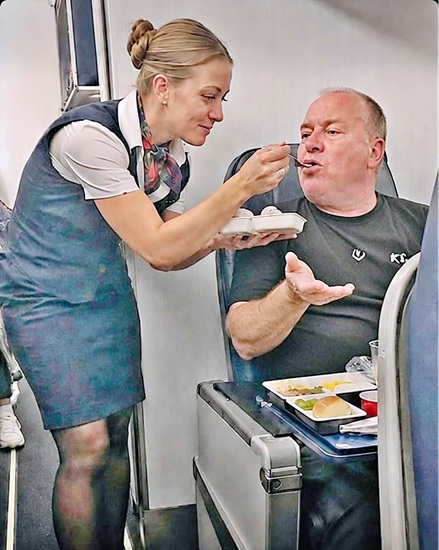
The atmosphere reportedly changed during the flight after she briefly left her seat to use the restroom. She estimated that she had been gone only a few minutes before returning to their row. As she approached, she noticed something that immediately caught her attention. According to her account, a flight attendant appeared to be helping her husband eat his meal by feeding him with a spoon. For a moment, she said she struggled to understand exactly what she was seeing because it seemed completely inconsistent with the healthy, independent person who had boarded the aircraft only a short time earlier.
The woman explained that her initial confusion quickly turned into embarrassment as she realized other passengers had also noticed the unusual scene. She described several nearby travelers watching quietly while the flight attendant continued assisting her husband. According to her recollection, her husband appeared surprised when he noticed her standing in the aisle. She approached both of them calmly but directly, asking what had happened and why assistance had suddenly become necessary during the meal service.
According to the story, the flight attendant immediately appeared uncomfortable and explained that the husband had told her he was experiencing severe hand tremors that prevented him from feeding himself safely. She reportedly said she had first asked whether anyone was traveling with him who might be able to help. In response, the husband allegedly told her that although his wife usually assisted him, she was upset with him during the trip and had refused to help. Believing she was assisting a passenger with a temporary physical difficulty, the flight attendant said she simply wanted to ensure he could finish his meal comfortably.
The storyteller said she immediately looked at her husband’s hands and observed no visible signs of shaking. According to her version of events, his hands rested normally on his lap without any obvious difficulty. She recalled feeling shocked not only by what she believed was a fabricated medical problem but also by the explanation he had allegedly given about her. She said she realized that, according to his account, she had unknowingly been portrayed as an uncaring spouse who refused to help her husband despite his apparent need for assistance.
Rather than immediately raising her voice, the woman explained that she first asked the flight attendant to clarify exactly what had been said. She recalled appreciating that the employee had acted in good faith based on the information available at the time. According to the account, once the misunderstanding became clear, the flight attendant appeared embarrassed and stepped back, recognizing that the situation involved a private disagreement between spouses rather than an onboard medical issue.
The woman then turned her attention to her husband and asked him directly whether he had ever done anything similar before. According to her account, he initially avoided answering but eventually acknowledged that he had exaggerated or invented similar situations on previous occasions. The story claims he later admitted that such incidents had allegedly occurred not only during airline travel but also in other public settings. Because these statements come solely from the personal narrative, they have not been independently confirmed and should be understood as part of the storyteller’s account.
According to the woman, the most troubling part of the conversation was not the fabricated request for assistance itself but the explanation her husband allegedly offered for involving her in the story. She claimed he admitted that assigning blame to another person often generated greater sympathy from strangers than presenting himself as someone simply experiencing a personal difficulty. In her telling, this realization fundamentally changed the way she viewed many past interactions, causing her to question whether similar stories might have been shared with other people throughout their marriage.
As the conversation continued, the husband reportedly began describing experiences from his childhood that he believed influenced his behavior. According to the account, he recalled periods during which illness within his family resulted in increased attention and support from relatives, neighbors, teachers, and friends. He allegedly explained that after life returned to normal, he felt that attention disappeared, leaving him with lasting feelings of being overlooked. The woman emphasized that these reflections represented his own explanation rather than a justification for the choices he had made over the years.
Mental health professionals often note that individuals can respond to childhood experiences in very different ways, and it is generally not possible to draw conclusions about someone’s psychological condition based solely on a personal story shared online. Feelings of loneliness, insecurity, or a desire for attention may have many different causes, and any concerns involving emotional well-being are best evaluated by qualified mental health professionals rather than through public speculation. Personal narratives can provide insight into an individual’s perspective, but they should not be interpreted as medical or psychological diagnoses.
The woman concluded this portion of her story by explaining that the events on the flight caused her to reconsider aspects of her relationship that she had previously overlooked. Whether every detail occurred exactly as described cannot be independently verified. Nevertheless, the account has prompted readers to discuss broader themes including honesty, trust, accountability, healthy communication, and the importance of addressing relationship concerns openly before misunderstandings become deeply rooted.
According to the personal account, the conversation that began during the flight continued after the aircraft landed, becoming one of the most significant discussions the couple had ever experienced. The woman explained that once they left the crowded cabin and entered the airport terminal, she found herself questioning not only what had happened during the flight but also whether similar situations might have occurred throughout their relationship without her knowledge. Rather than focusing solely on the incident itself, she described becoming increasingly concerned about what it suggested regarding trust and communication within their marriage.
The story goes on to describe the husband acknowledging that he had shared inaccurate or exaggerated accounts about their relationship with other people over the years. According to the narrator, he admitted that some relatives and acquaintances had been given the impression that their marriage was far more troubled than it actually appeared to be. Because these statements come exclusively from the woman’s account of the conversation, they have not been independently verified. Nevertheless, the narrative illustrates how misinformation within personal relationships can influence the way family members and friends perceive situations they have never witnessed themselves.
As the discussion continued, the woman recalled remembering several past interactions that suddenly seemed different when viewed through this new perspective. She described thinking about conversations with relatives who had unexpectedly offered advice or expressed concern about her marriage despite never having been directly involved in the couple’s daily life. At the time, she believed those comments reflected ordinary concern or general relationship advice. Looking back, however, she wondered whether some of those impressions had been shaped by inaccurate information that had gradually spread through private conversations over the years.
The account emphasizes the emotional impact of realizing that trust can be affected not only by actions but also by repeated misrepresentations. Trust is often described by relationship experts as something that develops gradually through honesty, consistency, and mutual respect. Likewise, rebuilding trust after it has been damaged usually requires openness, accountability, and a willingness from both individuals to address difficult conversations respectfully. Although every relationship is different, many counselors note that lasting progress generally depends upon acknowledging concerns honestly rather than minimizing or avoiding them.
The storyteller also reflected on the difference between explaining behavior and excusing it. According to her account, listening to her husband’s description of childhood experiences helped her better understand how he viewed certain situations, but she emphasized that understanding someone’s personal history does not automatically resolve the consequences of their actions. Mental health professionals frequently explain that life experiences may influence behavior, yet individuals remain responsible for the choices they make and for addressing unhealthy patterns in constructive ways.
Another important theme that emerges from the story is the value of seeking professional support when communication patterns become difficult to manage independently. Licensed therapists and relationship counselors often work with couples experiencing challenges involving trust, conflict, or communication. Professional guidance may provide a structured environment where both individuals can discuss concerns openly while learning healthier ways to express emotions and resolve disagreements. Every relationship is unique, and the most appropriate approach depends on the circumstances and the willingness of both partners to participate in the process.
The account also serves as a reminder that acts of kindness offered by strangers are usually based on compassion and a desire to help. According to the woman’s description, the flight attendant responded to what she believed was a passenger requiring assistance. Once she understood that the situation was more complicated than initially presented, she stepped away respectfully. The story therefore highlights the importance of providing accurate information to people who are genuinely trying to help others in good faith.
Communication experts frequently note that misunderstandings can become more difficult to resolve when inaccurate information is repeated over long periods of time. Honest conversations, even when uncomfortable, generally provide stronger foundations for relationships than stories intended to gain sympathy or avoid responsibility. Open communication allows individuals to address concerns directly while reducing the risk that false assumptions will influence relationships with family members, friends, or colleagues.
Although the dramatic details of this widely shared story cannot be independently confirmed, many readers have connected with its broader themes because they reflect challenges that can arise in many different relationships. Honesty, accountability, empathy, and respectful communication remain important regardless of the specific circumstances. Relationship specialists often encourage couples to address problems early, seek qualified professional guidance when needed, and work together toward solutions built on mutual respect rather than misunderstanding or manipulation.
Ultimately, the narrator concluded that she had not yet decided what the future of her marriage would look like. According to her account, she believed rebuilding trust would require meaningful effort, personal accountability, and a genuine commitment to change. She expressed hope that professional counseling could help both partners better understand the issues that had developed over time while creating an opportunity to rebuild healthier communication. Whether that outcome proves possible depends on the individuals involved and cannot be predicted from a single personal story.

