
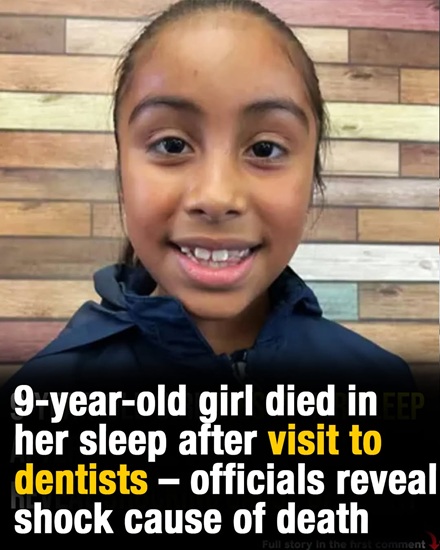
A routine visit to the dentist turned into an unimaginable tragedy for one California family after 9-year-old Silvanna Moreno died only hours after undergoing a dental procedure that included general anesthesia. The young girl, who lived in San Diego, had been experiencing ongoing tooth pain for several months before specialists recommended more extensive treatment. What was expected to be a procedure that would relieve her pain instead became the focus of a heartbreaking medical case that has drawn national attention.
Authorities have since investigated the circumstances surrounding her death, while medical experts continue to emphasize that the condition identified by investigators is extremely uncommon. The case has also renewed discussions about anesthesia safety, patient screening, and the importance of recognizing rare complications following medical and dental procedures. According to publicly reported information, Silvanna’s dental problems began in October 2024 when she started suffering from persistent pain in one of her teeth.
Despite efforts to manage the discomfort, the issue did not improve, and she was eventually referred to Dreamtime Dentistry in Vista, California, for specialized treatment. Dental professionals determined that she required a root canal on one of her molars, along with additional restorative work. Because several procedures needed to be completed during a single appointment, the treatment plan also included placing a dental crown and removing multiple severely decayed teeth, including both baby teeth and permanent teeth. The goal was to complete all necessary treatment during one visit while the child remained under anesthesia.

The appointment took place on March 18 and lasted for approximately three hours. According to statements later released by the dental clinic, the procedures themselves were completed without any reported complications. Dr. Ryan Watkins, identified by the clinic as its dentist anesthesiologist, administered the anesthesia and monitored the patient throughout the operation. The clinic later stated that Silvanna’s vital signs remained stable during the procedure and that she was continuously observed while under anesthesia.
Medical monitoring during dental procedures involving sedation is considered a standard safety practice designed to identify any signs of complications as early as possible. One detail that later became significant involved Silvanna’s health on the day before the procedure. Reports indicated that she had experienced a fever that resolved after receiving children’s Tylenol. Her mother later acknowledged that the fever had gone away before the appointment.
However, Dreamtime Dentistry stated that the clinic had not been informed about the recent illness. According to the practice, the pre-operative medical questionnaire completed before the procedure indicated that the patient was not sick. The clinic later said that if staff had been informed of a recent fever or illness, they would have postponed the appointment until the child had fully recovered. That issue has since become one aspect of the broader review into the events surrounding the case.
Following the completion of the dental work, Silvanna gradually woke up from the anesthesia. According to reports, she was able to open her eyes and stand before leaving the clinic with her family. Dreamtime Dentistry later stated that she was discharged while awake, with stable vital signs and intact protective reflexes, in accordance with its standard post-anesthesia discharge procedures. Medical facilities commonly observe patients after anesthesia to ensure they meet specific discharge criteria before being allowed to return home. The clinic has maintained that those criteria were satisfied before Silvanna left the office.

During the drive home, however, Silvanna remained very sleepy, which can occur after receiving anesthesia. Family members later described her as appearing groggy and “out of it” while she slept in the vehicle. They also reported that she was snoring loudly during the ride home. Once they arrived at their residence, relatives carried her inside so she could continue resting. At first, nothing appeared dramatically different from what they expected after a lengthy procedure involving anesthesia, and they allowed her to continue sleeping while they remained nearby and periodically checked on her.
According to accounts later shared publicly, Silvanna slept for roughly 90 minutes after arriving home. During that time, family members noticed that her snoring gradually became quieter and that her breathing appeared to slow. These changes caused increasing concern among relatives who were watching over her recovery. Her grandmother reportedly checked her heartbeat more than once after becoming worried about her condition. After noticing that Silvanna was no longer responding, the family immediately realized something was seriously wrong and contacted emergency services for assistance.
Emergency responders received the call at approximately 4:46 p.m., nearly six hours after the anesthesia had first been administered earlier that morning. Paramedics transported Silvanna to Rady Children’s Hospital, where doctors worked to save her life. Hospital staff determined that she was in asystole, a medical emergency in which the heart has stopped producing effective electrical activity. Despite extensive lifesaving efforts by emergency physicians and hospital personnel, Silvanna could not be revived. The loss of the young girl devastated her family and deeply affected everyone involved in her care.
Following her death, the San Diego County Medical Examiner conducted an investigation to determine the cause. According to the official findings, Silvanna died from methemoglobinemia in the setting of recent nitrous oxide administration. Methemoglobinemia is a rare medical condition in which an abnormal form of hemoglobin reduces the blood’s ability to carry oxygen effectively throughout the body. Medical experts note that the disorder may occur after exposure to certain medications or chemicals, although inherited forms also exist. The condition is considered uncommon, particularly in children, and prompt diagnosis is important because specific treatments are available in many cases when the condition is recognized early.
The medical examiner’s report also noted that multiple anesthetic medications administered during the dental procedure were contributing factors in the overall circumstances surrounding Silvanna’s death. However, the death was officially classified as accidental rather than intentional or the result of criminal conduct. Medical examiners classify deaths based on available evidence and medical findings, and an accidental ruling indicates that the fatal outcome occurred without evidence of intent to cause harm. Even so, the findings prompted further review of the case and generated widespread public discussion about anesthesia risks during pediatric dental procedures.
After the medical examiner released the findings, Dreamtime Dentistry issued additional public statements addressing the case. The clinic said that throughout the procedure Silvanna was continuously monitored by the dentist anesthesiologist and that her oxygen levels, heart rate, and other vital signs remained within acceptable ranges. According to the practice, there were no signs during the operation or the immediate recovery period that suggested the development of methemoglobinemia or another serious complication. The clinic also stated that Silvanna met the standard discharge criteria before leaving the office and that she was released into her mother’s care only after staff determined she was awake, had stable vital signs, and retained her normal protective reflexes.
Dr. Ryan Watkins also commented publicly after the medical examiner’s report became available. In statements reported by several news organizations, he explained that methemoglobinemia is a rare condition that can occur in association with nitrous oxide administration, although it is considered uncommon. He stated that Silvanna did not display the warning signs that healthcare providers typically associate with the condition while she remained at the clinic. Watkins added that if any indication of methemoglobinemia had been observed during treatment or recovery, the procedure would have been stopped immediately and the patient would have been transported to a hospital for emergency medical care. He further stated that the dental team reviewed the child’s medical and dental history before treatment and followed the clinic’s established safety protocols.
Medical experts note that methemoglobinemia is a rare disorder in which hemoglobin is altered in a way that limits its ability to carry oxygen efficiently throughout the body. Although inherited forms of the condition exist, acquired cases are more commonly linked to exposure to certain medications or chemicals. Healthcare organizations describe the condition as uncommon, and its symptoms can vary depending on the level of methemoglobin present in the bloodstream. Because the condition is rare, it may not always be immediately suspected, particularly if typical warning signs are absent. Early recognition and prompt treatment are considered important because effective therapies are available in many cases.
The case has also brought renewed public attention to pediatric dental anesthesia. Children who require multiple complex dental procedures during one appointment may receive sedation or general anesthesia when clinicians determine that it is appropriate. Decisions regarding anesthesia are generally based on factors such as the patient’s age, medical history, level of anxiety, and the amount of dental treatment required. Medical and dental organizations have established guidelines covering patient evaluation, monitoring during treatment, recovery procedures, and discharge requirements. Those guidelines are designed to reduce risk, although no medical procedure can be considered completely free of potential complications.
As the investigation continued, media reports revisited an earlier disciplinary matter involving Dr. Watkins. According to publicly available records cited by NBC News, the California Dental Board investigated an incident in 2016 involving an adult patient who experienced a serious medical emergency while under anesthesia during dental treatment. Investigators concluded that one of the anesthetic medications administered during that case should not have been used for that patient. The individual survived after emergency treatment, later filed a lawsuit, and the case was eventually settled. Following the Dental Board’s investigation, Watkins was placed on professional probation from 2020 until 2023. Public records indicate that the probation period concluded after the required conditions were completed.
The earlier disciplinary case has been widely reported alongside Silvanna’s death because it forms part of the dentist’s professional history. However, it is important to distinguish between separate incidents. The investigation into the 2016 case involved different medical circumstances, a different patient, and different findings than those identified by the San Diego County Medical Examiner in Silvanna’s case. Authorities reviewing the recent tragedy continue to evaluate the available evidence independently. Public reporting has not indicated that investigators have reached any conclusion linking the two cases beyond their association with the same dentist.
Following Silvanna’s death, Dreamtime Dentistry confirmed that it initiated an internal review of the events surrounding the procedure. Internal reviews are commonly conducted after serious medical incidents to examine documentation, clinical decisions, monitoring records, and established safety protocols. Such reviews may identify opportunities for improvement even when existing procedures were followed. At the same time, regulatory agencies and other authorities may conduct their own independent evaluations when appropriate. As of the latest publicly available information, the official cause of death remains classified as accidental by the medical examiner.
The heartbreaking loss has deeply affected Silvanna’s family, who have spoken publicly about the shock of losing a child after what they believed would be a routine dental procedure. Friends, relatives, and members of the community have expressed sympathy and support as the family continues to cope with the tragedy. Cases involving the unexpected death of a child often resonate widely because they remind families that even procedures considered routine can carry rare risks. Many healthcare professionals have also expressed condolences while emphasizing the importance of careful medical evaluation, clear communication between patients and providers, and ongoing research aimed at improving patient safety.
Medical specialists emphasize that serious complications from pediatric dental anesthesia remain uncommon, and millions of dental procedures are completed safely each year. Even so, experts encourage parents and caregivers to provide healthcare providers with complete and accurate medical information before any procedure, including recent illnesses, medications, allergies, or changes in a child’s health. They also recommend carefully following all post-procedure instructions provided by medical professionals and contacting emergency services immediately if a recovering patient experiences unexpected or rapidly worsening symptoms. These recommendations are intended to support patient safety and should not be interpreted as conclusions about any specific case.
Silvanna Moreno’s death remains a tragic reminder of how rare medical complications can have devastating consequences despite planned treatment and ongoing monitoring. The official findings released by the medical examiner, together with statements from the dental clinic and publicly available records, continue to shape the understanding of what occurred on March 18. While the internal review and any additional regulatory processes move forward, the case has prompted broader conversations about pediatric dental care, anesthesia practices, patient communication, and emergency preparedness. Above all, the story centers on the loss of a young girl whose family sought relief from months of dental pain but instead experienced an unimaginable tragedy that continues to be remembered across the United States.

