
On November 13, 1985, Colombia experienced one of the deadliest natural disasters in its history when the Nevado del Ruiz volcano erupted after nearly seven decades of relative inactivity. Although the eruption itself was considered moderate by volcanic standards, its consequences were catastrophic. The intense heat generated by the eruption rapidly melted the volcano’s snow and ice-covered summit, creating enormous volcanic mudflows known as lahars.
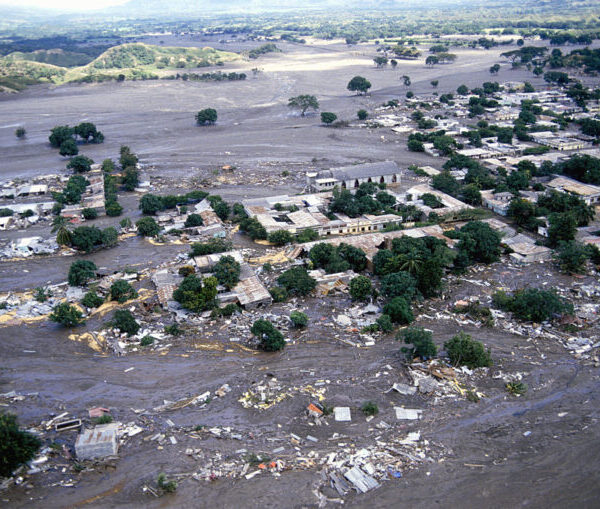
These fast-moving torrents of mud, rocks, water, ash, and volcanic debris rushed down the mountain valleys, destroying everything in their path. Within just a few hours, the peaceful town of Armero was almost completely erased from the map, leaving thousands of families devastated and forever changing Colombia’s history. The tragedy shocked not only Colombia but also the entire world because of its enormous human cost. Official estimates indicate that approximately 23,000 people lost their lives, representing nearly 94 percent of Armero’s population.
Thousands of homes, businesses, schools, churches, hospitals, and public buildings were destroyed as the powerful mudflows buried entire neighborhoods beneath several meters of mud and debris. Survivors described complete darkness, deafening noise, and overwhelming confusion as the disaster unfolded during the night, leaving many residents with almost no opportunity to escape.
What makes the Armero tragedy particularly heartbreaking is that scientists and volcanologists had warned about the danger months before the eruption occurred. Increased volcanic activity had been carefully monitored, including small explosions, earthquakes, sulfur emissions, and melting glaciers near the volcano’s summit. Experts prepared hazard maps showing exactly which communities would be threatened if lahars developed. Armero appeared prominently within the highest-risk zone. Researchers repeatedly urged authorities to prepare evacuation plans, educate residents, and take preventive measures before a major eruption occurred.
Unfortunately, those warnings did not result in immediate action. Several factors contributed to the delayed response, including disagreements among government officials, communication difficulties, political concerns, financial limitations, and uncertainty about whether a major eruption would actually occur. While emergency planning discussions continued, thousands of residents remained in vulnerable areas without being evacuated. When the eruption finally happened during the evening of November 13, the lahars reached Armero in only a few hours, leaving little time for organized evacuations or emergency response.
The lahars themselves became the true cause of the catastrophe rather than the volcanic eruption alone. Unlike flowing lava, lahars behave much like rapidly moving rivers of wet concrete. They carry enormous quantities of volcanic ash, rocks, trees, buildings, vehicles, and other debris while traveling at remarkable speeds. Because they follow river valleys, communities located many kilometers away from the volcano may still face devastating impacts. In Armero’s case, the town sat directly within the path of the Lagunilla River valley, making it exceptionally vulnerable once the glacier meltwater mixed with volcanic material.
Among the thousands of victims was 13-year-old Omayra Sánchez Garzón, whose story would become one of the most recognized human faces of the disaster. Born on August 28, 1972, Omayra lived in Armero with her parents and siblings. Like countless other families that evening, they remained awake as volcanic ash began falling over the town. Many residents believed the eruption would pass without major consequences because previous warnings had not resulted in evacuation orders. Within a short time, however, enormous mudflows arrived, destroying homes throughout the community.
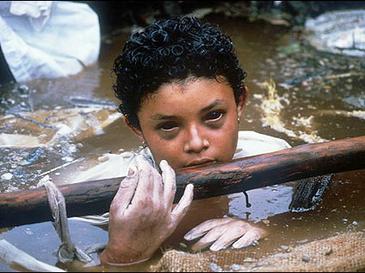
When rescue workers eventually reached Omayra, they discovered that she had become trapped beneath the remains of her collapsed house. Concrete, wooden beams, and other debris pinned her body below the waterline while her legs remained tightly trapped beneath the wreckage. Rescue teams quickly realized that freeing her would be extraordinarily difficult. Every attempt to remove the debris risked causing additional structural collapse or worsening her injuries. To prevent her from sinking beneath the muddy water surrounding her, rescuers placed a tire around her body to help keep her afloat while they searched desperately for possible solutions.
Over the next approximately 60 hours, rescue personnel, volunteers, journalists, doctors, and soldiers remained with Omayra as they continued searching for ways to save her. Throughout much of that time, she remained remarkably calm despite enduring unimaginable physical pain and emotional distress. Witnesses later recalled her speaking politely with rescuers, answering questions, asking for sweets, singing songs, and trying to remain hopeful even as her condition gradually deteriorated. Her courage during those long hours deeply affected everyone who met her.
Doctors eventually concluded that freeing Omayra alive would require amputating both of her legs because they were trapped beneath heavy concrete and structural debris. However, the necessary surgical equipment, blood supplies, anesthesia, operating facilities, and medical support simply were not available at the disaster site. The overwhelming scale of the catastrophe had stretched emergency resources far beyond their capacity. Thousands of other victims also required urgent rescue and medical treatment throughout the devastated region.
As hours passed, Omayra’s condition became increasingly serious. Continuous exposure to cold muddy water contributed to hypothermia, while prolonged compression of her lower body caused severe circulation problems. She gradually became exhausted and began experiencing hallucinations, sometimes speaking about school, classmates, homework, and a mathematics examination she feared she had missed. Those around her recognized these conversations as signs of both physical deterioration and extreme emotional stress.
Despite everything she endured, many witnesses remembered Omayra for her extraordinary composure. Journalists and rescue workers later described her as remarkably brave, displaying dignity far beyond her years. She continued speaking with those around her, occasionally smiling despite the circumstances, while everyone present understood that the situation was becoming increasingly hopeless. Her strength left an unforgettable impression on rescuers who desperately wished they could do more.
French photojournalist Frank Fournier arrived in Armero during the rescue efforts after traveling to Colombia to document the disaster. As he moved through the devastated town, he witnessed widespread destruction unlike anything he had previously experienced. Buildings had disappeared beneath mud, survivors searched desperately for loved ones, and rescue teams struggled with limited equipment while attempting to save as many lives as possible. It was during these efforts that Fournier encountered Omayra.
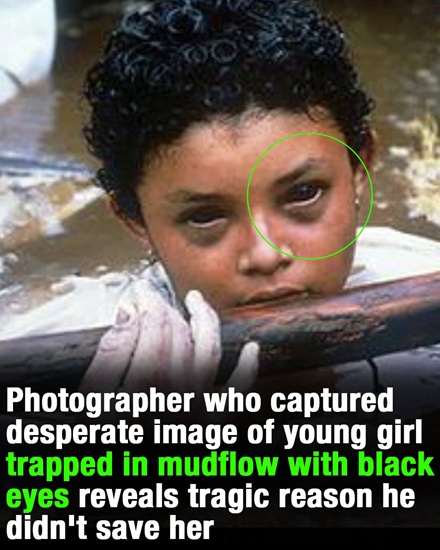
Deeply moved by her courage, Fournier photographed Omayra during the final hours of her life. The resulting image showed her partially submerged in muddy water, her face exhausted yet composed, with dark eyes reflecting extraordinary resilience despite overwhelming suffering. After publication, the photograph quickly spread across newspapers and magazines worldwide. It later received the prestigious World Press Photo of the Year award in 1986 and became one of the most recognized photographs in the history of photojournalism.
However, the image also generated intense ethical debate. Many people questioned why Fournier had taken photographs instead of attempting to rescue Omayra himself. Others believed the photograph served an essential purpose by exposing the enormous human consequences of the disaster and the failures that contributed to it. Fournier later explained that rescue workers had already exhausted every realistic option available and that he lacked both the equipment and expertise necessary to free her. Instead, he believed documenting her story would ensure that the world understood the true magnitude of the tragedy.
As Omayra’s condition continued to worsen, those surrounding her never stopped searching for possibilities, even when hope began fading. Rescue workers attempted to remove concrete slabs, wooden beams, twisted metal, and household debris piece by piece, but every effort revealed additional obstacles beneath the surface. Engineers, doctors, volunteers, and soldiers discussed possible solutions while racing against time. Unfortunately, the unstable wreckage made heavy machinery impossible to use safely, as any sudden movement could have caused fatal injuries. Despite their determination, the physical conditions at the site left rescuers with almost no practical options.
Throughout those difficult hours, Omayra became a symbol of courage rather than despair. Many journalists later recalled that she rarely complained about her pain. Instead, she often asked simple questions, spoke kindly to the people trying to help her, and remained remarkably composed despite the impossible circumstances. Rescue workers tried to keep her spirits high by talking with her, offering words of encouragement, and reassuring her that they were doing everything possible. Even though the situation grew increasingly desperate, no one wanted to abandon hope while she continued fighting for her life.
As time passed, the effects of prolonged exposure became more severe. Remaining trapped in cold, muddy water for many hours placed tremendous stress on her body. Medical professionals at the scene recognized that circulation problems, hypothermia, dehydration, and crush injuries were gradually becoming life-threatening. Without specialized surgical equipment or advanced emergency medical facilities available nearby, the chances of a successful rescue continued to decline. The disaster had overwhelmed hospitals, emergency responders, and transportation networks across the entire region.
During her final hours, Omayra occasionally became confused and began speaking about ordinary parts of her daily life. Witnesses recalled her mentioning school, classmates, homework, and an upcoming mathematics examination. These conversations reflected both her young age and the physical effects of the severe trauma she had endured. Despite moments of confusion, she also continued expressing love for her family and gratitude toward those trying to save her. Her strength deeply affected everyone who remained beside her throughout the rescue attempt.
On the morning of November 16, 1985, after nearly three days trapped beneath the rubble, Omayra Sánchez passed away. Medical experts later explained that multiple factors contributed to her death, including prolonged immersion in cold water, crush injuries, and the physical complications caused by being trapped for such an extended period. Her death became one of the most heartbreaking moments associated with the Armero disaster, not only because of her young age but because millions of people around the world had followed her rescue efforts through television broadcasts and newspaper reports.
Frank Fournier’s photograph of Omayra soon became one of the most recognizable images ever captured in the history of journalism. The photograph did far more than document one person’s suffering. It forced international audiences to confront the devastating human consequences of natural disasters and the importance of disaster preparedness. Many viewers described being profoundly moved by the image, while others admitted they had never before understood how deeply a single photograph could communicate both tragedy and resilience.
The publication of the photograph also sparked important discussions about the responsibilities of photojournalists. Some critics questioned whether photographers should continue documenting events when people are suffering. Others argued that photographs like Fournier’s play a critical role in informing the public, encouraging humanitarian assistance, and holding governments accountable when preventable tragedies occur. Fournier consistently explained that trained rescue personnel were already doing everything physically possible to save Omayra and that he could not have changed the outcome by himself.
In later interviews, Fournier emphasized that his goal was never to exploit Omayra’s suffering. Instead, he hoped the photograph would encourage greater awareness about disaster preparedness and emergency response. He believed the image illustrated not only one family’s tragedy but also the consequences of inadequate planning, delayed evacuations, and insufficient emergency resources. Over time, many journalism organizations came to view the photograph as an important example of documentary photography serving the public interest while preserving the dignity of its subject.
The Armero disaster itself prompted major changes within Colombia’s disaster management system. Government agencies carefully reviewed what had happened and introduced stronger emergency planning procedures for communities located near volcanoes and other natural hazards. Improvements included expanded volcanic monitoring, clearer evacuation protocols, better communication between scientists and government officials, and increased public education regarding emergency preparedness. These reforms were intended to reduce the likelihood of similar tragedies occurring in the future.
Nevado del Ruiz remains an active volcano today and continues to be closely monitored by Colombian geological authorities. Scientists regularly study seismic activity, gas emissions, ground deformation, and other indicators that could signal future eruptions. Modern monitoring technology provides significantly more information than was available during the 1980s, allowing emergency officials to respond more quickly if volcanic activity increases. While volcanic hazards cannot be eliminated, improved preparation has greatly strengthened the ability of nearby communities to respond safely.
Although the original town of Armero was never rebuilt on the same site, the area has become a place of remembrance. Memorials honor the thousands of people who lost their lives, and visitors continue to travel there to learn about the disaster and pay their respects. Crosses, monuments, and preserved landmarks remind future generations of the enormous human cost of the catastrophe. Survivors and family members regularly participate in remembrance ceremonies to ensure that those who died are never forgotten.
Omayra Sánchez’s story continues to be remembered through books, documentaries, educational materials, museum exhibits, and historical research. Her courage during her final hours has inspired countless people around the world. While her story remains deeply emotional, it also serves as a powerful reminder of the importance of listening to scientific warnings, investing in disaster preparedness, and ensuring that emergency response systems are adequately equipped before disasters occur rather than afterward.
The image captured by Frank Fournier remains one of the defining photographs of the twentieth century because it represents far more than a single tragic moment. It reflects human courage in the face of overwhelming adversity, the compassion shown by rescuers who refused to give up, and the painful lessons learned from one of history’s deadliest volcanic disasters. For many people, Omayra’s calm expression amid unimaginable circumstances continues to symbolize resilience, dignity, and the value of every human life.
Nearly four decades after the eruption, the story of Armero remains an important case study for scientists, emergency planners, journalists, and humanitarian organizations worldwide. It demonstrates how natural hazards become catastrophic disasters when warnings are ignored or emergency planning falls short. More importantly, it reminds future generations that every disaster teaches lessons capable of saving lives if those lessons are remembered and applied. Omayra Sánchez’s legacy therefore extends far beyond one unforgettable photograph, continuing to inspire efforts toward better preparedness, greater compassion, and stronger protection for vulnerable communities around the world.

