
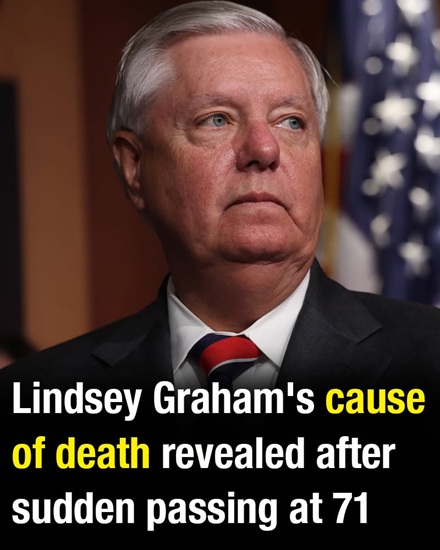
As more information became available, officials provided additional details about the medical emergency that claimed Senator Lindsey Graham’s life. According to the preliminary findings released by the District of Columbia medical examiner and shared by his office. Graham died from an aortic dissection caused by arteriosclerotic cardiovascular disease, a serious medical condition involving a tear in the inner wall of the body’s largest artery, the aorta. Officials emphasized that the findings remain preliminary while toxicology and microscopic examinations continue before the death certificate is finalized.
An aortic dissection is considered one of the most dangerous cardiovascular emergencies. It occurs when the inner layer of the aorta tears, allowing blood to flow between the layers of the artery wall. As the blood separates these layers, the vessel can weaken rapidly, potentially leading to catastrophic internal bleeding or interruption of blood flow to vital organs. Medical experts explain that survival depends heavily on immediate diagnosis and emergency treatment, as the condition can become fatal within a very short period of time.
According to reports released after his death, emergency responders were dispatched to Graham’s Washington, D.C., residence following a 911 call reporting cardiac distress. Paramedics provided emergency medical care before transporting him to George Washington University Hospital. Despite those efforts, the longtime senator died during the early hours of Sunday after what his office initially described as a “brief and sudden illness.”
Because Graham’s passing occurred unexpectedly and came shortly after his return from an overseas diplomatic trip, the event quickly became the subject of intense public attention. News that FBI personnel were present at his residence further fueled speculation online. However, authorities later clarified that federal agents were assisting local investigators as part of the normal investigative process surrounding the unexpected death of a high-ranking federal official. Officials reported that investigators found no immediate evidence suggesting criminal activity or foul play at the residence.
The preliminary medical findings also helped address numerous rumors that spread rapidly across social media in the hours following the announcement. Various unsupported claims alleged assassination or foreign involvement because of Graham’s outspoken positions on international conflicts. Fact-checks published by multiple news organizations concluded that there is currently no evidence supporting those allegations. Instead, investigators have consistently pointed to the preliminary medical findings indicating a natural cardiovascular event while awaiting completion of the final examination.
Medical specialists note that arteriosclerotic cardiovascular disease develops gradually over many years. The condition causes arteries to harden and narrow as fatty deposits accumulate along the vessel walls. While many individuals live for years with the disease, it significantly increases the risk of serious complications, including heart attacks, strokes, and, in some cases, an aortic dissection. Age, family history, high blood pressure, smoking, diabetes, and elevated cholesterol levels are among the factors that may contribute to the development of the disease.
Although an aortic dissection is relatively uncommon compared with other cardiovascular emergencies, physicians describe it as one of the most time-sensitive diagnoses in emergency medicine. The classic symptom is sudden, severe chest or upper back pain that patients often describe as tearing or ripping. However, presentations can vary, and some individuals experience symptoms that resemble those of a heart attack, making rapid diagnosis particularly challenging. Even with prompt treatment, mortality remains high due to the severity of the condition.
In the hours following confirmation of Graham’s death, tributes arrived from across the political spectrum. President Donald Trump honored the South Carolina senator as a devoted public servant and longtime ally, describing him as a patriot who dedicated his life to serving the nation. The White House also ordered American flags to be flown at half-staff in recognition of Graham’s decades of public service.
Vice President JD Vance also reflected on Graham’s career, describing him as someone who fought passionately for the causes he believed in and remained loyal to colleagues and friends. Democratic Representative Jim Clyburn likewise praised Graham’s willingness to work across party lines on issues affecting South Carolina, emphasizing that while they frequently disagreed politically, their professional relationship remained respectful throughout many years of public service.
Throughout his Senate career, Graham became widely recognized for his active role in foreign policy and national security. He frequently traveled overseas to meet with military leaders and allied governments, advocated for strong American engagement abroad, and remained a vocal supporter of military assistance to U.S. allies. His work often placed him at the center of major international policy debates, making him one of the most recognizable Republican voices on global affairs.
His death also leaves a significant vacancy in the United States Senate. Under South Carolina law, the governor is responsible for appointing an interim replacement until voters elect a successor in a special election. Political observers expect the selection process to attract considerable national attention given Graham’s influence within the Republican Party and his long tenure representing South Carolina in Washington.
As investigators complete the remaining laboratory examinations, officials have stressed that the preliminary medical findings already point toward a natural cardiovascular cause of death. The additional toxicological and microscopic testing forms part of the standard process used to finalize death certificates in sudden or unexpected deaths and should not be interpreted as evidence of suspicious circumstances. Authorities continue to emphasize that no evidence of foul play has been identified during the investigation.
For many Americans, Lindsey Graham’s legacy will ultimately be defined by more than the circumstances surrounding his passing. Over several decades in public office, he built a reputation as an influential voice on defense, foreign policy, judicial appointments, and national security. Whether admired or criticized for his political positions, he remained one of the most recognizable figures in modern American politics, leaving behind a career that shaped congressional debates and national policy for more than thirty years.

