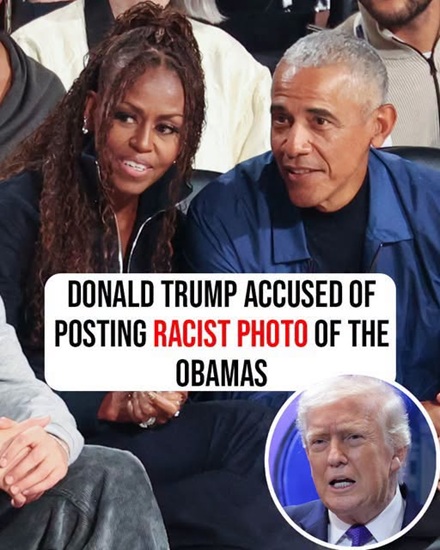
As the edited image continued circulating online, it quickly became the subject of widespread discussion among political commentators, journalists, and social media users. Supporters and critics of President Donald Trump interpreted the post in very different ways, reflecting the deep political divisions that continue to shape public discourse in the United States. While some supporters dismissed the image as political satire or internet humor, many critics argued that it relied on offensive symbolism and reinforced harmful stereotypes.
The contrasting reactions demonstrated how the same social media post can generate dramatically different interpretations depending on political perspective. Several civil rights advocates and political analysts expressed concern that the imagery echoed themes that have historically been associated with racial stereotypes. The use of graffiti, references to Black Lives Matter, and Arabic writing on a presidential aircraft was interpreted by many observers as combining unrelated political and cultural symbols in a way that critics considered inflammatory.
Others argued that political figures, particularly current and former presidents, are frequently the subjects of parody and manipulated images online. These differing viewpoints fueled another round of debate over the boundaries between political satire, misinformation, and offensive content. The image also revived discussion about Donald Trump’s long and often contentious relationship with former President Barack Obama.
Political observers noted that the two men have frequently criticized one another over the years, beginning long before Trump’s own presidency. Trump spent years questioning Obama’s birthplace through the so-called “birther” conspiracy theory before eventually acknowledging that Obama had been born in the United States. Since then, the former presidents have remained political rivals whose names often reappear in campaign speeches, interviews, and social media posts.
The renewed controversy arrived only weeks after another manipulated image involving Obama had already generated criticism. In that earlier instance, Trump had shared an altered image depicting Obama’s presidential library in Chicago with digitally added elements designed to mock the project. That post also sparked significant discussion online and reinforced criticism that artificial intelligence and digital editing tools are increasingly being used to create provocative political content capable of spreading rapidly across social media platforms.
Artificial intelligence has dramatically changed the way political images circulate online. Modern image-generation tools allow realistic-looking pictures to be created within minutes, often making it difficult for casual viewers to distinguish authentic photographs from manipulated ones. Experts in digital misinformation have repeatedly warned that such images can influence public opinion even when viewers later discover they were fabricated. Because visual content spreads faster than text, misleading or altered images frequently attract millions of views before corrections reach the same audience.
Fact-checking organizations and news outlets therefore encourage users to verify the origin of viral images before sharing them. Reverse image searches, checking multiple reputable news sources, and looking for official statements remain among the best ways to determine whether widely circulated images accurately represent real events. In highly polarized political environments, misleading visuals often spread rapidly because they reinforce existing beliefs rather than present verified information.
The timing of Trump’s post also drew attention because it came shortly after he had traveled aboard a newly modified presidential aircraft and shortly before an international diplomatic gathering involving NATO allies. Although there is no public evidence that the edited image had any direct impact on diplomatic discussions, commentators suggested that controversial online posts by world leaders can sometimes become distractions during periods when governments are focused on international negotiations or security issues.
Another post shared around the same period featured an edited image involving Italian Prime Minister Giorgia Meloni. That image, along with comments previously made by Trump about Meloni, generated additional discussion regarding political messaging on social media. While political memes have become common across many countries, analysts noted that posts made directly by heads of state often receive greater international attention because they may be interpreted differently than ordinary internet content.
Neither Barack Obama nor Michelle Obama immediately issued a public response to the edited aircraft image. Likewise, the White House did not initially provide further explanation regarding the purpose or intent behind the post. As is often the case with controversial political content, much of the public conversation was instead driven by reactions from journalists, advocacy organizations, elected officials, and millions of social media users debating the meaning and implications of the image.
The episode illustrates how political communication has evolved in the digital era. Social media now allows political leaders to communicate directly with millions of followers without traditional media acting as an intermediary. At the same time, this direct communication means that edited images, memes, and provocative visual content can rapidly become international news stories, generating debate far beyond their original audience.
Regardless of political affiliation, the incident also serves as a reminder of the importance of media literacy. Digitally altered images are becoming increasingly sophisticated, making it essential for readers to distinguish between authentic photographs, satire, political commentary, and misinformation. Verifying information through trusted news organizations and official sources remains one of the most effective ways to understand controversial events accurately.
As political campaigns continue to rely heavily on online communication, controversies surrounding manipulated images are likely to remain part of the broader discussion about technology, free expression, political messaging, and public trust. Whether viewed as satire, political criticism, or offensive rhetoric, such posts continue to generate significant public attention while highlighting the growing influence of digital media on modern political debate.
