
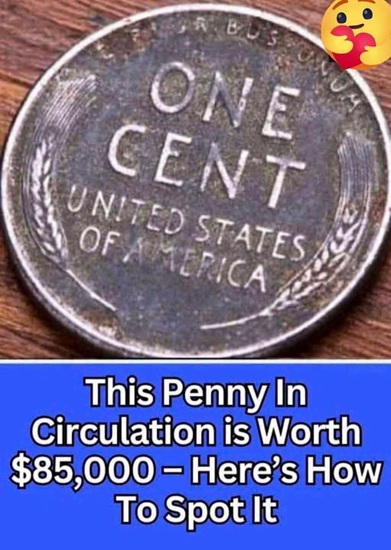
Most people think of pennies as the least valuable coins in circulation. They are often tossed into jars, forgotten in drawers, or left in old piggy banks for years without a second thought. However, every so often, an ordinary-looking penny turns out to be anything but ordinary. Certain rare coins have become highly prized among collectors because of unique historical circumstances, limited production numbers, or unexpected minting errors.
One of the most famous examples is the 1943 copper Lincoln Wheat Penny, a coin that has fascinated collectors for decades and remains one of the most sought-after error coins in American numismatic history. The story of the 1943 copper penny begins during World War II, when the United States was deeply involved in supporting the Allied war effort. Copper was considered an essential strategic material because it was heavily used to manufacture military equipment, including shell casings, electrical wiring, communication systems, and other important supplies needed by the armed forces.
To conserve as much copper as possible for military production, the U.S. Mint made the unusual decision to temporarily change the composition of the one-cent coin during 1943. Instead of using the traditional bronze alloy made primarily of copper, pennies were struck using zinc-coated steel. Millions of these steel pennies entered circulation throughout 1943, giving Americans a coin that looked noticeably different from previous Lincoln cents. The silver-gray appearance of the new steel cent surprised many people because it resembled a dime more than a penny.
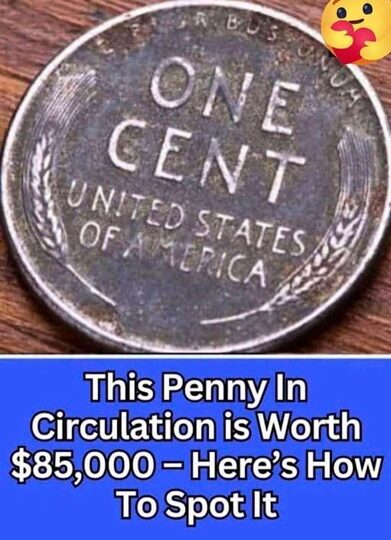
Although the steel cents successfully conserved copper for wartime needs, they created other problems. Many became rusty after prolonged circulation because the protective zinc coating could wear away over time. Others were easily mistaken for other coins due to their color, leading to confusion in everyday transactions. Even so, these steel pennies remain an important reminder of the extraordinary sacrifices made during World War II.
While nearly all pennies produced during 1943 were made from steel, a very small number were accidentally struck using leftover copper planchets from the previous year. A planchet is the blank metal disc used before a coin receives its design. According to historians and numismatic experts, a handful of bronze planchets from 1942 apparently remained inside the coin presses or storage bins when production switched to steel. As a result, those few copper blanks were mistakenly struck with the 1943 date before the error was discovered. These accidental coins would later become some of the rarest and most valuable pennies ever produced by the United States Mint.
Today, genuine 1943 copper Lincoln Wheat Pennies are considered legendary among coin collectors. Experts estimate that only a small number are known to exist across all three U.S. Mint facilities that produced pennies during that year—Philadelphia, Denver, and San Francisco. Because so few authentic examples survive, demand from collectors has remained extremely high for many decades. Whenever a verified specimen appears at a major coin auction, it often attracts significant attention from collectors, museums, and investors who recognize its historical importance.
The value of a genuine 1943 copper penny depends on several factors, including its condition, authenticity, mint mark, and overall preservation. Coins that have remained in exceptionally well-preserved condition typically command the highest prices because they show minimal wear and retain much of their original detail. According to public auction records, some certified examples have sold for hundreds of thousands of dollars, while particularly exceptional specimens have reached even higher prices under competitive bidding. Coins showing noticeable circulation wear generally sell for less, but authentic examples still command substantial values because of their rarity.
Because these coins are so valuable, counterfeit examples have become increasingly common over the years. Many altered coins are created by modifying ordinary 1948 Lincoln cents, carefully changing the number “8” into a “3” in an attempt to imitate the rare 1943 date. Other counterfeiters plate common steel pennies with copper to create the appearance of the valuable bronze version. Some fake coins are convincing enough to fool inexperienced buyers, making careful authentication essential before anyone assumes they have discovered a rare treasure.
One of the simplest preliminary tests involves using a small household magnet. Since genuine copper is not magnetic, an authentic 1943 copper penny should not stick to a magnet. In contrast, ordinary 1943 steel cents will be strongly attracted because they contain steel beneath the zinc coating. While this magnet test provides a useful first screening method, experts caution that it should never be considered final proof of authenticity. Additional testing by professional coin graders is necessary because counterfeit coins can sometimes be produced using non-magnetic materials that imitate genuine copper.
Professional numismatists recommend examining several additional characteristics before drawing conclusions. The coin’s weight provides another valuable clue. Authentic 1943 copper pennies weigh approximately 3.11 grams, while standard 1943 steel cents weigh about 2.7 grams. Collectors also inspect the color, edge, lettering, date shape, and overall strike quality under magnification. Any unusual features or inconsistencies may indicate that the coin has been altered or counterfeited. Because authentic specimens are so rare, reputable grading services play an essential role in confirming authenticity through detailed examination using specialized equipment.
If someone believes they have found a genuine 1943 copper penny, experts strongly advise against cleaning or polishing the coin. Cleaning can permanently damage the original surface and significantly reduce its collector value. Instead, the coin should be carefully stored in a protective holder and submitted to a respected third-party grading service for authentication and certification. Professional certification not only confirms whether the coin is genuine but also provides an official assessment of its condition, an important factor in determining its market value.
Many valuable coins have been discovered in unexpected places over the years, including inherited collections, forgotten coin jars, old piggy banks, estate sales, and family keepsake boxes that had remained untouched for decades. While finding a genuine 1943 copper penny is extraordinarily unlikely, stories of remarkable discoveries continue to inspire collectors to examine their coins carefully. Sometimes an item overlooked for generations turns out to be an important piece of American history with substantial collector interest. For many people, the excitement lies not only in the possibility of financial value but also in uncovering a tangible connection to one of the most significant periods in United States history.
The fascination surrounding the 1943 copper Lincoln Wheat Penny has continued for more than eighty years because it represents a rare combination of history, chance, and scarcity. Unlike commemorative coins intentionally produced in limited numbers, the copper 1943 cent was never meant to exist. It resulted from a production mistake during a period when the United States was rapidly adjusting manufacturing processes to support World War II. That unexpected error transformed what should have been an ordinary one-cent coin into one of the most recognizable treasures in American numismatics.
The Lincoln Wheat Penny itself already holds an important place in American history. Introduced in 1909 to commemorate the 100th anniversary of President Abraham Lincoln’s birth, it became the first regularly circulating U.S. coin to feature the portrait of an actual historical figure. Designed by sculptor Victor David Brenner, the coin displayed Lincoln’s profile on the front while two wheat stalks framed the reverse side. This design remained in circulation until 1958, when it was replaced by the Lincoln Memorial reverse. Because of its long production history, the Wheat Penny series has become one of the most widely collected coin series in the United States.
Although the 1943 copper cent receives the most attention, collectors know that many other Lincoln Wheat Pennies are also highly desirable. Coins such as the 1909-S VDB, the 1914-D, the 1922 “No D,” and the 1955 Doubled Die Lincoln Cent are famous because of their rarity or distinctive minting errors. However, the 1943 copper penny remains unique because it combines a dramatic historical story with an extremely small surviving population. For many collectors, owning one represents the ultimate achievement in building a Lincoln cent collection.
Authentication has become increasingly important because counterfeit examples have appeared for decades. Professional grading organizations such as the Professional Coin Grading Service (PCGS) and the Numismatic Guaranty Company (NGC) use advanced equipment to verify a coin’s metal composition, weight, dimensions, strike characteristics, and authenticity. These organizations encapsulate genuine coins in tamper-resistant holders that include certification numbers, making it easier for collectors and buyers to verify a coin’s identity. Purchasing certified coins significantly reduces the risk of unknowingly buying altered or counterfeit pieces.
Collectors should also understand that not every old penny is automatically valuable. Age alone does not determine a coin’s worth. Instead, value depends on several important factors, including rarity, demand among collectors, condition, historical significance, and authenticity. A common wheat penny from the 1940s may be worth only a few cents or a few dollars, while an authenticated mint error from the same period could be worth thousands or even hundreds of thousands of dollars. Learning these differences helps collectors make informed decisions when evaluating coins.
Proper storage is another important consideration for anyone who discovers an unusual coin. Experts recommend handling coins only by their edges to avoid transferring oils or dirt from fingers onto the surface. Coins should be stored in protective holders designed specifically for long-term preservation, and they should be kept in a cool, dry environment away from excessive moisture and direct sunlight. Abrasive cleaning, polishing, or chemical treatments should always be avoided because they can permanently damage a coin’s original surface and dramatically reduce its collector value.
Over the years, several authentic 1943 copper pennies have appeared at major public auctions, generating significant interest from collectors around the world. Prices have varied depending on the individual coin’s condition, certification, mint mark, and market demand at the time of sale. Exceptional examples have sold for hundreds of thousands of dollars, demonstrating just how highly prized these accidental wartime coins have become. Each verified sale reinforces the coin’s reputation as one of the most valuable and historically important mint errors ever produced by the United States Mint.
The popularity of rare coin collecting continues to grow because it combines history, economics, art, and detective work into a single hobby. Many collectors enjoy researching minting processes, learning about historical events that influenced coin production, and carefully examining everyday pocket change for unusual dates or minting errors. Even when valuable discoveries are uncommon, the educational experience itself often becomes one of the most rewarding aspects of numismatics. Every coin tells part of a larger story about the era in which it was produced.
Families sometimes unknowingly possess valuable coins that have been passed down through generations. Old coin albums, inherited collections, forgotten desk drawers, and jars filled with loose change occasionally contain pieces that deserve closer examination. While most coins found in these collections are ordinary circulation issues, some may include dates or varieties that warrant professional evaluation. Taking time to inspect inherited coins carefully can preserve both historical artifacts and, in rare cases, uncover unexpected financial value.
The 1943 copper Wheat Penny serves as a reminder that history can sometimes survive in the smallest everyday objects. What began as an accidental minting mistake during one of the most challenging periods in American history eventually became one of the most celebrated coins in the collecting world. Its story reflects both the demands of wartime production and the lasting appeal of rare historical artifacts. For collectors, historians, and curious families alike, it continues to represent far more than a one-cent coin—it represents an extraordinary piece of American history that has captured imaginations for generations.
Although the chances of finding an authentic 1943 copper penny are extremely small, checking old coin collections can still be an enjoyable and educational experience. Even if a rare copper cent is never discovered, examining historic coins offers a fascinating glimpse into the nation’s past and the evolution of American currency. Every collection has a story, and every coin carries a connection to the people and events of its time. Whether kept as family heirlooms or assembled by dedicated collectors, these coins continue to preserve pieces of history that remain meaningful long after they leave everyday circulation.

