

The death of longtime South Carolina Senator Lindsey Graham has brought an abrupt end to one of the most recognizable political careers in modern American history. Graham, who served in the United States Senate for more than two decades and spent over thirty years in public office, died on the evening of Saturday, July 11, 2026, at the age of 71. His office confirmed the news early Sunday morning, describing his passing as the result of a “brief and sudden illness” while asking the public to respect the privacy of his family during this difficult time.
The announcement immediately prompted reactions from political leaders, military colleagues, and supporters across the United States, many of whom praised his decades of service and his commitment to national security. Additional information about Graham’s final hours began emerging shortly after the official announcement. According to reports based on emergency scanner communications, first responders were dispatched to his Capitol Hill residence after receiving a report of a person experiencing severe chest pain.
Emergency personnel arrived quickly and immediately began assessing the situation. Roughly twenty-five minutes after the initial emergency call, radio traffic indicated that cardiopulmonary resuscitation (CPR) was already in progress as medical teams worked to stabilize the patient. Graham was then transported by ambulance to George Washington University Hospital. Although these emergency communications provide a clearer timeline of the response, his office has not publicly released a detailed medical explanation beyond stating that he died following a brief and sudden illness.

Neighbors living near Graham’s Washington residence also described an unusually active emergency response during the evening. Witnesses reported seeing multiple emergency vehicles arrive before medical personnel wheeled an older man from the home on a stretcher and placed him into an ambulance. Images shared by nearby residents appeared to show emergency crews working rapidly outside the property as they prepared to transport the senator to the hospital.
While these observations helped establish the sequence of events, officials have emphasized that no official cause of death has yet been announced publicly beyond the statement issued by Graham’s office. Authorities have not released additional medical findings, and family members have requested privacy while they grieve. The timing of Graham’s death surprised many because he had remained actively engaged in official duties only days earlier.
Shortly before returning to Washington, he traveled to Kyiv as part of a congressional delegation meeting with Ukrainian President Volodymyr Zelensky. During the visit, Graham discussed bipartisan efforts in the U.S. Senate to advance additional sanctions targeting Russia as lawmakers continued debating support for Ukraine. Throughout his Senate career, Graham consistently argued in favor of maintaining strong American alliances and supporting U.S. partners abroad. His latest overseas trip reflected the foreign policy priorities that had defined much of his public life.

Foreign policy remained one of Graham’s defining issues throughout his career. Long before becoming one of the Senate’s most recognizable voices, he built a reputation as a strong advocate for national defense and military readiness. He regularly supported increased defense spending, backed American military alliances, and frequently traveled overseas to meet with foreign leaders and U.S. service members. Even political opponents often acknowledged his extensive knowledge of military affairs and international security. Whether discussing conflicts in the Middle East, NATO cooperation, or relations with Ukraine, Graham consistently argued that American leadership played an essential role in global stability.
Reactions to Graham’s passing quickly spread across the political spectrum. South Carolina Governor Henry McMaster described him as a fierce defender of both his home state and the nation, praising his dedication and long record of public service.
President Donald Trump, who had once competed against Graham during the 2016 Republican presidential primary before later becoming one of his closest political allies, also honored the senator following news of his death, describing him as a loyal friend and dedicated patriot. Other lawmakers from both political parties extended condolences to Graham’s family, recognizing his influence in Congress even when they strongly disagreed with his policy positions.
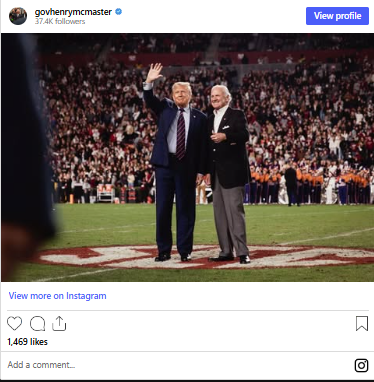
Graham’s passing also carries immediate consequences for the balance of power in Washington. Under South Carolina law, Governor McMaster has the authority to appoint an interim senator to fill the vacant seat until voters choose a permanent replacement through a special election. Because Republicans currently hold only a relatively narrow majority in the Senate, Graham’s death temporarily reduces that margin during an important legislative period. Before his passing, Graham had already begun campaigning for another Senate term, making his sudden death both a political and personal shock for supporters throughout South Carolina.
Long before entering national politics, Graham established an impressive military career that remained central to his identity. After graduating from the University of South Carolina with degrees in psychology and law, he entered the United States Air Force as a Judge Advocate General officer. He later continued serving through the Air National Guard and Air Force Reserve, participating in legal assignments connected to military operations in Iraq and Afghanistan. After more than thirty years of military service, Graham retired with the rank of colonel. He frequently cited those experiences when discussing veterans’ issues, military readiness, and foreign policy during his years in Congress.
Behind his political career was a story of perseverance shaped by humble beginnings. Graham grew up in Central, South Carolina, where his parents owned a small restaurant and pool hall. After losing both parents while still a young adult, he accepted responsibility for helping care for his younger sister while completing his education. Those experiences often influenced his speeches, as he credited his upbringing with teaching resilience, discipline, and responsibility.
From serving in the South Carolina House of Representatives to becoming one of the Senate’s most influential Republican voices, Graham’s career reflected decades of public service. As colleagues and supporters now remember his legacy, many point not only to his political accomplishments but also to the determination that carried him from a small South Carolina town to one of the highest offices in American government.
Lindsey Graham’s influence extended well beyond the legislation he sponsored or the committees he chaired. Throughout his years in Washington, he became one of the Senate’s most recognizable voices on issues involving national security, judicial nominations, military policy, and international affairs. Supporters often praised his willingness to take strong positions, even when they proved politically controversial, while critics challenged many of his decisions and policy shifts. Regardless of differing opinions, few disputed that Graham remained one of the most visible figures in the Senate for more than two decades. His frequent television appearances and participation in major national debates made him a familiar face to millions of Americans following politics.
During his time in Congress, Graham worked with several presidential administrations from both political parties. Although he was known as a conservative Republican, there were periods when he participated in bipartisan negotiations on immigration, criminal justice, and military legislation. Over time, however, he became increasingly identified with Republican leadership and eventually developed one of the closest political relationships with President Donald Trump after their rivalry during the 2016 Republican presidential primary came to an end. Their alliance became an important part of Republican politics during Trump’s presidency and continued afterward, with Graham often defending the administration’s policies on national television and in Senate hearings.
Judicial appointments also became one of Graham’s defining responsibilities during his years in office. As chairman of the Senate Judiciary Committee, he presided over several nationally watched confirmation hearings for federal judges and Supreme Court nominees. These proceedings frequently attracted intense media attention because they involved decisions that could shape American law for decades. Graham often emphasized the constitutional role of the Senate in evaluating judicial nominees and argued that courts should interpret the law rather than create new policy through judicial decisions. His leadership during those hearings became one of the most discussed chapters of his Senate career.
Military service remained an important part of Graham’s identity long after he entered politics. Even while serving in Congress, he continued fulfilling reserve military duties whenever possible. His background as an Air Force attorney gave him firsthand experience with military law and the responsibilities faced by service members during overseas deployments. Throughout debates involving defense budgets, veterans’ healthcare, and military readiness, Graham frequently referenced his own experience in uniform. Many veterans’ organizations appreciated his continued focus on military families and national defense, even when opinions differed on specific policy proposals.
The announcement of Graham’s death prompted tributes from colleagues who had worked alongside him for decades. Senators from both parties described him as someone who was deeply knowledgeable about Senate procedure and passionate about public service. Some recalled his sharp sense of humor behind closed doors, while others spoke about his willingness to mentor newly elected lawmakers. Several international leaders also offered condolences, recognizing Graham’s longstanding involvement in foreign policy and his consistent engagement with America’s allies. His death was widely covered by major news organizations around the world because of his influence on U.S. domestic and international affairs.
Constitutional experts note that Graham’s passing will also have practical consequences for the Senate’s day-to-day operations. Until a replacement is appointed and eventually elected, one Senate seat will remain vacant, potentially affecting committee assignments and legislative voting margins. Governor Henry McMaster is expected to appoint an interim senator according to South Carolina law, ensuring that the state continues to have representation in the Senate while preparations are made for a future special election. Political observers will closely watch that appointment because it could influence the balance of power during upcoming legislative debates.
As investigations into Graham’s final illness continue, officials have emphasized that speculation should be avoided until medical authorities complete their review. Emergency scanner communications help establish the timeline of the medical response, but they do not provide a medical diagnosis or official explanation for what caused the senator’s sudden collapse. Graham’s office has likewise declined to release additional medical details beyond its original statement. Family members have asked for privacy while funeral arrangements are made and while they mourn the unexpected loss of a loved one whose life was largely spent in public service.
Looking back across more than three decades in elected office, Lindsey Graham leaves behind a complex and significant political legacy. Admirers remember him as a determined advocate for national security, a dedicated military veteran, and a senator who remained deeply committed to representing South Carolina. Critics often challenged his policy positions and changing political alliances, yet they also acknowledged his experience and influence within Congress. Like many long-serving public officials, his career included moments of bipartisan cooperation, partisan conflict, legislative victories, and political setbacks that reflected the changing landscape of American politics.
Ultimately, Lindsey Graham will be remembered as one of the defining Republican senators of his generation. From his early years in South Carolina politics to his service in the U.S. House of Representatives and later the Senate, he devoted much of his adult life to public office and military service. His work on defense, judicial matters, and foreign policy ensured that his voice carried significant influence in Washington for many years. While the final medical details surrounding his passing may eventually become clearer, his long career, lasting impact on American politics, and decades of service to both his state and his country will remain central to how history remembers him.

