
The hospitalization of Senator Mitch McConnell, one of the longest-serving and most influential figures in modern American politics, has once again placed his health in the national spotlight. Although his office has stated that the Kentucky Republican is recovering and remains involved in Senate business, many questions surrounding the medical emergency remain unanswered. New eyewitness accounts, emergency dispatch records, and recently released video footage have provided additional insight into the morning of June 14.
But they have also prompted renewed public interest in exactly what happened before the senator was transported to the hospital. According to statements released by McConnell’s office, the senator was admitted to a Washington, D.C., hospital after suffering a medical emergency at his residence. His staff initially provided only limited information, saying that he was receiving “excellent care” and later adding that he continued to improve while staying in regular communication with members of his Senate staff. No official diagnosis or detailed medical explanation was released, and spokespersons repeatedly referred reporters back to the same brief statement whenever additional questions were asked.
As journalists continued investigating the incident, emergency dispatch recordings became public, offering the first timeline of events that unfolded that morning. According to those communications, emergency personnel were dispatched to McConnell’s Washington residence at approximately 8:36 a.m. after receiving a report of an unconscious individual. Within only a few minutes, the situation appeared to become more urgent. Radio traffic from emergency responders included a request for supervisory assistance and references indicating that cardiopulmonary resuscitation (CPR) was reportedly in progress. Additional communications also referenced a reported cardiac arrest, although the recordings themselves did not identify the patient by name.
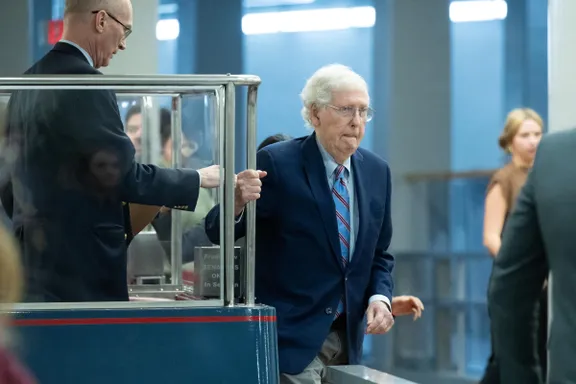
McConnell’s office has declined to comment specifically on the emergency radio communications, choosing instead to focus on updates indicating that the senator is recovering. Nevertheless, the dispatch timeline attracted considerable public attention because it represented the first detailed account of the emergency response before McConnell arrived at the hospital. While authorities have not publicly confirmed every medical detail contained within those emergency communications, the recordings demonstrate that responders treated the incident with a very high level of urgency.
Additional information emerged after CNN obtained video showing emergency personnel transporting McConnell from his Washington residence. The footage captured responders carefully wheeling a patient on a stretcher before placing him into a waiting ambulance. Neighbors who witnessed the response described seeing multiple emergency vehicles arrive, including ambulances, a fire truck, and Capitol Police officers who temporarily restricted access to the surrounding street while first responders worked.
One nearby resident later described opening the front door shortly after emergency vehicles arrived and observing the large response outside. According to the neighbor, approximately thirty minutes later emergency personnel brought the patient from the residence and loaded him into the ambulance. Although the witness said McConnell’s face was not clearly visible, another neighbor reportedly recognized the senator during the response. The eyewitness account has since received widespread attention because it represents one of the few public descriptions from someone who observed the emergency firsthand.

Another detail mentioned by the witness also attracted public discussion. According to the neighbor, the patient was wrapped in an orange-colored emergency blanket while being transported on the stretcher. However, the patient’s feet remained uncovered. The witness recalled that the feet appeared completely still during the brief moment they were visible. Although such observations do not provide any medical conclusions and emergency transport procedures can vary depending on the situation, the description nevertheless became widely discussed following publication of the interview.
As public interest surrounding McConnell’s condition continued to grow, attention also shifted toward members of his family. Social media users noticed that the X (formerly Twitter) account belonging to McConnell’s daughter, Porter McConnell, appeared to have been deleted or deactivated. Porter McConnell is known for her work in nonprofit leadership, public policy, communications, and advocacy. Publicly available professional information indicates that she currently serves as the managing director of a nonprofit organization while also operating her own consulting business focused on public policy and strategic communications. Neither Porter McConnell nor the senator’s office has publicly commented on the status of her social media account.
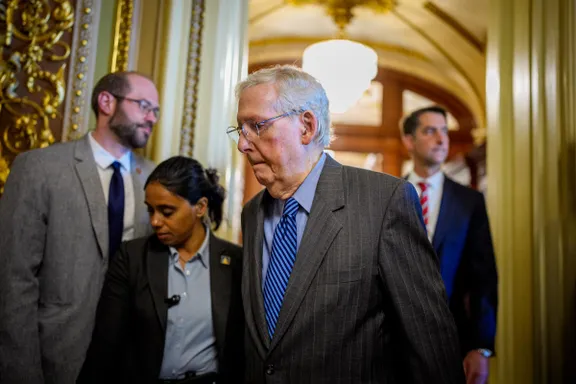
Another development that generated attention involved Elaine Chao, McConnell’s wife and the former United States Secretary of Transportation. According to publicly available reports, Chao traveled to Beijing several days after the senator’s hospitalization as part of a previously scheduled visit connected to longstanding meetings. During her trip, she met with Chinese Vice President Han Zheng, where discussions reportedly focused on maintaining stable U.S.-China relations, expanding economic cooperation, and encouraging cultural exchanges between the two countries. Neither the official Chinese government summary nor statements from McConnell’s office referenced the senator’s hospitalization during those meetings.
Although McConnell’s staff continues reporting that the senator’s condition is improving, many details surrounding the medical emergency have not yet been publicly disclosed. As a result, interest in the investigation and the senator’s recovery remains high. His office has consistently emphasized that he remains engaged with Senate business while recovering, but until additional official medical information is released, many aspects of the June 14 emergency remain the subject of ongoing public attention.
The latest medical emergency has drawn significant attention not only because of the limited information released by McConnell’s office but also because it follows several highly publicized health incidents over the past few years. Although the senator has repeatedly returned to work after previous setbacks, each new episode has generated renewed discussion about his health, particularly given his age and his long career in public office. Supporters, colleagues, and political observers alike have continued to wish him a full recovery while awaiting additional official updates.
Earlier in 2026, McConnell was hospitalized after experiencing what his office described as flu-like symptoms. At the time, spokesman David Popp explained that the senator sought medical evaluation “out of an abundance of caution.” His office later stated that his prognosis was positive and emphasized that he remained actively involved in Senate business while recovering. That hospitalization ended without major complications, but it added to a growing list of health-related incidents that have attracted national attention in recent years.
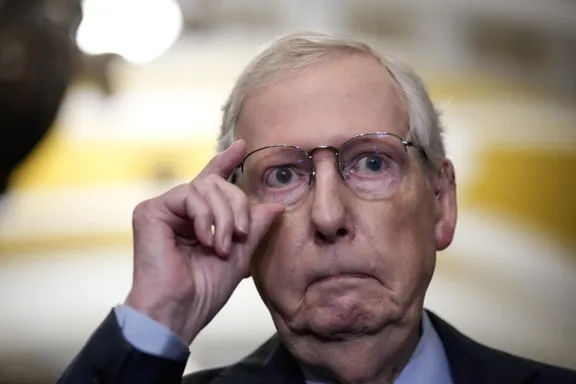
Several months before that, another widely discussed event occurred inside the United States Capitol. During a public appearance in October 2025, McConnell lost his balance while walking through a reception area with members of his staff. Video footage shared by news organizations showed the senator reaching toward an aide before falling forward near a wooden counter. Capitol Police officers and nearby staff members immediately rushed to assist him. After remaining on the floor briefly, McConnell was helped back to his feet and escorted from the area. The incident sparked widespread discussion online, although no serious injuries were immediately reported.
Even greater public attention surrounded two separate incidents during 2023, when McConnell briefly stopped speaking while addressing reporters. The first occurred during a news conference at the Capitol in July 2023. While answering questions, the senator suddenly paused mid-sentence and remained silent for several seconds before colleagues escorted him away from the podium. Later that day, he returned to continue speaking with reporters and, when asked how he was feeling, simply replied, “I’m fine.” His office did not indicate that the episode resulted in any long-term medical complications.
Only a few weeks later, a similar incident occurred during a public event in Covington, Kentucky. Once again, McConnell briefly paused while responding to questions before aides assisted him. His spokesperson later explained that the senator had felt “momentarily lightheaded” and planned to consult his physician before participating in additional public appearances. Although both episodes received extensive media coverage, McConnell continued carrying out his Senate responsibilities following medical evaluations.
Another significant health challenge occurred earlier in March 2023, when McConnell suffered a concussion after falling during a private dinner event at the Waldorf Astoria Hotel in Washington, D.C. He remained hospitalized for several days while doctors monitored his recovery before eventually returning to the Senate. Medical professionals frequently recommend extended observation following concussions, particularly for older adults, and McConnell’s office later confirmed that he had completed rehabilitation before resuming official duties.
Years before those incidents, McConnell also underwent surgery after another fall at his Kentucky home in 2019. According to his office, the accident resulted in a fractured shoulder that required surgical repair. The procedure was reported to have been successful, and after completing rehabilitation, the senator once again returned to work in Washington. Throughout his career, McConnell has repeatedly resumed his responsibilities following periods of medical recovery, demonstrating a continued commitment to his public service despite recurring health challenges.
McConnell has also spoken publicly about one of the earliest health challenges of his life. As a young child, he contracted polio before vaccines against the disease became widely available. He has often credited his mother with playing a crucial role in his recovery by carefully following an intensive physical therapy program prescribed by doctors. Over time, he regained his ability to walk, an experience he has frequently described as shaping both his resilience and determination throughout his personal life and political career.
The senator’s latest hospitalization comes during the final chapter of an extraordinary political career. Earlier this year, McConnell announced that he will not seek reelection in 2026, bringing to a close more than 40 years of continuous service in the United States Senate. Since first taking office in 1985, he has served as Republican Whip, Minority Leader, Majority Leader, and one of the longest-serving party leaders in American history. Throughout his career, he played a central role in numerous legislative debates, judicial confirmations, budget negotiations, and foreign policy discussions that shaped modern American politics.
When announcing his retirement, McConnell reflected on the trust Kentucky voters had placed in him over four decades of public service. He described representing the Commonwealth of Kentucky as “the honor of a lifetime” and expressed gratitude for having been elected to the Senate seven times. Although he confirmed that his current term will be his last, he also emphasized that he intends to remain fully engaged in his responsibilities until leaving office, saying he still has “unfinished business” to complete.
For now, attention remains focused on McConnell’s recovery. His office continues reporting that his condition is improving and that he remains actively involved in Senate matters despite being away from Capitol Hill. While emergency dispatch recordings, eyewitness accounts, and newly released video have provided additional insight into the morning of June 14, many medical details have not yet been publicly disclosed. Until further official information becomes available, the senator’s health will likely remain the subject of continued public interest as colleagues, constituents, and political observers wish him a full recovery.
