
Prince William marked what would have been Princess Diana’s 65th birthday by carrying out an important royal engagement in Scotland, combining public duty with a moment that many royal observers viewed as quietly symbolic. Although the occasion was not officially dedicated to remembering Diana, the timing naturally drew attention to the enduring influence she continues to have on the future king. Nearly three decades after her death in 1997, Diana’s legacy remains deeply woven into Prince William’s approach to royal service, charity, and leadership.
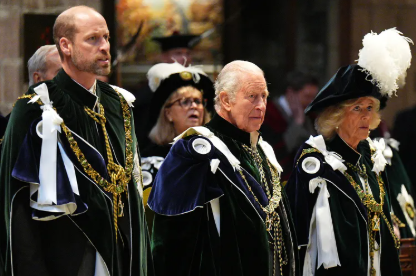
Rather than making public declarations about his mother, William has increasingly chosen to honor her through long-term initiatives and practical work that reflect the compassion and sense of responsibility she demonstrated throughout her life. On July 1, Prince William joined senior members of the Royal Family for the annual Order of the Thistle service at St. Giles’ Cathedral in Edinburgh.
The ceremony forms part of Royal Week in Scotland, an important period in the royal calendar during which the monarch and other members of the Royal Family participate in a series of official engagements across the country. In Scotland, Prince William holds the historic title of Duke of Rothesay, a role that reflects his position as heir to the British throne. Wearing the traditional green velvet robes, white-plumed hat, and insignia associated with the Order of the Thistle, William took part in one of the monarchy’s oldest and most distinguished ceremonial traditions alongside King Charles III, Queen Camilla, and other members of the royal household.
The Order of the Thistle is Scotland’s highest order of chivalry and recognizes individuals who have made outstanding contributions to Scottish national life. The order traces its origins back several centuries, although it was formally revived in its modern form by Queen Anne in 1687. Membership is limited and personally bestowed by the Sovereign, making it one of the greatest honors that can be awarded in Scotland. Every year, the service at St. Giles’ Cathedral combines religious tradition, military pageantry, and historic customs that highlight the close relationship between the monarchy and Scotland.
The procession through Edinburgh’s historic streets attracts visitors from around the world and remains one of the most visually striking events in the royal calendar. This year’s ceremony carried additional emotional significance because it coincided with what would have been Princess Diana’s 65th birthday. Although no official tribute was planned during the service, the date inevitably prompted reflection on Diana’s extraordinary influence and the lasting impact she continues to have on British public life.
Since her death in Paris on August 31, 1997, Diana has remained one of the most admired and discussed members of the Royal Family. Her humanitarian work, ability to connect with ordinary people, and willingness to challenge long-standing royal conventions transformed public expectations of the monarchy and helped redefine the role of a modern royal.
For Prince William, Diana’s legacy has never been limited to public memory or historical recognition. Throughout his adult life, he has spoken on several occasions about the lessons his mother taught him during his childhood. Diana believed that her sons should understand the lives and struggles of people from all backgrounds, regardless of privilege or status.
She deliberately introduced William and Prince Harry to experiences that were uncommon for members of the Royal Family, including visits to homeless shelters, hospitals, and charitable organizations. These experiences exposed the young princes to social issues that would later become central to William’s own charitable priorities and public service.
One of the causes that most clearly reflects Diana’s influence is the fight against homelessness. Just one day before attending the Order of the Thistle service, Prince William visited Aberdeen as part of his Homewards initiative, a long-term program launched by The Royal Foundation with the goal of demonstrating that homelessness can be prevented through coordinated action and local partnerships.
Rather than focusing solely on emergency accommodation, Homewards aims to bring together local authorities, charities, businesses, and community organizations to develop lasting solutions tailored to individual communities. The initiative reflects William’s belief that homelessness should be addressed through prevention as well as immediate support.
William has openly acknowledged that his interest in homelessness began during childhood because of his mother. Diana believed that exposing her sons to the realities faced by vulnerable people would help them develop empathy and a broader understanding of society.
She often took William and Harry on visits away from royal ceremonies and official events, encouraging them to meet people experiencing hardship and to listen to their personal stories. Those early experiences left a lasting impression on William, who has frequently credited Diana with shaping his understanding of public service and inspiring much of the charitable work he now undertakes.
Beyond homelessness, William has continued supporting several causes that reflect values Diana championed throughout her lifetime. Mental health awareness has become one of his defining priorities, particularly through initiatives led by The Royal Foundation. Alongside Catherine, Princess of Wales, and previously with Prince Harry, William helped encourage more open conversations about mental health, challenging stigma and promoting early intervention.
Although mental health campaigns have evolved significantly since Diana’s lifetime, her willingness to speak openly with people facing illness, trauma, and emotional hardship established a compassionate example that many believe influenced her son’s approach to public engagement. Princess Diana became internationally respected not only because of her popularity but also because of her humanitarian work.
She brought unprecedented public attention to people living with HIV/AIDS during a period when widespread fear and misunderstanding surrounded the illness. Images of Diana shaking hands with AIDS patients without wearing gloves challenged misconceptions and demonstrated that compassion could help overcome stigma. She also became a prominent advocate for the global campaign against anti-personnel landmines, visiting minefields in Angola and Bosnia to raise awareness of the devastating impact these weapons continued to have on civilians long after conflicts had ended. Those visits became defining moments of her humanitarian legacy and continue to be remembered around the world.
Although William has pursued his own priorities rather than simply repeating his mother’s work, many observers see clear similarities in his approach to royal service. He has increasingly emphasized practical projects designed to achieve measurable results rather than relying solely on symbolic appearances. Whether addressing environmental challenges through the Earthshot Prize, supporting mental health initiatives, or working to reduce homelessness through Homewards, William has sought to combine the visibility of the monarchy with partnerships capable of delivering lasting social impact. This emphasis on action reflects principles that many associate with Diana’s own commitment to helping vulnerable communities.
The coincidence of the Order of the Thistle ceremony with Princess Diana’s birthday therefore carried meaning beyond royal tradition. While the official focus remained on Scotland’s historic order of chivalry, many people viewed William’s participation as a reminder that the values his mother embraced continue to influence his public life. Without making a speech or organizing a formal tribute, he demonstrated through his ongoing work that remembrance can be expressed through dedication, service, and long-term commitment to causes that improve the lives of others. As the future king continues preparing for the responsibilities that lie ahead, Diana’s influence remains visible not simply through memory, but through the principles that continue to guide his work on behalf of communities across the United Kingdom.

