
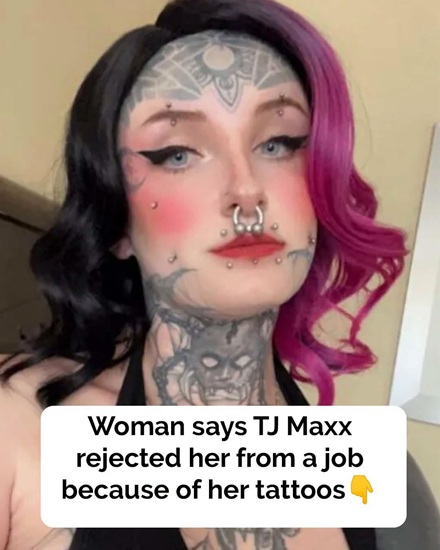
A recent viral discussion on social media has reignited debate about workplace appearance standards after a young woman, known online as Ash Putnam (also active under the handle ashxobrien), shared a video claiming she was not hired for a retail position at a major store. The video quickly gained millions of views and sparked widespread conversation about tattoos, facial piercings, and employment opportunities in customer-facing roles. In the video, Putnam expressed frustration after receiving a rejection for a retail job application.
She stated that she had applied to a position at a well-known retail chain and later received an automated rejection email. According to her account, she later visited the store to ask for feedback and was told that other candidates had more experience. She suggested that her visible tattoos and facial piercings may have influenced the hiring decision, although this was not confirmed by the employer.
Her appearance, which includes extensive tattoos on visible areas such as her face and neck as well as multiple facial piercings, became the focal point of the online discussion. After the video went viral, users across social media platforms reacted with a wide range of opinions about whether visible body modifications affect employability in customer-facing jobs.
Some commenters argued that visible tattoos and piercings can influence hiring decisions in certain industries, particularly retail positions where employees regularly interact with customers. Others countered that personal appearance should not determine job qualifications and emphasized that skills, experience, and work ethic should be the primary factors in hiring decisions.
The discussion highlighted a broader ongoing cultural shift. Over the past decade, tattoos have become significantly more accepted in many professional environments, including corporate offices, creative industries, and service sectors. However, there remains variation depending on industry, company policy, and customer expectations. Retail environments, in particular, often maintain appearance guidelines designed to align with brand image and customer-facing standards.
In many companies, dress codes and grooming policies are still in place, although they vary widely. Some organizations allow visible tattoos and piercings, while others require them to be covered or removed during work hours. These policies are typically tied to customer perception, workplace branding, and consistency across employee presentation.

Following the viral video, social media users shared personal experiences and opinions about job interviews and hiring practices. Some individuals who work in human resources or retail management commented that hiring decisions in customer-facing roles often consider overall presentation, including communication skills, professionalism, and alignment with company image. However, these statements reflect individual perspectives rather than universal hiring rules.
The conversation also brought attention to a common challenge faced by younger job seekers: gaining entry-level experience. Many commenters noted that entry-level positions often require prior experience, which can create a difficult cycle for applicants trying to enter the workforce for the first time. This issue is widely discussed in labor market research and is not limited to any specific appearance or demographic group.
At the same time, advocates for workplace diversity argue that personal expression, including tattoos and piercings, should not be automatically associated with professionalism or capability. They emphasize that modern workplaces are increasingly moving toward inclusive policies that focus on skills and performance rather than physical appearance.
Employment experts generally note that hiring standards vary significantly depending on the role. Positions involving direct customer interaction, particularly in traditional retail environments, may still have stricter appearance guidelines compared to behind-the-scenes or remote roles. However, many companies are gradually relaxing these policies as cultural attitudes evolve.
The viral nature of the discussion reflects how social media platforms can amplify individual experiences into broader debates about society and employment norms. A single personal account can quickly become a focal point for discussions about workplace fairness, generational attitudes, and evolving definitions of professionalism.
In response to the debate, opinions online remain divided. Some users argue that businesses should have the right to set appearance standards that align with their brand identity, while others believe that such standards should be updated to reflect modern diversity and self-expression.
Ultimately, the situation highlights an ongoing transition in workplace culture. While tattoos and piercings are more common and socially accepted than in previous decades, acceptance levels still vary depending on industry expectations and customer-facing roles. As a result, job seekers with visible body modifications may experience different outcomes depending on where they apply.
The discussion surrounding Putnam’s video continues to circulate online, serving as an example of how employment experiences can quickly become part of larger cultural conversations about identity, professionalism, and inclusion in the modern workforce.

