
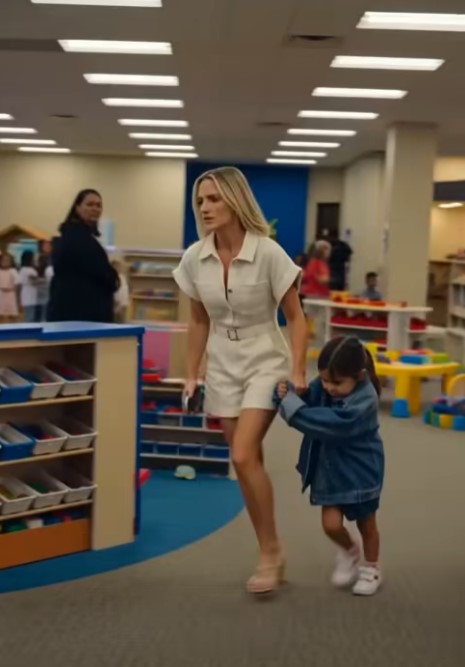
What was expected to be a normal day at a popular children’s museum reportedly evolved into an incident that attracted the attention of staff members, security personnel, and eventually local authorities. Families filled the museum as children explored hands-on exhibits, participated in educational programs, and enjoyed a variety of interactive activities. The atmosphere throughout the building was cheerful and energetic, with visitors moving between displays designed to inspire curiosity and learning.
Among the many guests enjoying the day, however, one young girl reportedly caught the attention of a security guard for unexpected reasons. According to the account, Marcus Vance, a museum security officer with a background in law enforcement, was performing his regular duties when he noticed a child named Maya. While most children appeared excited and eager to participate in the museum’s activities, Maya seemed unusually quiet and reserved.
Witnesses described her as cautious and hesitant, often keeping to herself instead of interacting with the other children. Her behavior stood out enough that Marcus continued to observe from a respectful distance while remaining focused on his responsibilities. Another detail reportedly drew his attention.
Despite the warm summer weather, Maya was wearing a thick denim jacket throughout her visit. Although there can be many harmless reasons for a child to wear extra layers, Marcus reportedly found the choice unusual considering the high temperatures outside. His years of experience working in public safety had taught him to notice details that might otherwise go unnoticed. While he did not immediately assume anything was wrong, he remained aware of the situation as the day continued.
The story states that concern increased when Maya briefly lost her balance near one of the exhibits. As she steadied herself, part of her jacket sleeve shifted, allegedly exposing bruising on her wrist. Marcus reportedly noticed marks that appeared unusual and decided to approach carefully to make sure the child was all right. Before the conversation could continue, however, an adult woman identified in the account as Veronica reportedly stepped in and answered on Maya’s behalf.
According to the narrative, Veronica explained that Maya was fine and suggested there was no reason to be concerned. She reportedly described the child as someone who occasionally sought attention and stated that the jacket was simply her preferred piece of clothing. Although the explanation appeared straightforward, Marcus reportedly remained uncertain. His previous experience had taught him that unusual injuries and withdrawn behavior sometimes deserved closer attention, especially when a child appeared uncomfortable or anxious.
Later in the afternoon, Marcus reportedly observed Maya sitting alone near a collection of oversized alphabet blocks inside one of the museum’s play areas. Rather than joining the other children, she appeared focused on selecting specific letters and arranging them in a deliberate order. Curious about what she was doing, Marcus watched from a distance. After several minutes, he reportedly noticed that the blocks formed a short message that immediately captured his attention.
According to the account, the message appeared to be a request for help. Before anyone could ask Maya about it, however, several children accidentally ran through the area and knocked the blocks apart. The carefully arranged letters scattered across the floor, causing the message to disappear. What reportedly happened next further increased concern. Instead of becoming upset, Maya quietly gathered more blocks and moved to a less noticeable location beneath a nearby shelf.
There, according to the story, she continued arranging letters where fewer people could easily see them. Marcus reportedly noticed additional words beginning to appear. The new messages seemed more personal and suggested that Maya might have been trying to communicate something important. As the phrases became more specific, Marcus reportedly began to suspect that the child was attempting to share information she felt unable to express directly through conversation.
The account claims that Maya eventually assembled a sequence of letters and numbers that appeared to resemble an address. Before Marcus could gather more information or ask questions, Veronica reportedly returned and informed Maya that it was time to leave. The child was then escorted from the museum. Concerned by everything he had witnessed throughout the day, Marcus reportedly decided that the situation warranted professional attention and contacted authorities to report his observations.
According to the narrative, investigators later reviewed the information provided by Marcus and began examining the circumstances surrounding the child’s situation. The reported messages, combined with observations made during the museum visit, became part of a broader effort to understand whether Maya’s behavior reflected an underlying problem. As with many situations involving child welfare concerns, authorities reportedly sought to gather information carefully before reaching conclusions.
A significant development in the story involved photographs allegedly taken by a museum supervisor who had noticed some of the block arrangements. According to the account, the images documented the messages Maya created and included timestamps showing when they were assembled. Because the photographs were reportedly taken before later events unfolded, they became an important reference point for understanding the timeline. Investigators allegedly considered them valuable pieces of documentation.
The narrative further explains that legal proceedings eventually followed. Attorneys involved in the matter reportedly debated the interpretation of the evidence and the meaning of Maya’s actions. Some argued that the messages should be viewed as serious attempts to communicate distress, while others suggested alternative explanations. Such disagreements are not uncommon in cases where investigators must evaluate behavior, testimony, and physical evidence together.
During the reported hearings, Marcus allegedly shared his perspective based on years of experience in public safety. He explained why certain details had concerned him and emphasized the importance of paying attention when children display unusual behavior or attempt to communicate fears indirectly. His testimony reportedly focused on observation rather than conclusions, leaving the responsibility for evaluating the evidence to investigators, medical professionals, and the court.
According to the account, the court reviewed multiple forms of evidence, including photographs, witness statements, expert evaluations, and testimony from those involved. The primary focus reportedly remained on the child’s welfare and safety. Temporary protective measures were allegedly considered while authorities continued gathering information. As in many cases involving children, decisions were reportedly made with caution and based on the evidence available at the time.
The story goes on to describe changes that allegedly occurred in the months following the museum incident. Maya reportedly began living in a more stable environment while receiving ongoing support. People familiar with the situation allegedly observed improvements in her confidence and overall well-being. Over time, she was said to have become more comfortable around others and more willing to participate in everyday activities.
One memorable moment described in the account reportedly occurred when Maya later returned to the museum. During that visit, she allegedly presented Marcus with a small alphabet block marked with the letter “M.” The gesture was portrayed as a simple expression of appreciation and a reminder of the role communication can play during difficult circumstances. The moment served as a symbolic conclusion to an experience that reportedly began with a few carefully arranged letters.
The broader theme of the story centers on awareness and attentiveness. Child welfare professionals often encourage adults to recognize significant behavioral changes, unexplained injuries, and other signs that may indicate a child is struggling. At the same time, experts emphasize the importance of relying on qualified professionals to investigate concerns thoroughly and objectively. Every situation is different and deserves careful evaluation based on evidence rather than assumptions.
Although the specific details of this account should be independently verified before being presented as established fact, the underlying message remains meaningful. Paying attention to children, listening carefully when they attempt to communicate, and responding responsibly when concerns arise can make an important difference. Stories of this kind continue to resonate because they highlight the value of compassion, vigilance, and appropriate action when the well-being of a child may be involved.

