
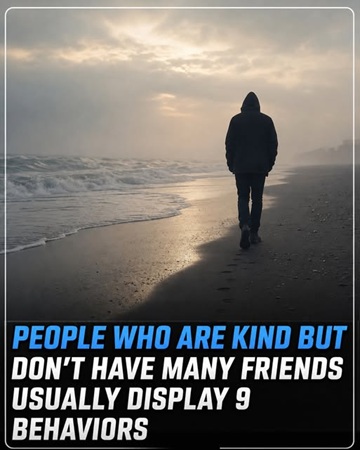
When people imagine a kind person, they usually picture someone constantly surrounded by friends, included in every plan, and widely appreciated in social groups. Popular belief often connects kindness with popularity, assuming that the most generous and warm-hearted individuals naturally attract large social circles. However, real life often presents a different reality. Some of the kindest people are not the most socially visible. Instead, they tend to live quieter, more selective social lives.
This is not because they lack social skills or emotional intelligence, but because they experience relationships in a deeper and more intentional way. They value sincerity over attention, and meaningful connection over constant interaction. In today’s fast-paced social world, where communication is often quick and surface-level, kind individuals tend to stand apart. They prefer calm conversations, emotional honesty, and genuine understanding rather than noise or performance.
This naturally influences the size and shape of their social circles. To understand this pattern, it is important to look at how these individuals think, feel, and behave in relationships. The following points explain why kind people often have fewer but much deeper connections in life.
1. They Are Deep Listeners, Not Loud Speakers
Kind individuals usually do not dominate conversations or compete for attention. Instead, they listen carefully and attentively. Their focus is not on speaking the most, but on understanding others in a meaningful way.
They often remember small details, pick up emotional cues, and make others feel heard. Because of this, people tend to trust them and open up easily in their presence. They become natural confidants in many situations.
However, in larger groups, this quiet style can make them less noticeable. While louder personalities often take the spotlight, kind individuals remain in the background, observing and absorbing rather than performing socially.
This creates a situation where they are deeply valued by a few, but not always widely recognized in bigger social environments.
2. They Naturally Avoid Gossip and Negative Talk
In many social circles, gossip is used as a way to bond or entertain. It can create quick connections, shared reactions, and temporary closeness. However, kind people often feel uncomfortable with this type of communication.
They generally prefer not to speak negatively about others or participate in discussions that feel judgmental. Instead, they either stay silent or gently change the topic when conversations turn toward gossip.
Because of this, they may slowly distance themselves from groups where gossip is a central part of interaction. This does not happen out of arrogance, but out of a desire to maintain emotional peace and personal integrity.
Over time, this choice naturally reduces the number of social groups they remain closely connected to.
3. They Set Personal Boundaries Without Drama
Kindness does not mean unlimited availability. In fact, many kind individuals learn that saying yes to everything can lead to emotional exhaustion and imbalance.
Instead of making their boundaries loud or confrontational, they tend to express them quietly. They may simply step back from situations that feel draining or unhealthy without creating conflict or explanation.
To others, this behavior may sometimes appear as distance or emotional detachment. In reality, it is a form of self-protection and emotional awareness.
By maintaining these quiet boundaries, they ensure that their kindness remains genuine rather than turning into burnout or resentment.
4. Their Empathy Is Strong and Emotionally Demanding
Kind individuals often experience empathy at a very deep level. They do not only understand what others are going through, but they can emotionally feel it in a personal way.
This emotional sensitivity makes them supportive and compassionate friends. People often turn to them during difficult times because they feel understood and safe.
However, this same trait can also become emotionally heavy. Absorbing other people’s stress, sadness, or frustration can leave them drained over time.
As a result, they may need more alone time than others to recover emotionally. This is not rejection of people, but a necessary way to maintain balance.
5. They Don’t Depend on Attention or Approval
Unlike people who rely on external validation, kind individuals often have a strong internal sense of self-worth. They do not need constant recognition, praise, or attention to feel secure.
They rarely feel the need to showcase their life for approval or approval from others. Instead, they focus on consistency, honesty, and quiet personal growth.
Because they are not actively seeking attention, they may sometimes be overlooked in social environments where visibility is valued more than depth.
Still, they remain confident in who they are without needing external reinforcement.
6. They Are Careful About Where They Invest Their Energy
With experience, kind individuals often become more selective about their relationships. They begin to recognize that not every connection deserves equal emotional investment.
Rather than spreading their energy across many casual relationships, they focus on a small number of meaningful ones. These are the relationships where trust, respect, and emotional balance exist.
This approach naturally reduces the size of their social circle, but increases the quality of the connections they maintain.
They prioritize depth, loyalty, and emotional safety over quantity.
7. They Sometimes Attract Emotionally Demanding People
Because kind individuals are patient and supportive, they can sometimes attract people who take more than they give. Their willingness to listen and help can unintentionally lead to unbalanced relationships.
Over time, they learn to recognize when a relationship becomes one-sided or draining. This awareness helps them set limits and protect their emotional well-being.
They do not become less kind, but they become more selective in how they give their time and energy.
This shift often results in a smaller but healthier social environment.
8. They Prefer Deep Conversations Over Large Gatherings
Large social events can feel overwhelming or superficial to kind individuals. They often prefer calm environments where meaningful conversation is possible.
One-on-one interactions or small groups allow them to connect more authentically without distractions. In these settings, they feel more comfortable expressing themselves and understanding others.
Because of this preference, they may avoid frequent participation in large social gatherings.
While this limits social quantity, it greatly increases emotional quality in their relationships.
9. They Refuse to Pretend or Fake Their Personality
One of the strongest traits of kind individuals is their commitment to authenticity. They do not feel comfortable pretending to be someone they are not just to fit in.
If a situation feels false, uncomfortable, or against their values, they will often choose to step away rather than participate.
Some people may misinterpret this as being distant or reserved. In reality, it is a strong expression of personal integrity.
This honesty ensures that the relationships they do maintain are genuine and built on mutual respect.
The Quiet Strength Behind Kindness
Kindness is not always loud or socially dominant. In many cases, it exists in quiet actions, thoughtful listening, and emotional understanding. Because of this, kind individuals often have smaller social circles, but much deeper connections.
Their lifestyle is not a sign of isolation, but a reflection of intentional emotional choices. They prefer depth over surface interaction, and sincerity over popularity.
In the end, the number of friends someone has is not what defines emotional richness. What truly matters is the quality of connection, trust, and understanding shared between people.
Kind individuals may walk a quieter social path, but it is often one filled with meaning, stability, and genuine human connection.

