
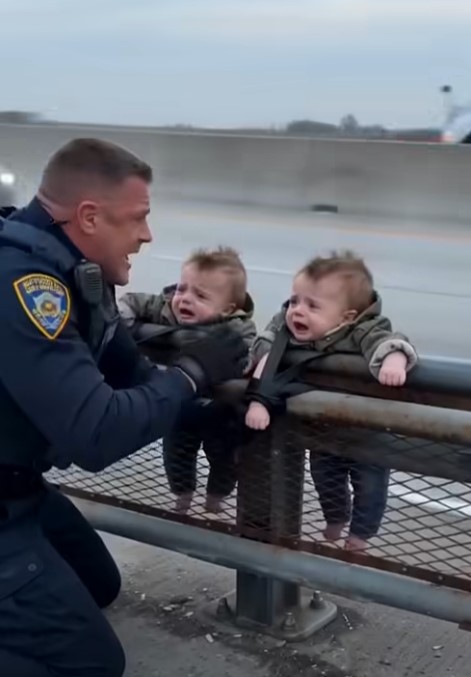
A routine afternoon patrol on a busy highway quickly turned into a serious emergency situation after authorities received multiple urgent reports about two very young children seen near a dangerous overpass. Drivers traveling along Route 9 alerted emergency services after noticing two toddlers standing close to the edge of a bridge, directly above fast-moving traffic. The situation immediately raised concern, and dispatchers treated the calls as high priority due to the obvious danger involved.
A highway patrol officer arrived at the scene within minutes of the report. As he approached the overpass, he was immediately confronted with the reality of the situation: heavy traffic flowing underneath and two small children standing near the guardrail at the top of the bridge. The officer carefully moved closer, trying not to alarm them, and began speaking in a calm voice while assessing how best to bring them to safety without causing panic.
The toddlers appeared scared, confused, and exhausted, likely overwhelmed by the loud noise of passing vehicles and the unfamiliar surroundings. They stood close together near the barrier, showing signs of distress and uncertainty. The officer quickly realized that handling the situation alone would not be enough and immediately requested backup and emergency medical assistance to ensure the children could be properly evaluated once removed from danger.
Within a short time, additional officers and emergency responders arrived at the location. The area was quickly secured, and traffic around the overpass was partially controlled to prevent further risk. Medical teams were placed on standby nearby, prepared to assist as soon as the children were brought to a safe zone. The coordinated response demonstrated the urgency and seriousness of the situation from the moment the first call was received.
As officers carefully interacted with the children, it became clear that they were extremely stressed and unresponsive to detailed questions. At that moment, the priority remained their immediate safety rather than gathering information. The officer slowly guided them away from the edge of the bridge, ensuring each step was controlled and calm to avoid any sudden movements or additional fear.
Once the children were safely removed from the overpass, investigators began focusing on how they had arrived there alone. The surrounding area was carefully searched for clues, and officers documented anything that might be relevant to the investigation. Witnesses who had contacted emergency services were interviewed on-site, providing valuable descriptions of when and how they first noticed the children.
As the investigation expanded, authorities turned their attention to nearby properties that could potentially be linked to the incident. One location not far from the overpass appeared abandoned at first glance, but due to its proximity, officers decided to investigate further. Upon entering the property, law enforcement proceeded cautiously while searching for any signs of recent activity or individuals who might require assistance.
Inside the building, officers found evidence suggesting that people had been there not long before the search. Although details were not immediately confirmed, the discovery prompted a more thorough inspection of the premises. Every room and surrounding structure was carefully checked while investigators documented the scene and continued to assess whether anyone else was in danger.
During the operation, authorities located a teenage girl inside the property who required immediate attention. She was quickly escorted out and provided with medical evaluation and protective care. Officials ensured she was taken to a safe location while investigators continued their work. Her presence became an important part of understanding the broader circumstances surrounding the case.
Information provided by the teenager helped investigators develop a clearer understanding of the events leading up to the discovery of the children. While authorities did not release full details, they confirmed that her cooperation played a significant role in advancing the investigation. Multiple agencies worked together, following several leads and checking additional locations to ensure no other individuals were at risk.
In the days that followed, the two toddlers received medical care and continuous supervision. Doctors reported that both children were recovering well after being placed in a safe and controlled environment. Child welfare specialists became involved to ensure their long-term protection and well-being while the investigation continued to move forward.
Eventually, authorities were able to identify and locate family members connected to the children. After proper verification and legal procedures, the toddlers were safely reunited with their relatives. Officials described the reunion as a positive outcome after a deeply concerning situation that had begun with emergency calls from alert drivers.
Following the incident, law enforcement officials highlighted the importance of public awareness and quick reporting. They emphasized that the timely response from citizens, combined with coordinated action from emergency services, played a crucial role in preventing a potentially tragic outcome. The teamwork between officers, medical personnel, and investigators was praised as essential to resolving the case.
For the highway patrol officer who first arrived at the scene, the experience served as a powerful reminder of how quickly ordinary calls can turn into life-changing situations. What began as a routine patrol response ultimately became a complex rescue effort involving multiple agencies. In the end, two young children who were found in a dangerous situation were safely rescued and given the opportunity for a secure and stable future.

