
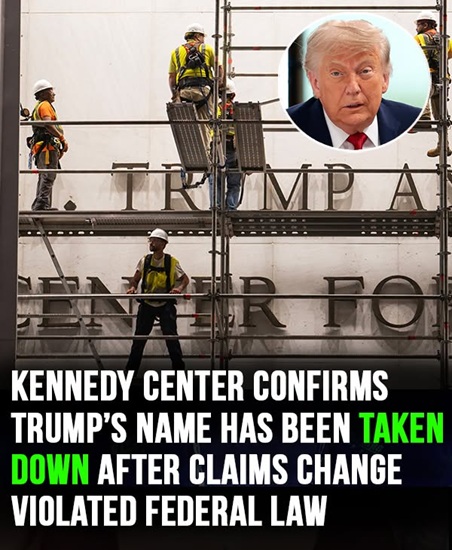
The Kennedy Center in Washington, D.C., one of the most recognized cultural institutions in the United States, recently became the focus of a legal and political dispute involving its official naming. The center, which has long been dedicated to President John F. Kennedy, found itself at the center of controversy after changes to its branding sparked public debate and legal challenges. The issue began when a new leadership structure and board decisions led to discussions about altering the institution’s presentation and public identity.
At one point, references connected to former President Donald Trump were reportedly added alongside the existing name of the Kennedy Center. This proposed combined title immediately drew attention and criticism from lawmakers, cultural commentators, and members of the public. Opponents of the change argued that the Kennedy Center was originally established by Congress as a memorial to President John F. Kennedy, and therefore its name carries legal and historical importance.
They stated that any modification to the official name or symbolic branding would require congressional approval rather than internal administrative decisions. This argument became the foundation of the legal challenge that followed.
The dispute escalated into the federal court system, where a judge reviewed whether the naming changes were consistent with the law governing the institution. In the court’s ruling, it was emphasized that the Kennedy Center’s identity is defined by its founding legislation. The judge concluded that only Congress has the authority to alter its official name, reinforcing the center’s original designation.
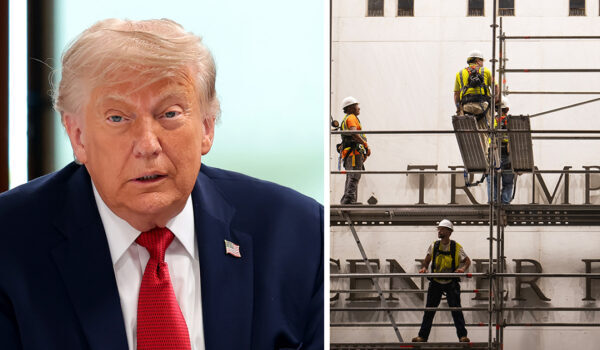
As part of the ruling, the court ordered that any unauthorized external lettering or branding changes be removed from the building. This included recently installed signage elements that reflected the disputed naming decision. The court also set a timeline for compliance, requiring the modifications to be reversed within a specified period.
Following the legal decision and after appeals attempts did not stop the enforcement, crews were sent to the Kennedy Center to carry out the removal process. Reports described workers arriving early in the day and covering parts of the building while carefully dismantling the added letters. The removal marked a visible reversal of the earlier branding effort.
The scene outside the Kennedy Center drew attention from the public and media. Onlookers gathered to observe the changes, and reactions were mixed. Some individuals supported the court’s decision, viewing it as a necessary step to preserve the institution’s original identity. Others criticized the ruling, arguing that it reflected broader political tensions rather than purely administrative concerns.
Supporters of the decision emphasized that national cultural institutions should maintain their historical names and avoid politically influenced alterations. They argued that the Kennedy Center represents a legacy connected to President John F. Kennedy and should remain unchanged unless formally modified through legislative action.
On the other side, those who supported the leadership changes argued that administrative boards should have flexibility in shaping the institution’s direction and branding. They viewed the situation as part of a broader debate about governance, authority, and how public cultural institutions evolve over time.
The controversy also extended into political commentary, with various public figures expressing opinions on both sides of the issue. Some lawmakers supported the court’s interpretation of the law, while others questioned whether the dispute should have reached the judicial system at all. This division reflected the broader political polarization surrounding high-profile cultural institutions.
Social media platforms also played a role in amplifying the debate. Users shared opinions, images, and commentary, often interpreting the situation through different political and cultural perspectives. As a result, the discussion extended far beyond the legal details and became a wider public conversation about symbolism and identity.
In addition to the naming dispute, there were also discussions about proposed renovation and modernization plans for the Kennedy Center. At various stages, suggestions were made to upgrade facilities and improve the venue’s infrastructure. However, these proposals became part of the broader debate once legal questions and governance issues emerged.
Critics of the renovation ideas raised concerns about costs, planning, and oversight, while supporters argued that modernization could help maintain the Kennedy Center’s reputation as a leading arts venue. These discussions added further complexity to an already sensitive situation involving leadership decisions and institutional authority.
Representatives connected to the Kennedy Center have indicated that future steps will focus on clarifying governance structures and ensuring compliance with federal law. The goal, according to public statements, is to maintain the center’s role as a major cultural landmark while resolving disputes over administrative authority.
Despite the controversy, the Kennedy Center continues to operate as one of the United States’ most important performing arts venues. It hosts a wide range of cultural events, including theater productions, concerts, ballet performances, and national celebrations. Its significance as a cultural institution remains unchanged, even as debates about its governance continue.
In conclusion, the dispute over the Kennedy Center’s naming highlights the complex intersection of law, politics, and cultural heritage. The court’s decision reinforced the principle that federally established institutions must follow congressional authority when it comes to official naming. At the same time, the public reaction shows how deeply symbolic changes can resonate in a politically divided environment.
As discussions continue, the Kennedy Center remains both a cultural landmark and a focal point of national debate, reflecting how history, politics, and identity can intersect in modern public institutions.

