
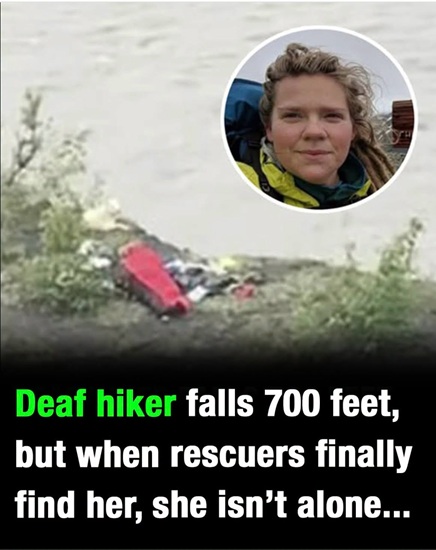
Young adulthood is often seen as a period for exploration, personal growth, and stepping outside of comfort zones. Many people use this stage of life to travel, discover new environments, or challenge themselves through demanding physical activities. Some choose safe and familiar destinations, while others are drawn to remote and extreme landscapes where nature is powerful and unpredictable. One such journey involves Amelia Milling, a young woman who set out alone into the Alaskan wilderness in search of adventure and self-discovery.
At twenty-one years old, Amelia Milling, who is deaf, had already developed a strong sense of independence and resilience. Instead of avoiding challenges, she often embraced them, especially outdoor experiences that required endurance and focus. Determined to push her limits, she planned a multi-day hiking trip in Alaska, a region known for its breathtaking scenery but also for its harsh and dangerous conditions. Her goal was to experience nature in its purest form while testing her own strength and survival skills.
At the beginning of her journey, everything appeared to be going smoothly. The trails were scenic, the environment was peaceful, and the experience gave her a sense of freedom and accomplishment. However, the Alaskan wilderness is known for its sudden changes in terrain and weather, and even experienced hikers can quickly find themselves in danger. During her hike, Amelia lost her balance on a steep, snow-covered slope, which led to a serious accident in which she slid a significant distance down the mountainside.
Although the fall was extremely dangerous, she survived without breaking any bones, which was fortunate given the severity of the situation. However, survival in such an environment involves more than physical injury. After the fall, Amelia realized she was disoriented and unsure of her exact location. Surrounded by unfamiliar terrain, she faced the growing challenge of finding her way back to the trail while dealing with cold temperatures and isolation.
As time passed, the situation became increasingly difficult. Being alone in a remote wilderness area can quickly lead to exhaustion, both physically and mentally. Amelia understood that staying calm and conserving energy were essential for survival. She also knew that she would need assistance if she was going to make it out safely, especially given the unpredictable nature of the landscape around her.
During this critical moment, she noticed movement in the distance. At first, she thought it might be a wild animal, which is common in Alaska’s natural environment. However, as the figure came closer, she realized it was a white husky wearing a collar. This discovery immediately changed her perception of the situation, as the animal did not appear to be wild but instead seemed trained or domesticated.
The dog, known as Nanook, is often described in accounts as a trail or guide dog familiar with the mountain paths. According to the story, Nanook was accustomed to helping lost hikers in the area and guiding them back toward safety. His arrival brought an unexpected sense of relief to Amelia, as she was no longer completely alone in the vast and silent wilderness.
Nanook stayed close to her after finding her, providing companionship in an environment where isolation can quickly become overwhelming. As night approached, the dog remained by her side, which helped her maintain a sense of security and emotional stability. In survival situations, even the presence of another living being can significantly reduce panic and improve decision-making.
At one point during her attempt to continue moving, Amelia encountered another dangerous obstacle involving a river with strong, fast-moving currents. Crossing cold water in such conditions is extremely risky, and she struggled to maintain her balance. In this moment of difficulty, Nanook reportedly stayed nearby and assisted her movement, helping her avoid being pulled further into the water.
Recognizing that her situation required urgent help, Amelia activated her GPS emergency beacon. This device allowed her to send a distress signal to rescue teams, providing them with her approximate location in the remote wilderness. Emergency communication devices like this are often critical in areas where mobile phone signals are unavailable.
Once the signal was received, local rescue teams quickly organized a response operation. Helicopters and ground search units were dispatched to locate her in the vast mountainous region. After a coordinated search effort, Alaska State Troopers and rescue personnel were able to reach her location and safely extract her from the wilderness.
She was then transported by helicopter to a safer area where she could receive medical attention and recover from the physical and emotional strain of the experience. Although the incident was dangerous, the rescue was ultimately successful, and she survived the ordeal thanks to a combination of preparedness, emergency equipment, and rapid response from rescuers.
Throughout the entire experience, Nanook remained a memorable part of the story. In many retellings, he is described as a loyal and helpful trail dog who stayed with Amelia during one of the most difficult moments of her life. While different versions of the story vary in detail, the consistent theme is the presence of a dog that provided comfort and assistance during a life-threatening situation.
This type of story also highlights the importance of preparation when exploring remote natural environments. The Alaskan wilderness is beautiful but unforgiving, and even small mistakes can lead to serious consequences. Proper equipment, awareness of terrain, and emergency communication tools are essential for anyone traveling in such regions.
In the end, Amelia Milling’s experience is often shared as a reminder of both the risks and the beauty of wilderness exploration. It reflects human resilience in the face of danger and the importance of support—whether from rescue teams, technology, or unexpected companionship in nature.
The story continues to circulate widely online as an inspiring example of survival, courage, and endurance in one of the most challenging environments on Earth.

