
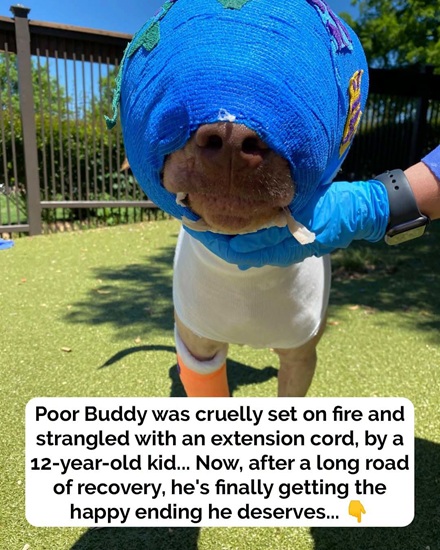
Buddy’s story gained attention after reports described a deeply disturbing act of cruelty that left the dog with serious burn injuries. According to animal rescue reports in Mississippi, Buddy was a gentle and friendly dog who had never shown aggression or posed any danger. His case quickly spread because of the extreme nature of his injuries and the long recovery process that followed. The Tunica Humane Society took responsibility for Buddy’s care after the incident was reported.
Early assessments indicated that he had suffered severe burns across his face and upper body, requiring urgent medical intervention. In addition, he was found with an object wrapped around his neck, which added further concern about his condition when he was discovered. Due to the seriousness of his injuries, Buddy was transferred to the Mississippi State University College of Veterinary Medicine for specialized treatment.
Veterinary teams began intensive care immediately, focusing on stabilizing his condition, managing pain, and preventing infection. His recovery was described as a gradual and delicate process requiring constant monitoring. Medical staff worked carefully to treat his wounds through regular bandage changes and ongoing evaluation of damaged skin. Veterinarians explained that burn injuries in animals often require long-term care, as healing depends on multiple stages of recovery and consistent medical attention.
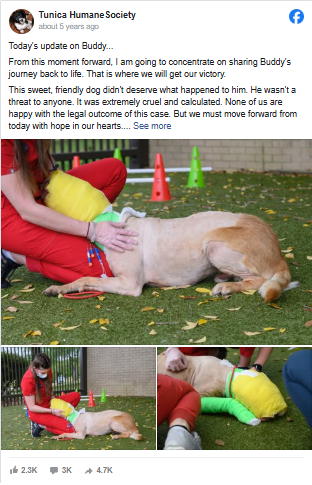
Despite the severity of his condition, caregivers reported that Buddy remained responsive and gradually began showing signs of improvement. His treatment team focused not only on physical healing but also on keeping him calm and comfortable throughout the process. Over time, he slowly adapted to the environment and became more stable.
Updates shared by the Tunica Humane Society highlighted gradual progress in his recovery journey. According to their reports, Buddy began undergoing skin graft treatments to help repair the damaged areas. These procedures were carefully monitored to ensure proper healing and reduce complications.
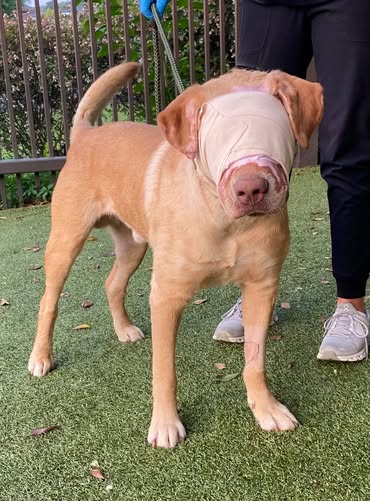
As time passed, Buddy’s condition slowly improved, and he began showing more awareness of his surroundings. Veterinary staff noted small but meaningful changes in his behavior, including increased movement and responsiveness. These improvements were seen as positive steps in his long recovery process.
Experts involved in his care explained that burn recovery in animals typically involves multiple phases, including stabilization, infection control, tissue repair, and long-term recovery support. Buddy’s treatment followed this structured approach due to the extent of his injuries.
Additional procedures were performed as part of his ongoing treatment plan, including continued skin graft support and protective bandaging. Each stage was carefully adjusted based on his healing progress, with veterinarians closely monitoring every change in his condition.
Animal care workers also emphasized the emotional side of Buddy’s recovery. Animals that experience trauma often require time to regain trust and feel safe again. For this reason, caregivers provided a calm and supportive environment to help him adjust and recover emotionally.
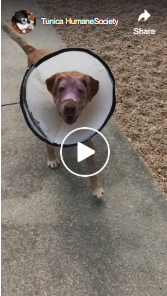
Over time, Buddy became more active and began showing signs of improved behavior. Reports from caregivers indicated that he started interacting more with his surroundings and gradually displayed a more playful attitude. These changes were seen as encouraging milestones in his rehabilitation.
One of the key turning points in his recovery came when his bandages were gradually reduced as healing progressed. This allowed veterinarians to better assess his condition and adjust treatments accordingly. Each improvement, even small, was considered an important step forward.
Eventually, Buddy reached a stage where he was more aware of his surroundings and able to respond more naturally to light and movement. Caregivers described this phase as an important moment in both his physical and emotional recovery journey.
As his condition continued to improve, veterinarians noted that he became more energetic and engaged. His behavior suggested increasing comfort and confidence compared to the earlier stages of treatment, when he was still in critical condition.
Despite the progress, medical teams made clear that Buddy would require ongoing care for the foreseeable future. Because of the severity of his burns, long-term treatment was expected, including protection for sensitive skin and continued veterinary supervision.
Caregivers also explained that animals recovering from serious burns often need lifestyle adjustments. These can include limited sun exposure, protective care routines, and regular medical follow-ups to ensure continued healing. Buddy’s case followed this careful long-term care approach.
Throughout his recovery, the Tunica Humane Society continued sharing updates to raise awareness about animal welfare and the importance of protecting vulnerable animals. Their updates focused on Buddy’s resilience and the dedication of veterinary professionals involved in his treatment.
Over time, Buddy’s story became widely recognized as an example of survival and recovery after severe trauma. His progress highlighted the importance of veterinary care, structured rehabilitation, and compassionate support in helping injured animals recover.
Although his healing process remained ongoing, each stage of improvement reflected the combined effort of veterinarians, caregivers, and rescue staff. His journey demonstrated how consistent medical care and patience can lead to meaningful recovery outcomes.
Buddy’s story continues to be shared as a reminder of resilience and recovery. While he still requires long-term support, his improvement represents the impact of dedicated animal care and rehabilitation. His journey also serves as an example of the importance of kindness and responsibility toward animals in need.

