
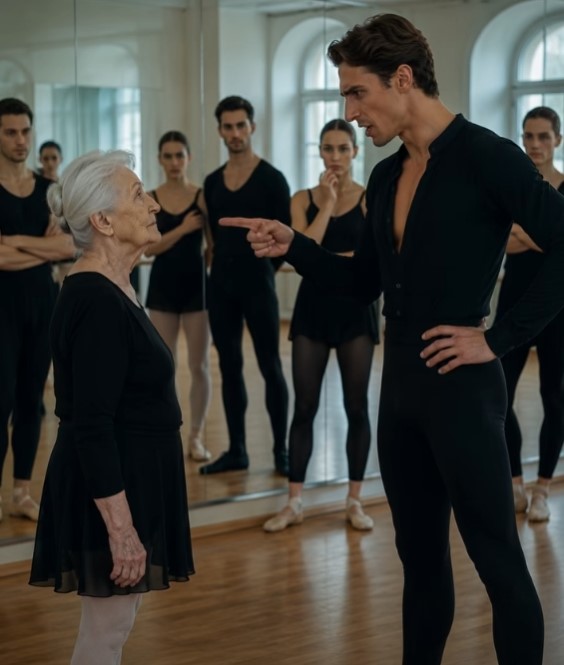
The ballet academy had earned a reputation as one of the most respected dance institutions in the area. Young performers from different backgrounds came there to improve their technique, develop their artistry, and pursue their dreams of performing on larger stages. The facility was known for its professional atmosphere, experienced instructors, and commitment to excellence. Students spent countless hours practicing every detail of their craft, understanding that success in ballet required dedication, patience, and discipline.
One of the academy’s most respected instructors was Daniel, the lead choreographer. Although he was younger than many senior professionals in the industry, his talent and work ethic had helped him build a strong reputation. Daniel believed that precision mattered in every movement. He expected his students to work hard, pay attention to corrections, and constantly strive for improvement. His classes were challenging, but many dancers appreciated the high standards he maintained.
On a typical morning, the main rehearsal studio was filled with activity. Music played softly through the speakers while students practiced exercises at the barre. Some dancers focused on flexibility, while others repeated combinations they had learned earlier in the week. The atmosphere was serious but productive. Everyone was concentrating on their training and trying to improve their performance.
Daniel moved around the room, observing each student carefully. Whenever he noticed a mistake, he offered immediate feedback. He reminded dancers to maintain proper posture, improve their balance, and pay attention to timing. His instructions echoed throughout the studio as students worked to meet his expectations. The class was proceeding exactly as planned.
Then something unexpected happened.
The studio door slowly opened, immediately drawing the attention of several dancers. Visitors rarely entered during active rehearsals, so the interruption stood out. Conversations stopped, and curious eyes turned toward the entrance. Standing in the doorway was an elderly woman carrying a small sports bag.
She appeared to be around eighty years old. Her silver hair was tied neatly into a bun, and she wore a simple black ballet outfit along with white tights and ballet slippers. Although her appearance was modest, she carried herself with unusual confidence. She looked around the room calmly before taking a few steps inside.
For a moment, nobody said anything.
Daniel eventually walked toward her with a polite smile. Assuming she might be looking for another room, he asked if she needed assistance. The woman smiled warmly and replied that she had come to attend the ballet class. Her answer immediately surprised many of the students.
Several dancers exchanged amused glances.
Others struggled to hide their reactions.
A few quietly whispered among themselves.
To them, the situation seemed unusual.
Daniel hesitated before responding. He explained that the class involved physically demanding exercises and advanced techniques. Concerned about her safety, he suggested that the training might be too challenging. He emphasized that he did not want her to risk injury while attempting movements designed for experienced dancers who practiced regularly.
The elderly woman listened patiently.
Then she simply smiled.
“I appreciate your concern,” she said, “but I would still like to participate.”
Her calm response caught several students off guard. Instead of appearing discouraged, she seemed completely comfortable. The confidence in her voice suggested she knew exactly what she was doing. Yet many dancers remained skeptical. They assumed she underestimated the difficulty of the class.
As whispers spread across the studio, some students quietly laughed. They believed the woman would quickly realize that ballet required a level of strength and flexibility that became more difficult to maintain with age. Others assumed she was simply interested in observing rather than participating.
The woman, however, showed no sign of embarrassment.
Rather than continuing the discussion, she placed her bag against the wall and slowly walked toward the center of the studio floor. Her movements immediately attracted attention. There was something graceful about the way she carried herself. Even before she began dancing, several people noticed her posture and balance.
The room gradually became quiet.
Curiosity replaced amusement.
Everyone wanted to see what would happen next.
Standing in the center of the floor, the woman calmly positioned herself. Her shoulders remained relaxed, her posture perfectly aligned, and her movements deliberate. She appeared completely at ease despite being surrounded by dozens of people watching her closely.
Then she raised her arms into a classical ballet position.
The movement was elegant.
Simple.
Controlled.
Yet there was a level of refinement that immediately captured attention.
The students who had been smiling moments earlier suddenly became silent. Her technique reflected years of experience. Every position appeared precise. Every movement flowed naturally into the next. She displayed a level of control that many younger dancers spent years trying to achieve.
As she continued, the atmosphere inside the studio changed dramatically.
The woman moved through a sequence of traditional ballet exercises with remarkable grace. Her balance remained steady, and her transitions were smooth. There was no sign of hesitation. Each movement demonstrated discipline, confidence, and deep understanding of the art form.
Several students stared in disbelief.
Others exchanged surprised glances.
The laughter had completely disappeared.
Daniel watched carefully from the side of the room. As a choreographer, he understood the technical demands of ballet. He recognized quality when he saw it. The woman’s movements reflected a lifetime of training. Her technique was not merely good for her age—it was genuinely impressive by any standard.
The performance continued.
She crossed the floor with effortless elegance.
Every step appeared intentional.
Every gesture carried meaning.
Although she no longer possessed the athletic explosiveness of youth, she demonstrated something equally valuable: mastery. Her understanding of timing, musicality, and expression transformed even simple movements into something memorable.
The students were captivated.
Many had never witnessed such a clear example of experience and artistry working together. What initially seemed like an unusual interruption had become a lesson in itself. The woman was demonstrating that true skill often extends beyond physical ability alone.
After several minutes, she prepared for one final movement.
The room became completely silent.
Everyone watched carefully.
With impressive control, she executed a powerful extension that showcased both flexibility and balance. The movement was performed with confidence and precision, leaving many students visibly astonished. Several gasped quietly while others stared in amazement.
When the sequence ended, silence lingered for a moment.
Then applause filled the studio.
One dancer began clapping.
Another quickly joined.
Within seconds, the entire room erupted into applause.
Many students rose to their feet.
The atmosphere had transformed completely.
The same people who had doubted her only minutes earlier were now showing genuine admiration and respect. The elderly woman simply smiled and acknowledged the applause with quiet gratitude.
Daniel approached her with a different attitude than before. The certainty he had displayed earlier had been replaced by humility. He thanked her for the remarkable demonstration and admitted that he had made assumptions too quickly. The woman responded kindly, explaining that people often judge others before learning their stories.
Curious, Daniel asked about her background.
The woman paused briefly before answering.
She explained that ballet had been part of her life since early childhood. She had spent decades studying, performing, and teaching the art she loved. Throughout her life, she remained committed to continuous learning and improvement. Ballet was not simply an activity for her—it was a lifelong passion.
As she shared her experiences, students listened attentively.
Her story was inspiring.
Years of dedication had shaped her abilities.
The discipline she developed over time remained visible in every movement she performed.
The conversation left a lasting impression on everyone present.
The students realized how easily assumptions can create misunderstandings. They had judged someone based entirely on appearance and age without knowing anything about her background, experience, or achievements. What they learned that day extended far beyond ballet.
Before leaving, the woman offered a final piece of advice.
She encouraged the dancers to remain open-minded, continue learning, and never underestimate others. Talent can appear in unexpected places, and valuable lessons often come from people we least expect. Her words resonated deeply throughout the studio.
Long after she departed, the dancers continued talking about the experience. What had started as an ordinary training session became one of the academy’s most memorable days. The elderly visitor had reminded everyone that passion, dedication, and excellence are not limited by age.
Years later, many students would still remember that morning.
They would remember the unexpected visitor.
They would remember the lesson she taught.
And most of all, they would remember how a single performance changed an entire room’s perspective. The experience served as a powerful reminder that true mastery is earned through commitment, perseverance, and a lifelong love for learning—qualities that never lose their value, regardless of age.

