
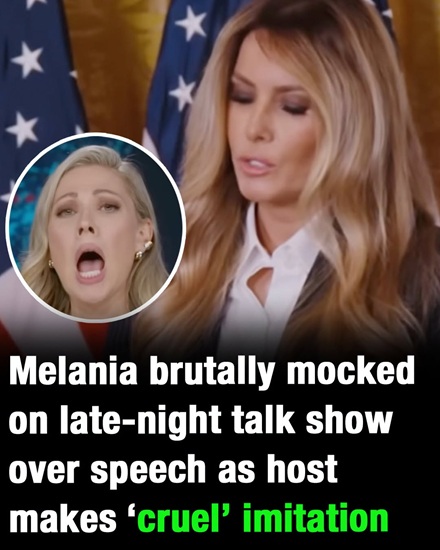
Melania Trump recently attended a ceremony recognizing the winners of a national artificial intelligence competition, where students from across the country were celebrated for their achievements in technology and innovation. The event, known as the Presidential AI Challenge National Champion Awards, was designed to encourage young people to explore artificial intelligence and develop skills in emerging technological fields.
During the event, the First Lady delivered a speech focusing on education, innovation, and the importance of preparing the next generation for a rapidly changing digital world. She highlighted the value of creativity and learning, encouraging students to take advantage of opportunities in science and technology.
Her remarks centered on motivation and growth, emphasizing that new technologies like artificial intelligence are reshaping industries and creating new paths for future careers. The speech was intended to inspire students to pursue their ambitions and engage with modern technological advancements.
Her Perspective on Artificial Intelligence and Future Technology
In her address, Melania Trump discussed the expanding influence of artificial intelligence across multiple sectors. She noted that AI is increasingly being used in areas such as healthcare, entertainment, education, and business operations, where it continues to transform traditional systems and processes.
She described artificial intelligence as a tool that can extend human potential and support innovation in different fields. Her comments reflected ongoing global discussions about how AI is becoming a major force in shaping economic development and technological progress.
She also referenced examples of automation and machine-based systems that are already being integrated into real-world applications, including healthcare support systems and digital content creation tools. These examples were used to illustrate how AI is gradually becoming part of everyday life.
Media Attention and Online Reactions
Following the event, Melania Trump’s speech was widely shared online and discussed across various media platforms. As with many public appearances by political figures, her remarks attracted different interpretations from audiences and commentators.
Some observers focused on the inspirational tone of her speech, highlighting her message about education and innovation. Others paid attention to specific phrases from her remarks, which were later circulated and analyzed on social media.
As is common with high-profile speeches, reactions varied depending on individual viewpoints. Some viewers saw the message as positive and forward-thinking, while others engaged in more critical discussions about the language and style used in the address.
Satirical Commentary in Late-Night Television
After the speech gained public attention, it was also referenced in a segment on a late-night comedy program. Such shows in the United States frequently include satire, parody, and humor when discussing political figures and public events.
In the segment, the host used comedic imitation and exaggerated phrasing to interpret parts of the speech in a humorous way. This style of presentation is typical of satirical programming, which often reimagines public statements for entertainment purposes rather than formal reporting.
The comedic commentary reflected how media personalities sometimes respond to political speeches by blending humor with cultural observation. These segments are designed primarily to entertain audiences and offer a humorous perspective on current events.
The Role of Humor and Satire in Public Discussion
Satire plays a long-standing role in media and public commentary, especially in programs that focus on political humor. These shows often use exaggeration, imitation, and comedic storytelling to engage audiences and highlight aspects of public discourse.
In this context, the response to Melania Trump’s speech illustrates how quickly public statements can become part of broader cultural conversations. Once shared widely online, speeches are often reinterpreted in various formats, including news coverage, social media discussion, and entertainment segments.
It is important to understand that satire is not intended as literal reporting. Instead, it is a form of commentary that uses humor to reflect on how public communication is perceived.
Artificial Intelligence in Global Discussion
The original event also reflects the growing global focus on artificial intelligence and its impact on society. Governments, educators, and industry leaders are increasingly discussing how AI can be used responsibly while encouraging innovation and learning.
Public events centered on AI often aim to inspire students and highlight the importance of preparing for future careers in technology-driven industries. As AI continues to develop, conversations about its ethical use, benefits, and challenges are becoming more significant worldwide.
Programs like the Presidential AI Challenge are part of broader efforts to engage students early and help them understand the role of technology in shaping future opportunities.
Public Speeches and Media Interpretation
Melania Trump’s participation in the AI award ceremony and her remarks on technological progress became part of a wider public discussion after being shared and referenced in media coverage and entertainment programs. Her speech focused on education, innovation, and encouragement for young learners entering the field of technology.
The subsequent media commentary demonstrates how public statements can be interpreted in multiple ways depending on context and platform. In today’s digital age, speeches by public figures often spread quickly and are reshaped through news reporting, online discussion, and satirical content.
Overall, the event highlights both the increasing importance of artificial intelligence in public dialogue and the diverse ways in which modern media engages with political and cultural moments.

