
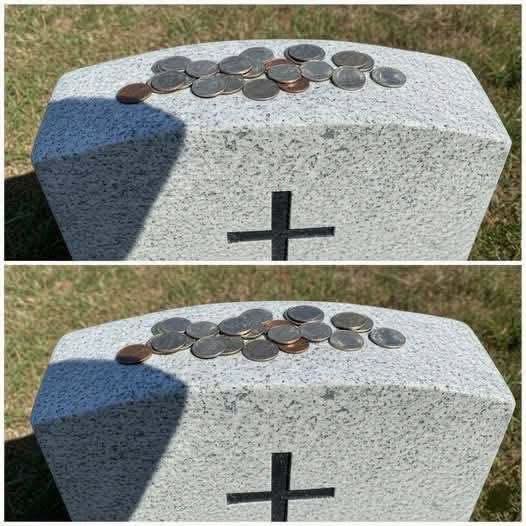
At first glance, a few coins resting on a gravestone may seem like a small or unimportant detail, easily missed among flowers, flags, or engraved memorials. However, in many military cemeteries across the United States, these coins hold a deeply symbolic meaning understood especially within veteran communities. They are not random objects left behind, but intentional gestures of remembrance, respect, and silent communication.
These coins are most often seen at the graves of fallen service members, including soldiers, marines, sailors, and airmen who served in the armed forces. Visitors who leave them are participating in a quiet tradition that expresses honor without the need for spoken words. Each coin becomes a message of memory, gratitude, and connection to those who gave their lives in service.
The tradition itself is strongly linked to military culture in the United States, where it has developed into a meaningful but informal way of paying respect. While it is not an official military rule or requirement, it is widely recognized and respected among veterans and their families. It reflects values such as loyalty, sacrifice, unity, and shared experience among those who have served.
Historically, the idea of leaving coins with the deceased dates back thousands of years. In ancient Greek mythology, it was believed that the dead needed to pay Charon, the ferryman, to cross the river Styx into the afterlife. A coin was placed with the body as payment for safe passage. Similar customs also existed in ancient Roman and Egyptian traditions, where offerings were left to honor or support the dead in the journey beyond life.
Over centuries, these ancient beliefs evolved into modern symbolic practices. While the spiritual meanings have changed, the core idea remains the same: small objects can carry powerful emotional and cultural significance, serving as a bridge between the living and those who have passed away.
In the context of modern American military tradition, the practice of leaving coins became more widely known during and after the Vietnam War era. Many veterans returning from service found it difficult to express grief or openly discuss their experiences. As a result, leaving coins at graves became a silent and respectful way to acknowledge fallen comrades and shared memories.
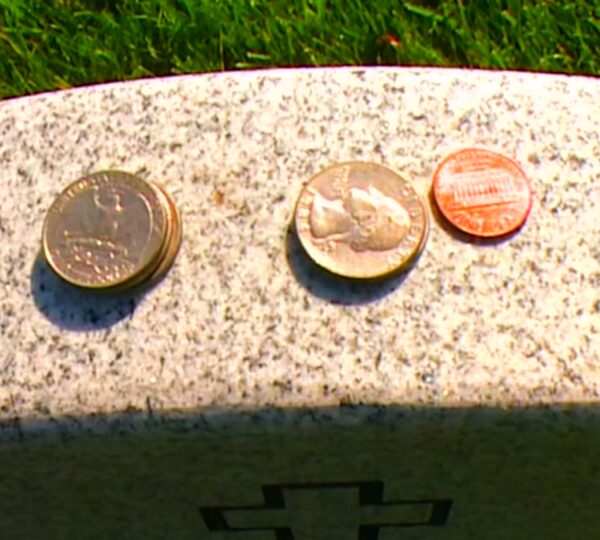
Each coin type carries a specific meaning within this tradition. A penny represents the simplest form of respect, indicating that someone visited the grave and took a moment to honor the fallen service member. It is a quiet sign of remembrance and acknowledgment of their sacrifice.
A nickel carries a deeper message. It signifies that the visitor trained alongside the deceased, sharing early military experiences, discipline, and preparation. This reflects a bond formed during the foundation of their service journey.
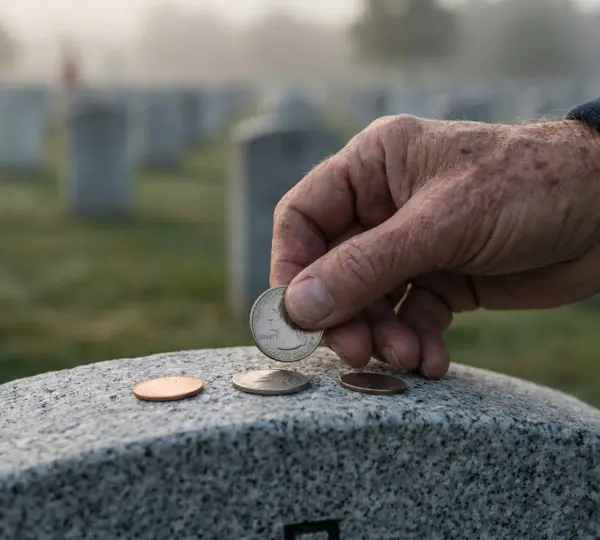
A dime represents an even stronger connection. It shows that the visitor served directly with the deceased during active duty, possibly sharing deployments, missions, or challenging situations where trust and teamwork were essential.
A quarter holds the most profound meaning in this tradition. It indicates that the visitor was present at the time of the service member’s death, symbolizing firsthand witness to sacrifice and a deeply personal act of respect and remembrance.
These meanings are not officially regulated but are widely understood within military circles. Together, they form a silent language of honor that allows veterans and visitors to communicate shared experiences without words.
For families, discovering coins left on a grave can be deeply emotional and comforting. It provides reassurance that their loved one is remembered not only by family members but also by others who served alongside or understand the weight of military sacrifice.
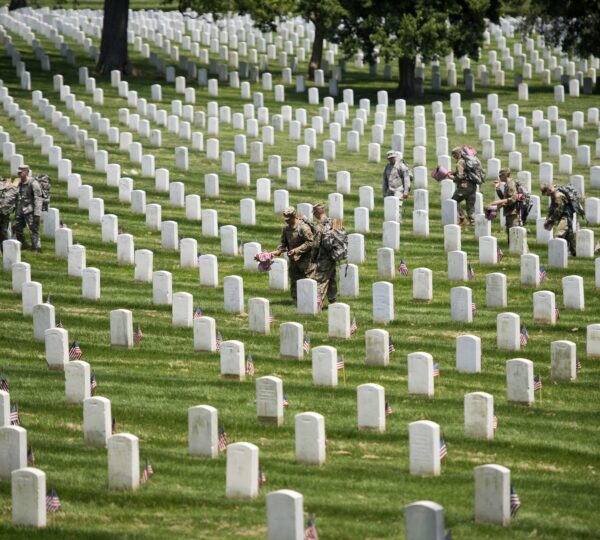
In many national cemeteries maintained by the U.S. Department of Veterans Affairs, coins may be seen accumulating over time. These small offerings represent repeated acts of remembrance from different visitors, creating a quiet but powerful record of respect.
For veterans, leaving a coin often serves as a personal moment of reflection. It allows them to honor fallen comrades, process memories of service, and maintain a sense of connection with those they lost. It is a simple but meaningful ritual that carries emotional weight.
This tradition also highlights the strong sense of brotherhood within military service. Bonds formed during training and combat are often lifelong, built on trust, shared hardship, and mutual reliance. Coins become physical symbols of these invisible but powerful connections.
Unlike formal ceremonies or public memorials, this practice is private and subtle. It does not require recognition or attention, yet it carries deep emotional significance for those who understand its meaning.
Over time, coins have become a recognizable feature in many military cemeteries. While civilians may not always understand their symbolism, veterans often recognize them immediately as messages of respect and remembrance.
The simplicity of this gesture is what makes it so powerful. A small coin, with little monetary value, becomes a symbol of loyalty, sacrifice, and shared history. It shows that remembrance does not need to be grand to be meaningful.
This tradition continues to be passed down through generations of service members. Younger soldiers are taught its meaning, ensuring that the practice remains part of military culture and collective memory.
In a broader sense, the practice reflects how human societies create symbolic ways to deal with grief and honor the dead. While cultures may differ, the intention remains universal: to remember, respect, and maintain connection across time.
Ultimately, coins placed on gravestones represent far more than physical objects. They are silent messages of gratitude, honor, and memory, preserving the legacy of those who served and sacrificed.
This quiet tradition ensures that remembrance continues beyond official ceremonies. It shows that even the smallest gestures can carry deep meaning when rooted in respect, shared experience, and human connection.

