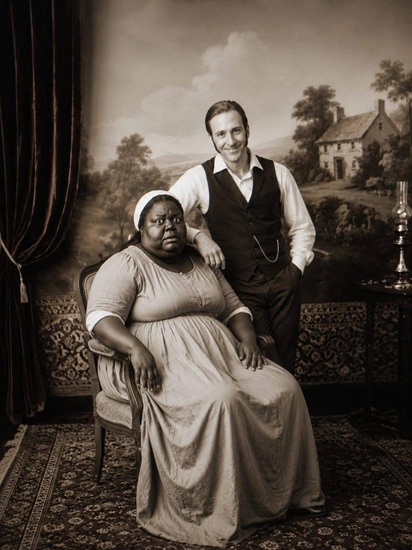
People in the market burst into laughter when a farmer offered only seven cents for a towering woman nearly two meters tall, whom most buyers had already dismissed as useless and unmanageable. Many believed she had no practical value for labor. They said her strength was uncontrolled, that no task could properly suit her, and that keeping her would only lead to losses. However, Joaquim Lacerda did not react like the others.
While the crowd saw a problem, he appeared to observe something different beneath her reputation—raw strength that might still be shaped. The woman was called Benedita. That moment of sale, intended as humiliation in the eyes of many observers, would later become a significant turning point in both of their lives. The event took place in February 1857 in the central square of Vassouras, a town located in the interior of Rio de Janeiro during a period deeply tied to plantation agriculture.
The region of Vale do Paraíba was then shaped by coffee production, where economic prosperity depended heavily on forced labor systems that defined daily life and social structure at the time. On that morning, men, women, and children stood on a raised wooden platform, presented to potential buyers as part of a market system that treated human lives as commodities. The auctioneer, a loud and authoritative man with a curved mustache, moved through each listing with practiced confidence, describing individuals in terms of strength, age, and perceived usefulness.
When Benedita was brought forward, an unusual silence fell across the square. The reaction was not admiration, but uncertainty, as people tried to understand her imposing physical presence. She stood approximately 1.95 meters tall, her frame significantly larger than most individuals around her. Her height alone made her stand out immediately among the gathered crowd of buyers.
Her shoulders were wide and heavily built, her hands large and rough, and her bare feet pressed into the wooden surface, showing signs of years of exhausting physical labor. She wore a torn and worn cotton garment that reflected hardship and deprivation. The condition of her clothing suggested a life shaped by continuous struggle and limited protection from harsh conditions. Her hair was cut very short, and her expression remained distant.
She appeared emotionally withdrawn, observing nothing in particular, as if disconnected from the situation unfolding around her. The auctioneer announced her details, including her name, estimated age of twenty-three, and origin from the Recôncavo region of Bahia, emphasizing her physical strength in commercial terms. Despite her strength, she was also labeled uncontrollable. Reports suggested she had been transferred between multiple properties, with no overseer successfully managing her behavior or labor capacity.
This reputation made buyers hesitant. Many avoided bidding altogether, while others lowered their expectations, uncertain whether she could be integrated into any productive or stable working environment. As the auction continued, bids dropped significantly. Small offers were made and quickly withdrawn, reflecting growing reluctance among buyers to take responsibility for someone considered unpredictable. The numbers continued to fall until they reached extremely low values, signaling that most participants had lost interest or confidence in purchasing her under the existing conditions.
For a brief moment, it appeared that no one would claim her at all. The crowd began shifting attention elsewhere, waiting for the next listing in the ongoing auction process. Then, unexpectedly, a deep voice broke through the silence from the back of the square, offering a bid that immediately changed the atmosphere and drew everyone’s attention back. “Seven cents,” the voice said calmly, yet firmly, standing out sharply against the hesitation and noise that had filled the space only moments before.
The speaker was Joaquim Lacerda, a farmer known for his quiet demeanor. Unlike others, he did not seem influenced by public opinion or the reputation attached to the woman. To the surrounding crowd, his decision appeared irrational. Many could not understand why anyone would place even a minimal bid on someone widely regarded as unmanageable and unproductive.
However, Joaquim’s expression suggested careful observation rather than impulse. It seemed as though he was evaluating potential that others had either overlooked or dismissed entirely without consideration. The auctioneer paused briefly before acknowledging the bid, while murmurs spread across the square. Some laughed, others expressed disbelief, unable to interpret the meaning behind the purchase.
For Benedita, the moment represented yet another transition in a life defined by uncertainty and repeated changes of ownership, circumstances, and environment beyond her control or choice. Despite the reactions around them, Joaquim remained calm and focused. His attention appeared directed not toward her reputation, but toward an idea of what she might become under different circumstances.
The transaction itself, though financially insignificant, stood out within a system that reduced human beings to measurements of labor value, strength, and perceived usefulness in harsh economic conditions. In that brief moment, two lives became connected through an unexpected decision, setting the stage for an uncertain future shaped by environment, perception, and the harsh realities of the era.
What would follow depended less on public opinion and more on Joaquim’s intentions, as well as the unknown potential that he believed he had recognized in Benedita.
