
Sometimes a single decision, such as ordering a simple at-home DNA test, can unexpectedly reshape how a family understands identity, trust, and emotional connection within their everyday lives together. What started as curiosity in our household soon turned into an emotional and life-changing experience for me and my husband Paul, bringing unexpected questions about family, biology, and personal history.
Our story reflects the complex emotional impact of DNA testing, identity discoveries, and the meaning of parenthood when biological results do not match the life we have always known and lived. Paul first suggested taking a DNA test out of curiosity, hoping to explore his ancestry and share meaningful family history insights with our son Austin as he grew older over time.
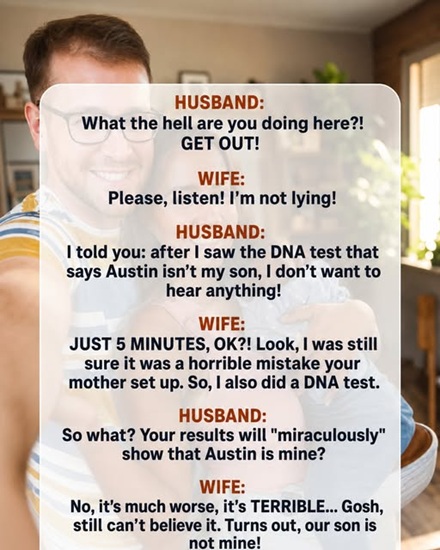
Several weeks later, the test results arrived at our home, and what was expected to be a simple discovery quickly turned into a moment filled with shock, confusion, and silence. Paul read the report carefully, his expression changing as he processed the information. He eventually said the results indicated that he was not Austin’s biological father. That moment created immediate emotional distress between us, as everything we believed about our family structure suddenly felt uncertain and difficult to fully understand or process at that time.
I was deeply shaken by the claim, as I knew within myself that our relationship had always been faithful and built on trust, leaving the results completely confusing and unexpected. Despite my certainty, the situation created emotional pressure, as the scientific report appeared to contradict everything we had believed about our lives and our son’s origin.
In order to find clarity, I decided to take my own DNA test, hoping it would provide answers and help us understand the situation in a more accurate way. When my results arrived, the emotional weight became even heavier, as the report suggested that I also did not share a biological connection with our son Austin.
This discovery left us in a state of deep confusion, as it became clear that neither of us appeared to be biologically related to the child we had raised from birth. We then began looking back to the very beginning, focusing on the hospital where I had given birth, hoping that records might help us understand what could have happened. After reviewing documentation and speaking with hospital staff, we were informed about the possibility of a rare newborn identification error that may have occurred shortly after delivery.
The explanation suggested that two newborn babies may have been mistakenly switched at birth, resulting in each child being raised by the wrong biological parents without immediate awareness. This realization was extremely difficult to process, as it meant that for years we had been raising a child who was biologically connected to another family somewhere else. At the same time, another couple had likely been raising our biological child, creating an emotional and deeply sensitive situation involving two families and two young children.
Soon after, we were introduced to another family, Sarah and James, who were also affected by the same situation and had begun searching for answers regarding their own child. Meeting them for the first time was emotionally overwhelming, especially as we noticed a strong physical resemblance between Paul and their son Andrew, which made the situation even more complex. I also noticed familiar emotional and physical traits in Andrew, creating an unexpected feeling of connection while simultaneously processing the reality of everything that had happened.
Both families sat together in silence during the first meeting, each of us trying to understand how years of love, memories, and parental experience could exist alongside this new information. Over time, we held many difficult but necessary conversations, focusing on what would be best for both children involved, prioritizing emotional stability and long-term well-being above everything else. Eventually, both families agreed that neither child should be suddenly removed from the environment they had known their entire lives, as stability was essential for their emotional health.
We decided that Austin would remain with us, while Andrew would stay with Sarah and James, ensuring that both boys continued their lives in familiar and loving environments. Although the decision was emotionally painful, it was made with careful thought, prioritizing the children’s comfort, psychological stability, and long-term development over biological uncertainty. We also agreed that both boys should eventually learn about their shared story and develop a relationship with each other, allowing them to grow up with understanding and connection.
Despite the biological revelations, Austin remained our son in every meaningful sense, as our relationship had been built through years of love, care, and shared daily life experiences. The situation eventually led both families to reflect deeply on what defines parenthood, realizing that emotional bonds often carry more meaning than genetic connections alone in real life. Over time, we formed an extended family relationship, built on communication, respect, and shared responsibility, ensuring both children received love and support from all parents involved.
This new family structure required ongoing cooperation, trust, and emotional understanding between all adults, focusing on creating a healthy environment for both Austin and Andrew as they grew. Through this journey, we learned that family is not defined only by DNA, but also by love, presence, responsibility, and the shared experiences that shape a child’s life. We also understood the importance of patience and emotional strength when facing unexpected life-changing information, especially when it affects children and deeply personal family relationships.
Looking back, the experience was one of the most difficult and emotionally complex challenges we have ever faced, requiring acceptance, communication, and emotional resilience from everyone involved. Today, when I look at Austin, I do not see a mistake or uncertainty. I see my child, the one I raised, loved, and supported every single day since birth.
Our experience ultimately taught us that parenthood is not defined solely by biology, but by commitment, care, emotional connection, and the lifelong journey of raising a child with love. Even though the truth was unexpected and painful, it ultimately brought clarity and a deeper understanding of what it truly means to be a family in every sense of the word.

