
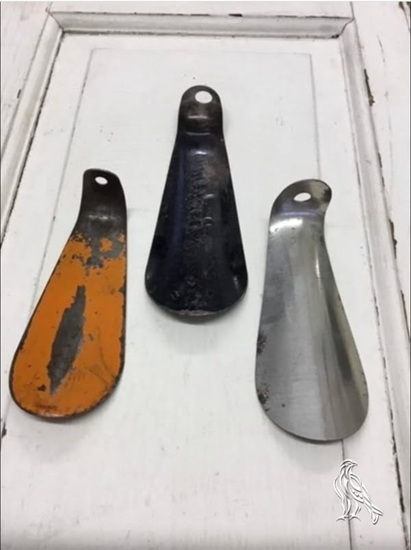
Every now and then, an unusual object from the past captures the attention of internet users and sparks a wave of curiosity. People begin sharing photos, offering theories, and attempting to identify something that once played a simple role in everyday life. A recent example involved a strange-looking item that left thousands of people guessing. Its shape appeared unfamiliar to many viewers, leading to a wide variety of explanations across social media platforms.
Some individuals believed the object was connected to cooking or food preparation. Others suggested it might have been part of an antique machine, a decorative household accessory, or a tool used in a forgotten profession. As discussions continued, more and more theories emerged. The object seemed mysterious because most people had never encountered one in their daily lives or seen it used firsthand.
Eventually, the mystery was solved. The item was identified as a shoe horn, a practical tool that has been helping people put on shoes comfortably and efficiently for hundreds of years. Although it may appear simple, the shoe horn has a long history and remains useful even today. Its purpose is straightforward, yet it addresses a problem that people have faced for generations.
A shoe horn is designed to help the foot slide smoothly into a shoe without bending or damaging the back portion of the footwear. This simple function has made it a reliable accessory for centuries. Long before modern shoe care products became common, people relied on shoe horns to protect their footwear and make daily routines easier. Historical evidence suggests that shoe horns have existed for several hundred years, with early versions appearing in Europe during the late medieval period.
By the fifteenth century, these tools were already being used in many households, particularly among people who owned well-crafted shoes that required careful maintenance. The earliest shoe horns were usually made from natural materials that were both durable and widely available. Animal horn was one of the most common choices and inspired the tool’s name.
Craftsmen also produced shoe horns from bone, wood, and other sturdy materials. These resources provided a smooth surface that allowed the foot to enter the shoe more easily. At the time, footwear was often handmade and considerably more expensive than many modern shoes. Protecting a pair of shoes from unnecessary wear was therefore an important concern. Many shoes were constructed from thick leather and featured stiff openings that made them difficult to put on without assistance.
A shoe horn offered a practical solution by reducing friction between the foot and the shoe. Instead of forcing the foot inside, the wearer could guide it gently into place. This prevented excessive pressure on the heel section and helped maintain the shape of the shoe over time. For many people, using a shoe horn became a normal part of getting dressed. It required very little effort but provided significant benefits for preserving footwear.
As craftsmanship advanced, shoe horns gradually became more refined in both appearance and construction. New manufacturing techniques allowed artisans to experiment with different materials. Metal versions became increasingly popular as metalworking skills improved. Brass and steel shoe horns offered durability and often lasted for many years without significant wear. These metal designs were valued not only for their strength but also for their polished appearance and elegant finish.
Many examples produced during earlier centuries featured decorative details, including engraved patterns, ornamental handles, and carefully crafted surfaces. Some wealthy households owned particularly elaborate shoe horns made from premium materials and designed to complement other personal accessories. In addition to serving a practical purpose, these decorative versions reflected changing tastes and standards of craftsmanship.
The Industrial Revolution played a major role in making shoe horns more widely available to the public. Improved manufacturing methods reduced production costs and increased accessibility. As factories became capable of producing household goods on a larger scale, shoe horns became common items in many homes. During the nineteenth century, they could be found in households across different social classes, no longer limited to those with significant financial resources.
The twentieth century introduced new materials that transformed the production process even further. Plastic quickly became one of the most widely used options. Plastic shoe horns were lightweight, affordable, and easy to manufacture in large quantities, making them practical for everyday use. Despite changes in materials, the overall design remained remarkably consistent. The curved shape that made early shoe horns effective continued to define modern versions.
This continuity highlights one of the most impressive aspects of the shoe horn. Its design solved a common problem so efficiently that there was little need for major changes. Many products evolve dramatically over time, but the shoe horn remains an example of a tool whose original concept continues to work exceptionally well. Its primary purpose has always been to protect the back of a shoe while helping the wearer put it on comfortably and efficiently.
The reinforced heel section of a shoe can become damaged if the foot is repeatedly forced inside without proper support. Over time, this can lead to bending, creasing, and loss of structure, reducing both the appearance and lifespan of the footwear. A shoe horn minimizes these issues by creating a smooth surface that guides the foot into position with minimal pressure.
This is particularly useful for formal shoes, leather footwear, and boots that feature a more structured design. People who invest in high-quality shoes often use shoe horns regularly because they help maintain the shape and durability of the footwear. Modern shoe horns are available in a variety of lengths and styles to meet different needs and preferences.
Compact versions are easy to store and carry, making them ideal for travel or occasional use outside the home. Many travelers appreciate having a small shoe horn in a suitcase because it provides convenience without taking up much space. Longer versions are designed for everyday home use and are especially popular among people seeking greater comfort.
A long-handled shoe horn allows users to put on shoes while standing, reducing the need to bend down. This feature can be particularly beneficial for older adults, individuals recovering from injuries, or people experiencing mobility limitations. Healthcare professionals sometimes recommend long shoe horns as assistive devices that can make daily activities more manageable.
By reducing physical strain, these tools help many individuals maintain independence and comfort during routine tasks. Although some people consider shoe horns old-fashioned, they continue to be used in homes, hotels, shoe stores, and dressing rooms around the world. Their ongoing presence demonstrates that practical inventions do not necessarily become obsolete simply because they have existed for a long time.
In addition to their everyday usefulness, shoe horns have become collectible objects valued by enthusiasts of antiques and historical household items. Collectors often seek vintage examples that feature unusual materials, distinctive craftsmanship, or decorative details. Older shoe horns can provide fascinating insights into design trends, manufacturing methods, and daily life during earlier historical periods.
Some antique versions were crafted from silver or other premium materials, reflecting the preferences and social status of their original owners. Museums and private collections occasionally include shoe horns among exhibits that explore the history of personal accessories and domestic life. These objects may seem simple, but they help illustrate how people approached practical challenges in previous generations.
One reason shoe horns continue to attract interest is their combination of functionality and timeless design. Unlike many inventions that become outdated as technology advances, the shoe horn remains just as useful today as it was centuries ago. Its success lies in its simplicity. It performs a specific task effectively without requiring complicated mechanisms or constant redesign.
The recent online fascination with this object highlights how quickly familiar tools can become mysteries when they fade from everyday visibility. For younger generations who have never used one, a shoe horn may appear unusual or difficult to identify at first glance. Once its purpose is understood, however, the object becomes an excellent example of practical design that has endured across generations. Rather than being a forgotten machine part or an unexplained gadget, the shoe horn is a reminder that some of history’s most successful inventions are also among the simplest.
Its long history reflects the enduring value of thoughtful craftsmanship, functional design, and tools that quietly improve daily life without drawing much attention. Even in a world filled with modern innovations, the humble shoe horn continues to serve the same purpose it has fulfilled for centuries, helping people protect their shoes and make everyday routines a little easier.

