

Interactions between political leaders and journalists have long been an important part of public life, but in recent years these exchanges have increasingly become major news stories themselves. A recent example occurred during a June 3 press briefing in the Oval Office, where President Donald Trump responded to questions regarding a proposed Department of Justice initiative that had already sparked public debate.
The proposal reportedly involved approximately $1.8 billion and was intended to compensate individuals who believed they had been unfairly affected by actions taken by federal prosecutors. The plan quickly became controversial, with critics raising concerns that certain people connected to the January 6 Capitol events could potentially benefit from the program. Supporters of the proposal argued that allegations of unfair treatment by government agencies deserved review and that the matter should be examined based on the facts surrounding each case.
As reporters gathered inside the White House for the briefing, several questions focused on the future of the proposal and whether the administration still intended to move forward with it. Journalists sought clarification on whether the program remained active, had been delayed, or was no longer under consideration. Rather than immediately providing a detailed answer, Trump expanded the discussion to include criticism of previous administrations and broader political issues.
The president argued that government institutions had been used improperly against some of his supporters and political associates, repeating themes that have appeared frequently in his public remarks. As the conversation developed, attention gradually shifted away from the policy itself and toward an exchange involving CNN correspondent Kaitlan Collins. Without being directly asked about the reporter, Trump criticized CNN and questioned the network’s coverage of his administration.
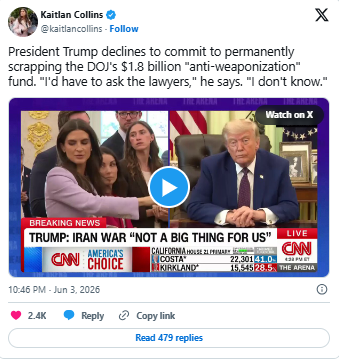
He then directed several personal remarks toward Collins, commenting on her demeanor during White House briefings and suggesting that she rarely appeared pleased with administration policies. The comments immediately attracted attention because they focused on the journalist rather than the issue originally being discussed. Political commentators from different perspectives reacted to the exchange, with some defending the president’s communication style and others criticizing the personal nature of the remarks.
Throughout much of the interaction, Collins remained focused on obtaining information regarding the proposed Department of Justice fund. Instead of responding to the personal observations, she returned to the original question and asked whether the program was still being considered by the administration. Her response drew notice because it redirected the discussion back toward a specific policy matter rather than the personal exchange taking place in the room.
When asked directly about the proposal, Trump indicated that he would need to consult with legal advisers before providing a definitive update on its status. That answer prompted additional questions from reporters who were seeking a clearer understanding of where the initiative stood. As the discussion continued, Collins repeatedly attempted to obtain more specific information about the proposal and whether it remained a priority.
The interaction reflected the sometimes tense relationship that can exist between political leaders and members of the press during high-profile news conferences. Observers noted that the exchange highlighted the balance journalists often try to maintain between asking persistent questions and keeping attention focused on public policy issues. At several points, Trump returned to discussing Collins rather than providing detailed information about the proposal itself.
The CNN correspondent has frequently questioned the president during press conferences and has become one of the most visible reporters covering the White House. Her reporting style often includes follow-up questions designed to clarify statements made by government officials or to obtain additional information. Supporters of this approach argue that follow-up questions are a critical part of journalism because they help ensure accountability and transparency.
Others believe that repeated exchanges can sometimes contribute to an increasingly confrontational atmosphere between reporters and public officials. Regardless of perspective, the role of journalists in questioning government leaders remains an essential feature of democratic societies. During the June 3 briefing, Collins continued directing her questions toward the policy issue rather than responding extensively to the personal comments made about her.
That decision became a topic of discussion among media observers who viewed it as an effort to keep attention on the subject under consideration. The exchange also renewed broader conversations about the relationship between public officials and journalists in modern political communication. Debates about how reporters are treated during press briefings have existed for decades and have involved administrations from both major political parties.
Journalists are expected to ask questions on behalf of the public, while elected officials often challenge coverage they believe is unfair or inaccurate. These differing roles can sometimes create tension, particularly during discussions involving controversial policies or politically sensitive topics. Media analysts noted that the interaction reflected a larger trend in which personal exchanges often receive as much public attention as the policies being discussed.
In the age of social media, brief moments from press conferences can spread rapidly and reach audiences far beyond those originally watching the event. Video clips and excerpts from the briefing circulated widely online, generating commentary from political supporters, critics, journalists, and members of the public. Some observers focused primarily on the unanswered questions surrounding the proposed compensation initiative, while others concentrated on the tone of the interaction itself.
The event illustrated how modern news coverage often combines policy discussions with broader conversations about communication style and public discourse. A single exchange during a press conference can quickly become part of a larger national discussion due to the speed with which information travels online. Political briefings that once reached only a limited audience now have the potential to be viewed by millions within hours of taking place. This transformation has significantly changed how government communication is consumed and interpreted by the public.
The June 3 exchange became another example of how a policy-related question can evolve into a wider debate about journalism, accountability, and political rhetoric. Whether viewed as a disagreement over media coverage or as a discussion about public transparency, the interaction attracted significant attention across news platforms. For many observers, the moment underscored the continuing importance of clear communication between elected officials and members of the press.
It also highlighted the challenges reporters face when attempting to obtain specific answers during politically charged discussions. As public interest in government decision-making remains strong, exchanges between journalists and political leaders are likely to continue generating widespread attention. Ultimately, the briefing demonstrated how modern press conferences often serve multiple purposes at once, functioning as policy discussions, media events, and public forums for competing viewpoints.
The incident also reinforced the reality that communication style can become as much a part of the public conversation as the issues being debated. In the end, the exchange left many observers focused on two separate questions: the future of the proposed Department of Justice initiative and the evolving relationship between political leaders and the journalists who cover them.

