
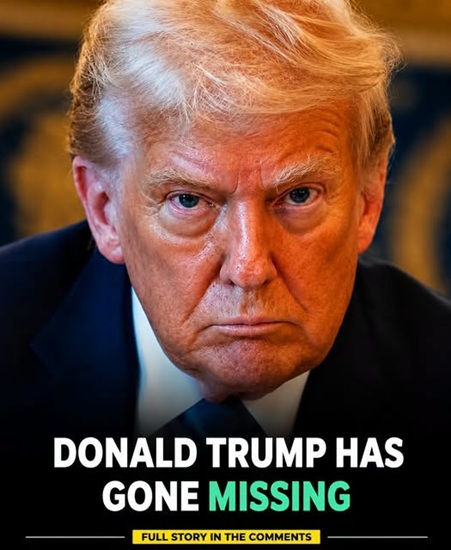
Recent attention in political reporting has focused on Donald Trump’s public schedule and the number of recent live appearances he has made compared to earlier periods of his political activity. This discussion has circulated across media coverage and online commentary. According to publicly available information and standard reporting on presidential schedules, Trump’s most recent widely covered in-person engagement at a Cabinet-level setting was reported around May 27, after which fewer live public events were noted in comparison to previous weeks.
During this period, official communication from the White House and associated channels continued through written statements, briefings, and scheduled updates, which are common forms of communication for any administration. These forms of communication are typically used alongside public appearances and are part of the normal structure of governmental operations, especially when leaders are engaged in internal meetings, policy discussions, or private briefings.
The reduced number of visible live appearances during this specific timeframe has led to increased public discussion, particularly among political commentators and observers who track presidential activity closely. Some analysts note that political schedules can naturally vary depending on travel, administrative work, policy planning, and private meetings that are not always reflected in public-facing calendars.
As a result, periods with fewer public appearances do not necessarily indicate a change in official activity, but rather a shift in how and where work is conducted. In addition to general scheduling discussions, attention has also been drawn to a reported visit by Trump to Walter Reed National Military Medical Center, which was covered by several media outlets.
According to those reports, the visit lasted several hours and was described in general terms as part of routine medical evaluation procedures, although no detailed medical information was publicly released beyond official summaries. The White House physician has previously issued public health updates stating that the president undergoes regular medical monitoring, which is standard practice for individuals in high-profile leadership positions.
These updates typically summarize overall health status in general terms rather than providing detailed medical records, in accordance with established privacy and communication guidelines. Some medical experts speaking in media interviews have discussed broader topics related to executive health transparency, noting that routine medical imaging and preventive testing can be part of standard care for older adults.
They also emphasize that without access to full medical records, external interpretation of specific procedures or their frequency remains limited and should not be treated as definitive conclusions. In public discussion, presidential health transparency has long been a subject of interest in the United States, where periodic health summaries are traditionally released to provide general information to the public.
However, the level of detail in these summaries has varied across different administrations, leading to ongoing debate about how much medical information should be shared publicly. Alongside health-related discussions, attention has also been placed on the broader topic of presidential visibility and public engagement. Modern political communication often involves a combination of live appearances, digital messaging, written statements, and controlled press interactions.
This means that periods with fewer live events may still include significant behind-the-scenes activity that is not immediately visible to the public. Political analysts often point out that executive schedules are frequently structured around internal meetings, intelligence briefings, policy coordination, and diplomatic communication. These responsibilities are typically conducted outside of public view and are not always reflected in daily media coverage.
In this context, variations in public appearances are not unusual and can occur for a range of administrative and logistical reasons. Media coverage of such periods often increases public interest, particularly when high-profile figures are involved and when information is primarily limited to official statements. Social media platforms and commentary outlets may amplify discussion during these periods, contributing to wider public attention and interpretation of schedule gaps.
Supporters and critics of political figures often interpret the same information differently, depending on political perspective and expectations regarding transparency and visibility. This divergence in interpretation is common in modern political environments, where information is widely accessible but often viewed through different analytical or ideological lenses. In general, political reporting on leadership activity relies on verified schedules, official communications, and documented public appearances.
When live appearances are less frequent, reporting typically focuses more on written statements and confirmed engagements rather than speculation. It is also important to note that variations in public presence are not unique to any single administration, as all political leaders balance public events with private governance responsibilities. Historical patterns show that presidents and senior officials often adjust their public-facing schedules based on workload, travel, security considerations, and policy demands.
In today’s media environment, however, expectations for constant visibility have increased significantly due to real-time news cycles and digital platforms. This has led to greater scrutiny of gaps in public appearances, even when official activity continues behind the scenes. As of the latest publicly available information, there have been no official statements indicating any extraordinary circumstances related to the president’s duties during the period in question.
However, public interest in his schedule remains active, and media organizations continue to monitor upcoming appearances and official engagements. Future public events, scheduled addresses, or official appearances are expected to provide additional clarity regarding ongoing activity.
In the meantime, discussions around visibility, communication style, and transparency continue to form part of broader political discourse. The situation reflects a wider trend in modern politics, where leadership is evaluated not only through policy decisions but also through communication frequency and public engagement. As reporting continues, updates will depend on verified information released through official channels and confirmed public appearances.

