
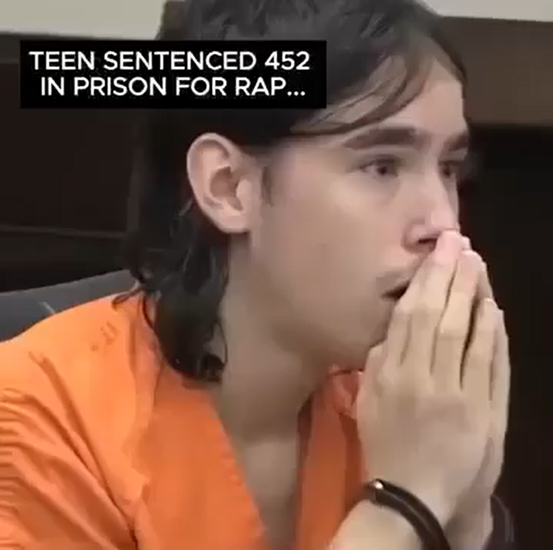
A teenager walked into court carrying the weight of unimaginable consequences, and walked out with a sentence so extreme it felt almost unreal: 452 years behind bars, a figure that defies human comprehension entirely. The number alone stopped people in their tracks. It was more than decades or lifetimes; it felt like a statement, a declaration that the court intended to seal this life away indefinitely before it had truly begun. Families wept openly inside the courtroom.
Some nodded solemnly through tears, believing the punishment reflected the gravity of the harm inflicted. Others sat stunned, questioning whether justice had become a mechanism of despair rather than restoration. This sentence did not affect only the teenager. It rippled outward, dividing neighbors, friends, and even parents. Conversations erupted on porches, social media feeds, and workplaces, touching a moral dilemma that no one could easily resolve…
The courtroom itself was filled with tension. The judge’s words rang sharply, cutting through the space with a finality that weighed on everyone present. Silence settled like a thick fog over the benches. For the victims’ families, accountability and grief merged into a single, insistent demand: recognition that real harm had been done, and that society had responded with the only language it knows to honor suffering.
They do not dwell in theories or abstractions. Their lives now bear absence, trauma, and memories that will never fade. Justice, in their eyes, is measured in consequences rather than mercy or second chances. On the other side, the teenager’s family watched as a child they had known, nurtured, and loved was reduced to a staggering number. The child’s bedroom, toys, and voice suddenly felt far away, almost imaginary…
A father’s quiet hopes, a mother’s protective worry, all rendered invisible under the enormity of the sentence. The boy they raised was no longer a person; he had become a measure of punishment so vast it consumed empathy entirely.
Herein lies the ethical tension. Society must protect the innocent, uphold the law, and prevent harm. But it must also consider whether a young life is being permanently erased, leaving no room for rehabilitation.
Punishment without the possibility of redemption risks transforming justice into cruelty. The line between firm accountability and absolute despair becomes dangerously thin, and the public wrestles with the morality of both extremes. Neighbors argued late into the night about what justice meant. Was this sentence merely proportional to crimes committed, or did it reflect a collective impulse to extinguish any future the teenager might have had?
Online forums and comment threads became battlegrounds of ideology. Some demanded harsher measures, insisting that society could not tolerate acts causing profound harm. Others pleaded for consideration of age, growth potential, and the capacity for change.
Ethicists note that extreme sentences raise philosophical questions about the purpose of punishment. Is it purely retributive, ensuring proportional suffering, or is it protective, aimed at preventing further harm while leaving room for rehabilitation?
Behavioral studies show that adolescence is a period of rapid neurological development. Decision-making, empathy, and impulse control are all in formation, complicating assessments of moral culpability and long-term accountability for young offenders. Still, victims’ families see only the consequences of actions, not the theoretical malleability of a teenager’s mind. Their pain demands recognition, their grief demands that justice be visible, tangible, and undeniable.
Legal professionals emphasize that sentences like 452 years are symbolic, cumulative, and reflective of multiple convictions rather than a literal expectation of lifespan imprisonment. Yet the human impact makes the abstraction nearly impossible to bear. Inside the courtroom, lawyers, clerks, and observers wrestled silently with the paradox of extreme punishment: how to honor victims’ suffering while acknowledging that the condemned is not yet a fully formed adult.
Psychologists warn that lifelong incarceration beginning in adolescence often limits opportunities for moral growth, education, and personal transformation. Once removed from society, the chance to contribute positively vanishes almost entirely. The teenager’s case raised broader societal questions. When harm is severe, can mercy coexist with accountability? When youth is involved, does long-term punishment contradict ethical principles of proportionality and potential for change?
Advocates for criminal justice reform argue that sentences of hundreds of years underscore a systemic tendency to prioritize retribution over rehabilitation, especially for young offenders, while failing to consider the long-term social consequences. Yet, some community members insist that justice must be felt, physically and emotionally, by those whose lives were irreparably harmed. They argue that symbolic sentences send a clear societal message about the consequences of destructive actions.
Families of victims often describe the sensation of living in a world where justice is insufficient. No sentence, no number, no duration can erase trauma or return what was lost, leaving legal measures as the only recourse to acknowledge suffering. For the teenager, the number 452 is more than punishment; it is identity redefined, freedom suspended, and potential deferred indefinitely. Childhood, education, relationships—all replaced by a staggering figure representing a lifetime’s absence.
Courts must balance these realities with societal obligations. Protecting the public, acknowledging victims, and respecting the potential for rehabilitation are competing imperatives that rarely coexist without tension. Ethical discussions in law schools now reference cases like this as paradigmatic dilemmas. They illustrate the difficulty of administering justice when crime, youth, and irreversible punishment intersect in profoundly human ways.
Some legal theorists emphasize that extremely long sentences can act as deterrents, signaling societal intolerance for certain actions. Others counter that the moral cost may outweigh any preventive benefits, particularly when human development is not considered. The teenager’s family struggles with shame, fear, and hope simultaneously. They remember the child before wrongdoing, imagining what life could have been while confronting the reality of what life has become.
Community response varies widely. Support groups, mental health advocates, and legal analysts debate publicly, reflecting society’s deep divisions on punishment, mercy, and moral responsibility in the context of adolescent offenders. Ultimately, the case forces reflection on the nature of justice itself. Is the goal retribution, deterrence, protection, or rehabilitation? And can these objectives ever fully coexist when a single life is at stake?
Philosophers argue that a just society must uphold both firmness and compassion. It must acknowledge harm without extinguishing hope entirely, ensuring that consequences are fair, proportionate, and informed by understanding of human development. The victims deserve recognition, care, and protection. Their trauma is real, and justice must respond to it. But justice should also be mindful that youth, even after egregious actions, retains the potential for growth and understanding.
For some observers, 452 years represents justice speaking loudly, an affirmation that society will not tolerate certain acts. For others, it sounds like hope, growth, and potential being sentenced alongside the crime. In classrooms, debates continue on the ethics of such sentences, exploring questions of moral culpability, proportionality, and the capacity of young people to change. No single answer satisfies all parties involved.
Even as the sentence is carried out, the broader society watches and learns. Lawmakers, educators, parents, and social workers consider the implications of extreme juvenile sentencing for both public safety and human development. At its core, the case underscores the tension between harm and humanity. It forces a confrontation with difficult truths: wrongdoing must be acknowledged, victims must be protected, yet young lives still contain possibility and potential.
Ethical, legal, and social discourse continues to evolve, examining how best to reconcile justice with mercy, accountability with hope, and punishment with the possibility of transformation in developing individuals. In the end, the number still hangs over the case.
452 years. It will continue to spark debate, reflection, and ethical inquiry far beyond the courtroom walls, challenging assumptions about punishment and the human capacity for change. For the victims, it is justice. For the offender, it is a future suspended. For society, it is a profound moral question: how to balance accountability, compassion, and the potential for redemption in the shadow of irreversible harm.

