
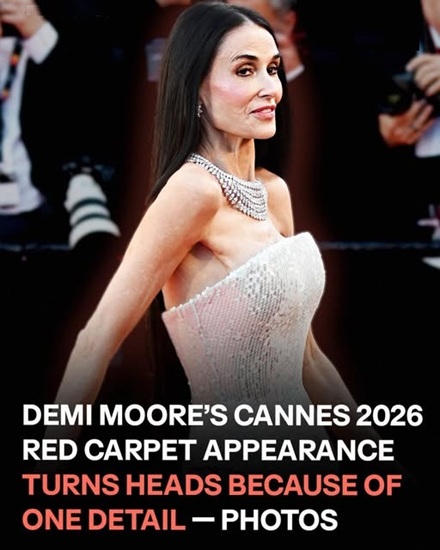
Demi Moore arrived at Cannes with the kind of presence that immediately draws attention, the sort of arrival that feels less like an entrance and more like a reminder of long-standing Hollywood influence. The atmosphere around the opening ceremony was already charged with anticipation, with cameras positioned along the red carpet and guests preparing for one of the most closely watched cultural events in the film world.
Moore’s appearance added another layer of excitement, as photographers and fans alike responded to her as both a veteran actress and a fashion focal point. Her custom sequined Jacquemus gown reflected the cinematic energy of the festival itself, shimmering under the Riviera lights in a way that naturally commanded the frame. Before stepping onto the main red carpet, Moore’s presence in Cannes was already being documented through her earlier appearances in the city. She was seen attending a dinner outing in a Gucci ensemble that reflected a more relaxed but still highly curated fashion direction.
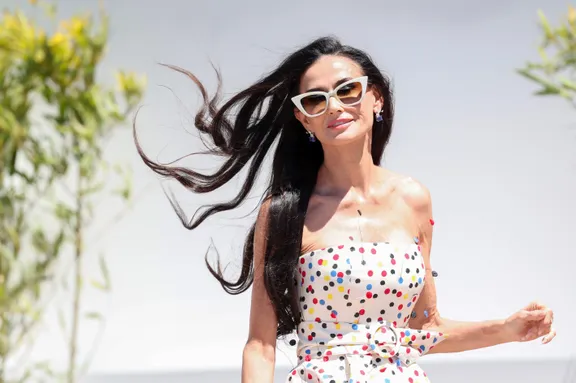
The outfit combined structured elements with casual layering, creating a balance between comfort and high fashion that is often seen among major festival attendees. Accessories such as a structured shoulder bag and statement footwear completed the look, reinforcing her long established reputation for thoughtful styling choices during public appearances. The next morning brought a complete shift in tone as she appeared at the official jury photocall alongside other notable figures in the film industry.
This setting emphasized professionalism and artistic collaboration rather than red carpet glamour. Her polka dot Jacquemus dress stood out for its bold visual design, featuring color accents and playful texture that contrasted with the formal backdrop of the event. The styling choices reflected a broader trend in Cannes fashion where individuality is often expressed through strong silhouettes and distinctive designer pieces.
Later that evening, Moore transitioned into what many considered her most striking look of the festival. The custom Jacquemus gown she wore for the opening ceremony featured intricate sequins and structured tailoring that highlighted both craftsmanship and theatrical presentation. The gown’s design reflected a classic red carpet philosophy, where movement, lighting, and fabric work together to create visual impact. Paired with carefully selected jewelry, the overall look positioned her firmly within the tradition of Cannes icons who use fashion as part of their public storytelling.
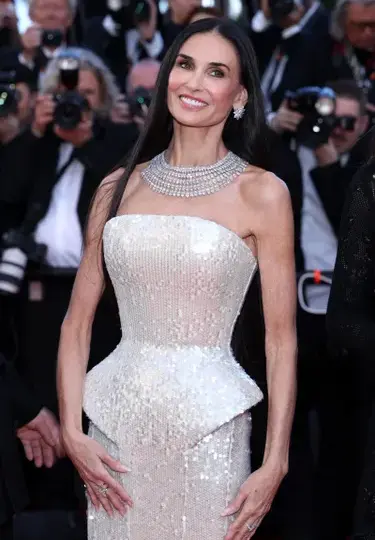
As images from the event circulated online, public discussion quickly expanded beyond fashion into broader commentary about appearance and celebrity culture. Many viewers focused on her overall presentation, while others engaged in wider conversations about how actresses are perceived in high visibility environments. Social media platforms amplified these discussions, as users reacted in real time to photographs and video clips from the red carpet.
The variety of responses reflected the increasingly interactive nature of modern celebrity events, where audience interpretation becomes part of the story. Some online commentary centered on admiration for Moore’s continued ability to command attention at major international events. Supporters highlighted her long career in film and her continued relevance in public appearances that span decades of industry change. Others focused on stylistic interpretation, discussing how her fashion choices aligned with evolving trends in red carpet design.
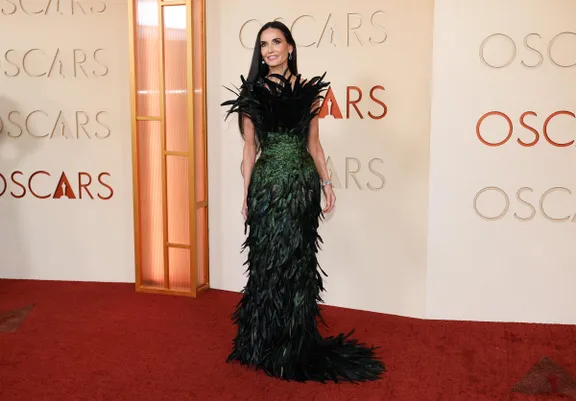
These discussions often extended into broader appreciation for Cannes as a space where fashion and cinema intersect on a global stage. At the same time, conversations also reflected how quickly public focus can shift toward physical appearance when it comes to high profile figures. Images taken from multiple angles were widely shared, leading viewers to form their own interpretations of her look at the event. This pattern is not unique to Moore, but rather part of a larger trend in celebrity culture where visual scrutiny becomes amplified through digital platforms.
The speed of online reaction often turns a single appearance into a wide ranging public discussion. Fashion analysts and commentators observing the festival noted that Moore’s wardrobe choices aligned with a deliberate styling approach often seen among established actresses. Rather than relying on a single aesthetic, she presented multiple looks across different appearances, each suited to its specific context. This approach reflects a common strategy at Cannes, where celebrities often use fashion to adapt to varying levels of formality throughout the festival schedule.

The result is a layered public image that evolves over the course of the event. Beyond the fashion and public reaction, Moore’s presence at Cannes also highlighted her continued participation in the broader entertainment landscape. Her involvement in recent projects and appearances demonstrates a sustained connection to film culture, even as the industry continues to evolve.
Events like Cannes provide a platform where legacy and contemporary cinema intersect, allowing established figures and newer voices to share the same space. Moore’s participation fits within this dynamic environment. The red carpet itself remains one of the most visible aspects of the festival, and Moore’s appearance contributed to its ongoing cultural significance.
Photographers captured her from multiple perspectives, ensuring that her looks would circulate widely across media outlets and social platforms. This visibility is part of what makes Cannes a central moment in the global entertainment calendar, where individual appearances can quickly become widely discussed cultural moments.

As discussions continued online, they also reflected broader themes about aging in Hollywood and how female celebrities are perceived over time. Public attention often places additional scrutiny on long standing figures in the industry, particularly when they continue to appear in high profile settings. Moore’s presence at Cannes naturally became part of this ongoing conversation, which extends far beyond a single event or appearance.
Despite the range of commentary, the overall impression from the festival remained centered on her ability to maintain relevance in a highly competitive visual environment. Cannes is known for its intensity, with every appearance carefully documented and widely analyzed. Within that context, Moore’s looks stood out for their consistency in presentation and alignment with the event’s aesthetic expectations. Her presence contributed to the broader narrative of the festival’s opening days.
Ultimately, her appearance at Cannes served as another example of how celebrity culture, fashion, and public perception intersect in real time. Each outfit, photograph, and reaction becomes part of a larger ongoing narrative shaped by both media coverage and audience engagement. Moore’s role within that space reflects not only her personal career longevity but also the evolving nature of public attention in the digital age.

