
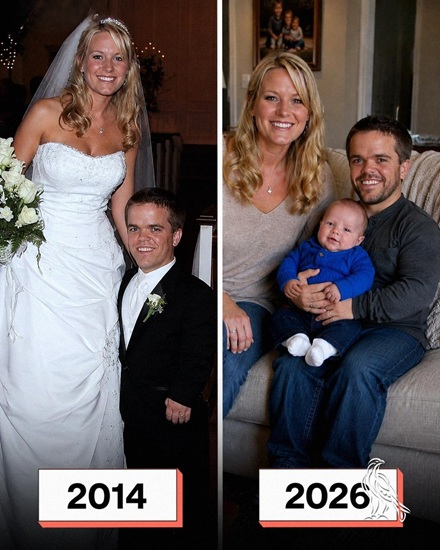
My parents had always disguised their cruelty as humor, but over the years it became clear that what they called jokes were actually constant, deliberate humiliations. They never missed an opportunity to mock my husband, Jordan, especially his height and physical condition. At family gatherings, they would make comments disguised as laughter, expecting everyone else to join in as if it were harmless entertainment. Over time, it became a pattern that I could no longer ignore, even though I tried to convince myself it was just their way of speaking.
What hurt most was not only what they said, but how comfortable they had become saying it in front of others. They acted as if their words carried no weight, even when they clearly did. Jordan, on the other hand, never responded with anger. He always remained composed, calm, and respectful, even when the comments were clearly meant to embarrass him. He was born with achondroplasia, a form of dwarfism, but that never defined his personality or his achievements. He was an architect with an extraordinary talent for visualizing structures and spaces in ways that others could not.
I often watched him work with a kind of quiet brilliance, turning simple ideas into designs that felt alive. To me, he was everything my parents failed to understand about strength. But to them, he was something they treated as a source of ridicule, something they refused to respect. I still remember the day of our wedding as if it were frozen in time. My mother looked uncomfortable from the moment she arrived, not because she was unhappy for me, but because she could not hide her embarrassment about Jordan.
It was as if she was more concerned with appearances than with my happiness. My father tried to act polite, but there was always a sharp edge to his tone, as though every interaction required a hidden insult. I kept hoping that, for just one day, they would set aside their behavior and allow me to enjoy one of the most important moments of my life. Instead, the tension followed me everywhere like a shadow.
During the reception, my father eventually stood up with a glass in his hand and asked for attention. The room slowly quieted, unaware of what was coming next. He raised his microphone and delivered a toast that immediately shifted the atmosphere in the room. His words were framed as humor, but the intent behind them was clear. He made a joke about our future children and their height, causing a few awkward laughs from guests who didn’t know how else to react. I remember feeling my entire body go rigid as I looked at Jordan, who simply held my hand under the table.
He didn’t react outwardly, but I could feel the weight of what he was holding back. After the wedding, things did not improve. In fact, they became worse in more subtle ways. My parents continued their behavior during family dinners and conversations, often targeting Jordan with disguised insults. One evening, Jordan mentioned that he had spent part of his childhood in an orphanage after being abandoned. I expected at least a moment of empathy or understanding from them.
Instead, they exchanged looks and laughed, turning something deeply personal into another moment of cruelty. That was the moment I realized they would never change their behavior, no matter how many chances they were given. It was no longer ignorance—it was a choice. Over time, I began to distance myself from them emotionally and socially. I stopped sharing details of my life and limited my visits. Every interaction felt like a test of patience, where I was constantly forced to defend the person I loved.
Jordan never asked me to cut them off completely, but I could see how much it affected him. Despite everything, he continued focusing on his work and building his architecture firm into something meaningful and successful. He surrounded himself with people who valued talent and character rather than appearance, slowly creating a professional life that reflected his true abilities.
Then everything changed when my parents’ financial situation collapsed. At first, their messages were vague and filled with concern about business struggles and mounting debts. Over time, those messages became more urgent, until they eventually lost nearly everything they had worked for. One evening, they arrived at our home unannounced. For the first time, I saw them without their usual confidence. They looked exhausted, uncertain, and visibly humbled by their circumstances. It was a stark contrast to the people who had once treated others with superiority.
They did not come to apologize. Instead, they came to ask for money. They explained that they needed $20,000 to prevent their condo from being seized by the bank. My mother tried to frame it as a family obligation, reminding us that we were connected by blood. My father spoke more directly, outlining their situation as if it were a business transaction. I immediately felt a wave of frustration, remembering years of humiliation that had never been acknowledged or corrected. I was ready to refuse them outright, but Jordan surprised me by inviting them inside calmly, suggesting we talk.
For nearly two hours, they sat in our living room and explained their financial crisis in detail. They spoke about debt, deadlines, and pressure from creditors, but not once did they acknowledge the emotional damage they had caused over the years. There was no apology, no reflection, only urgency. Eventually, Jordan left the room and returned with a check for the full amount they had requested. My mother immediately reacted with relief, as if the problem had already been solved. But Jordan held the check back and told them there was a condition attached.
He asked for an apology.
At first, my father dismissed it lightly, as if it were a trivial request. He offered a quick apology that lacked sincerity, while my mother attempted to soften her words in a similar way. But it was clear that neither of them truly understood what they were apologizing for. The apology felt empty, almost rehearsed, as if it were simply the price they needed to pay to get what they wanted. That moment made something shift inside me. I realized that allowing them to walk away like this would only continue the same cycle that had existed for years.
I took the check from Jordan’s hand before they could accept it. I told them clearly that they could not erase years of humiliation with a few careless words. I reminded them of every insult, every joke, and every moment they had treated Jordan as if he was less than human. My voice was steady, but every word carried the weight of everything I had kept silent about for too long. I told them that if they wanted help, they would need to understand what they had done first, not just apologize for convenience.
I proposed a condition: they would spend time at Jordan’s architecture firm, observing the environment and the people who worked there. Jordan’s firm was built on inclusivity, employing individuals who had often been underestimated or overlooked elsewhere. It was a place where talent mattered more than appearance, and where people were valued for their skills rather than judged for their differences. I wanted my parents to see that world, not as spectators looking down on it, but as people who were finally placed within it without superiority.
My father reacted immediately with anger, refusing the idea and calling it unnecessary. He dismissed the entire suggestion as insulting and beneath them. In that moment, it became painfully clear that they still did not understand the problem. When he referred to the idea as a “circus,” something inside me broke completely. There was no misunderstanding left to excuse, no confusion to explain away. It was simply who they had chosen to be. I asked them to leave without the money, and for the first time, they did.
After they left, the silence in the room felt different. It was no longer heavy with tension, but instead strangely peaceful. Jordan held my hand and told me quietly that I had done the right thing. In that moment, I understood something I had struggled with for years. Peace does not come from ignoring injustice or accepting disrespect. It comes from standing firm when it matters most. And for the first time in a long time, I felt that we had chosen dignity over silence, even when it was the more difficult path.

