
The courtroom was operating like it did on any other routine morning, with the familiar rhythm of legal procedure unfolding in a controlled and predictable environment. Lawyers arranged their documents, clerks prepared files, and officers stood quietly along the walls, observing the proceedings with professional detachment. There was nothing unusual expected from the hearing scheduled that day, and most people in the room were mentally prepared for another standard legal session.
That sense of normalcy changed the moment a trained police K9 entered the courtroom. The dog, a highly disciplined service animal with years of operational experience, moved confidently beside its handler. Its presence was familiar to law enforcement personnel, who were accustomed to K9 units being used in controlled environments. At first, no one anticipated that the dog’s behavior would deviate from protocol in any meaningful way.
As the handler guided the K9 toward the designated position, the atmosphere remained calm and orderly. However, within seconds, the dog suddenly halted. Its posture shifted from relaxed control to focused alertness, and its attention locked onto a woman seated in the front section of the courtroom. The sudden change immediately drew attention from those nearby, although no one yet understood its significance.
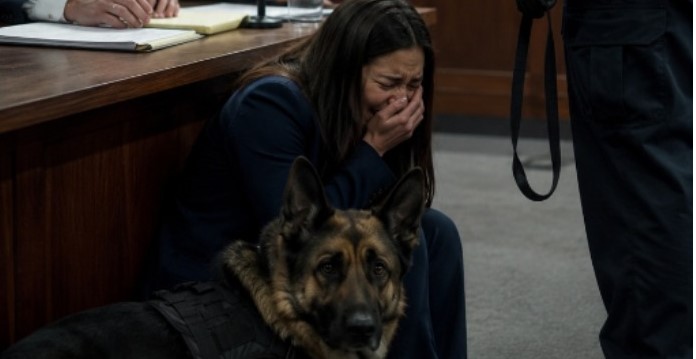
The dog then moved forward without hesitation, breaking formation and ignoring the handler’s command to remain in position. It approached the woman directly and stopped in front of her, lowering its body in a protective stance. Instead of showing aggression, the dog appeared calm but intensely focused, as though recognizing something or someone familiar.
The handler immediately attempted to regain control using standard verbal commands. However, the dog did not respond. The repeated instructions had no effect, which created confusion among court personnel. Service animals are trained to obey commands under almost all circumstances, making this behavior highly unusual and concerning to those observing it.
As uncertainty spread through the courtroom, the judge paused proceedings and requested clarification from the handler. The situation no longer appeared routine, and attention shifted entirely toward the interaction between the dog and the seated woman. The handler, visibly conflicted, admitted that the dog had never behaved in such a manner before.
Despite continued attempts to redirect the K9, the dog remained positioned beside the woman. It refused to move even after multiple commands were issued. The silence in the courtroom became heavier, as observers struggled to understand what was unfolding in front of them. The situation no longer resembled a standard procedural hearing.
The woman seated beside the dog remained calm but visibly emotional. After several moments, she softly addressed the animal by name. This immediately drew attention from the handler, who appeared visibly startled by her familiarity with the K9. Her voice carried a tone of recognition rather than fear, which further deepened the confusion in the room.
When questioned by the handler, the woman stated that she had previously worked with the dog during its early training years. This claim immediately shifted the atmosphere in the courtroom. According to official records referenced by the handler, the dog’s original trainer had reportedly died years earlier while on duty, making the woman’s statement highly unexpected.
The woman then explained that she had served in a K9 training unit and had worked closely with the dog during its early development. She described their partnership as built on structured training, repetition, and trust formed over time. Her explanation suggested a historical connection that had not been previously acknowledged in the current case file.
She continued by describing events that led to her separation from official records. According to her account, she had discovered inconsistencies within internal documentation during her service. These irregularities reportedly involved personnel files and operational records that raised concerns about procedural integrity within the unit.
Shortly after identifying these issues, she described experiencing a sudden and unexplained incident that resulted in her removal from active records. Upon recovery, she discovered that her identity had been effectively erased from official systems. Her employment history, presence, and contributions had been removed or reclassified in a way that left no accessible trace.
As she finished her explanation, attention in the courtroom shifted toward a man seated toward the back of the room. He had remained silent throughout the proceedings, observing without interruption. The woman identified him as being connected to the events that led to her disappearance from official records, though she did not provide immediate detailed allegations in that moment.
At that point, the dog once again reacted, positioning itself between the woman and the man she had identified. Its behavior remained protective and alert, reinforcing the emotional tension in the room. The handler, still processing the unfolding situation, observed the dog’s response without intervening immediately.
The woman then presented a small identification object linked to the dog’s early service history. The handler examined it carefully and appeared visibly affected upon recognizing it. The object confirmed a historical connection between the woman and the K9 unit that had not been accounted for in current records.
Following this development, the judge temporarily suspended proceedings due to the unexpected nature of the testimony and emerging evidence. Court officials began reviewing the situation to determine appropriate next steps, while security personnel maintained order in the room.
The individual identified earlier attempted to leave the courtroom but was stopped by officers as procedural review continued. The situation remained unresolved at that moment, with authorities initiating further examination of the claims and documentation presented during the hearing.
As the courtroom settled into silence, the emotional focus shifted toward the bond between the woman and the K9. The dog remained beside her, calm and steady, as if recognizing a familiar presence from its past. The handler observed the interaction with visible emotional conflict, acknowledging the unusual depth of the connection.
In the end, the incident highlighted the complexity of memory, training bonds, and unresolved histories within working service units. While official procedures required further investigation, the emotional weight of the moment left a strong impression on everyone present in the courtroom.
The case remained under review, and further verification was expected before any formal conclusions could be drawn. However, what stood out most to witnesses was not only the procedural disruption, but the undeniable recognition displayed by the K9—suggesting that some connections, once formed, may persist far beyond official records.

