
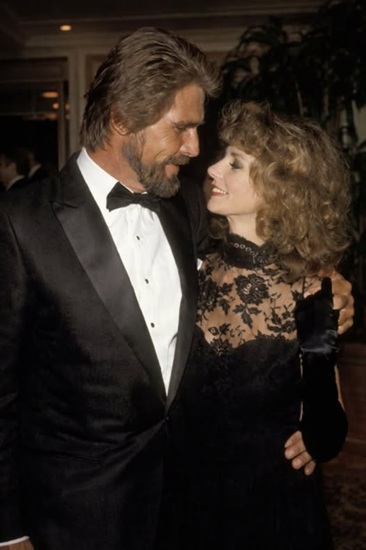
Inside the Beverly Hilton, the atmosphere at the 42nd Annual Golden Globe Awards felt almost cinematic in itself. The ballroom was alive with movement—waiters weaving through tables with crystal trays, flashes of cameras bursting in rhythmic waves, and the soft hum of conversation blending with orchestral music in the background. The air carried a mixture of perfume, fresh floral arrangements, and the subtle scent of luxury tobacco that lingered in corners where conversations became quieter and more personal.
It was a night built on visibility. Every seat held someone whose name, work, or presence had shaped the entertainment industry in some way. Yet beneath the glamour and precision, there was also an unspoken tension—an awareness that every glance, every smile, and every gesture might be captured forever. In such an environment, even stillness became a kind of performance.
Among the many familiar faces that evening, James Brolin and Jan Smithers stood out not through excess, but through contrast. They did not arrive with theatrical attention or exaggerated presence. Instead, they seemed to bring a sense of calm that subtly shifted the energy around them. In a room defined by ambition, they represented something quieter—connection.
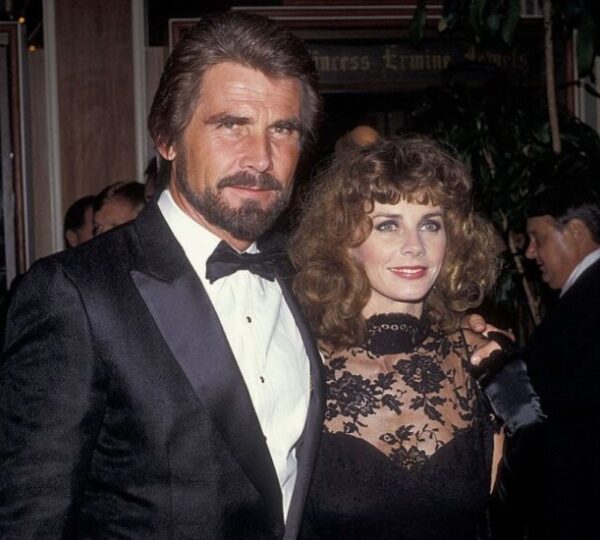
Jan Smithers, widely recognized for her role in WKRP in Cincinnati, carried herself with a natural ease that did not rely on spectacle. Her appearance that night reflected a style that was softer and more restrained than the dominant fashion trends of the mid-1980s. While many embraced bold silhouettes, structured glamour, and dramatic styling, she leaned into simplicity. That choice, intentional or not, gave her a distinct presence that felt almost timeless.
There was something grounding about the way she moved through the room. She did not appear to compete with the surrounding elegance of the venue or the intensity of the event. Instead, she seemed comfortable existing within it, as though she understood that presence did not require amplification. Her familiarity to audiences from television added another layer of recognition, yet in person she carried an understated quality that felt personal rather than performative.
James Brolin, beside her, reflected a different kind of presence—steady, composed, and quietly commanding. He moved through the room with the confidence of someone accustomed to attention but not dependent on it. His demeanor suggested experience, not only in Hollywood but in navigating the shifting expectations that come with long-term public life.
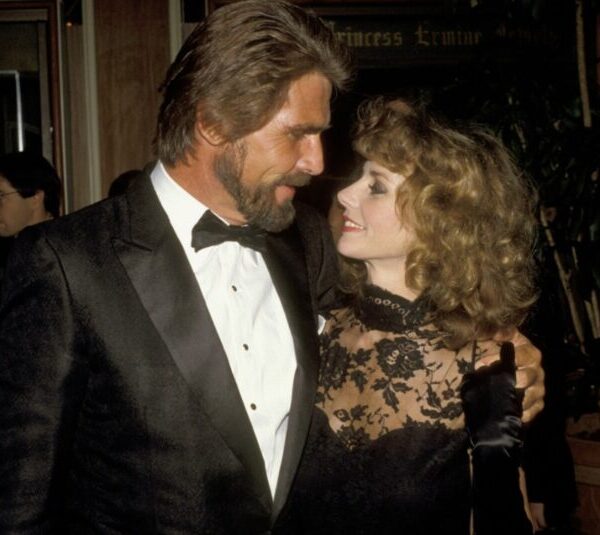
Together, they formed a contrast that felt intentional even if it was simply natural. Where the event around them emphasized spectacle, they embodied restraint. Where others leaned into visibility, they leaned into each other. Their dynamic did not demand interpretation, yet it naturally drew attention because of its simplicity.
The Golden Globes that year were emblematic of a broader era in entertainment—one defined by expansion, ambition, and increasing media visibility. The 1980s were a time when Hollywood was becoming more globally televised, more commercially structured, and more intensely scrutinized. In that context, every public appearance carried additional weight, as photographs and broadcasts extended moments far beyond the walls of the Beverly Hilton.
Yet within that broader atmosphere, moments of authenticity stood out sharply. James Brolin and Jan Smithers did not appear to be performing for the room. Instead, they seemed to exist within it, sharing a sense of familiarity that contrasted with the otherwise highly curated environment. Their presence did not interrupt the event, but it softened it at the edges.

Observers often remember that night not for a single dramatic moment, but for the overall feeling it created. It was a blend of glamour and quiet intimacy, where the grandeur of the ceremony met the subtle human reality of relationships unfolding in public view. In such settings, even a glance or a shared smile can become part of the narrative memory of the evening.
What makes images and recollections from that era endure is not only the fashion or the awards themselves, but the emotional texture captured within them. Years later, those photographs continue to circulate because they reflect something beyond celebrity—they reflect connection under observation. The contrast between public performance and private familiarity is what gives such moments their lasting resonance.

Looking back, the significance of that evening lies not only in the awards handed out or the films celebrated, but in the atmosphere itself. It was a snapshot of Hollywood at a particular point in time, when glamour still carried a sense of mystery and public appearances were both carefully constructed and unexpectedly human.
In that sense, James Brolin and Jan Smithers became part of a larger visual memory of the night. Not because they dominated it, but because they balanced it. They represented a quieter form of presence that contrasted with the intensity around them, offering a reminder that even in spaces defined by fame and recognition, authenticity can still be visible.
Ultimately, what remains from that Golden Globes evening is not just the spectacle of the event, but the impression of contrast—the way softness existed alongside glamour, and how connection could still be felt even in a room built for attention. In the years that followed, that balance is what continues to give the memory its lasting appeal.

