
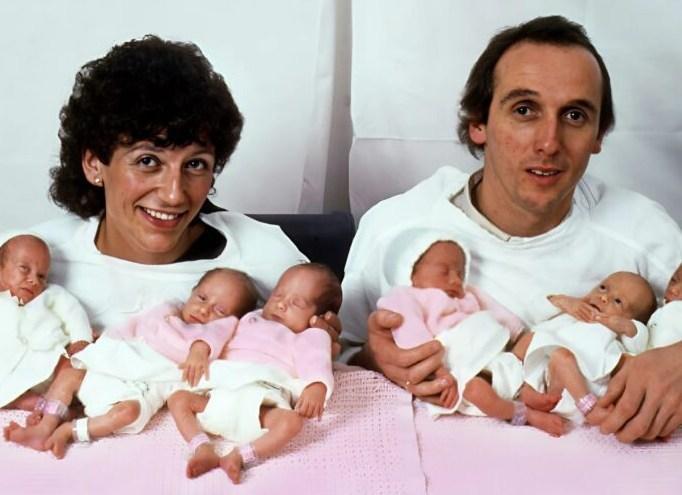
Janet and Graham Walton’s story is one of the most remarkable and widely documented multiple-birth cases in modern medical history. Their journey began like many young love stories, but it eventually evolved into something that captured global attention. What started with friendship in their teenage years later grew into a deep and committed relationship built on trust, patience, and shared hope for the future. They met when they were both around seventeen years old.
At the time, neither could have predicted how unusual their life together would become. Their bond developed naturally over time, moving from friendship into romantic partnership. Even in those early years, they supported each other through challenges, forming a strong emotional foundation that would later be tested in extraordinary ways. As their relationship matured, Janet discovered that she had a rare medical condition that made natural conception extremely difficult.
The diagnosis was emotionally difficult for her, as she had always imagined having children one day. After learning the news, she made the decision to be honest with Graham, expecting uncertainty about their future together. However, Graham’s response was steady and supportive. He told her that his commitment to her was not dependent on whether they could have children. According to multiple accounts of their story, he reassured her that their relationship mattered more than biology or expectations. This moment became an important turning point in their lives, strengthening their emotional connection even further.

Eventually, they decided to marry when Janet was 24 years old. Like many couples facing fertility challenges, they explored medical options available at the time. Over the years that followed, they underwent several attempts to conceive, each one unsuccessful. The emotional strain of repeated disappointment was significant, but they continued to support each other throughout the process.
After approximately twelve unsuccessful attempts, they reached a difficult decision. They agreed that if one final attempt did not succeed, they would begin the process of adoption. It was a practical and emotional turning point, reflecting both acceptance and hope for building a family in another way.
However, on what was described as their thirteenth attempt, something unexpected occurred. Janet became pregnant. Initially, the news itself was surprising, but further medical examinations revealed something even more extraordinary: she was carrying multiple babies.
Doctors soon confirmed that Janet was expecting six children.
The news was both astonishing and concerning. While multiple births are rare, a sextuplet pregnancy carries significant medical risks for both the mother and the babies. Medical professionals advised caution and closely monitored the pregnancy due to the high likelihood of premature birth and complications.

Throughout the pregnancy, Janet remained determined to carry her children for as long as safely possible. She received ongoing medical supervision, and her condition was carefully observed due to the extreme demands of carrying six babies at once.
At approximately 31 weeks of pregnancy, labor began. Due to the medical risks involved, a caesarean section was performed to ensure the safest possible delivery for both Janet and the babies.
All six daughters were born prematurely, with birth weights ranging roughly between 1.0 kg and 1.6 kg. Despite being born early and under medically challenging circumstances, all six babies survived. This outcome was considered highly significant given the risks associated with multiple premature births of this scale.
The births attracted attention beyond the medical community, becoming widely discussed in the media at the time. However, for Janet and Graham, the focus was not public attention but the immediate responsibility of caring for six newborns at once.
After returning home, their lives changed dramatically. The demands of raising six infants simultaneously required constant attention, structured routines, and significant support. Graham took time away from work to help Janet manage daily care, recognizing the physical and emotional demands involved in caring for such a large group of newborns.
Because of the scale of their situation, the family also received assistance from nurses and support staff during the early years. Even with help, the workload was intense. Daily life revolved around feeding schedules, medical appointments, sleeping patterns, and the constant needs of six growing babies.
The practical challenges were significant. The family reportedly used thousands of diapers each year and experienced years of limited sleep due to the demands of caring for multiple infants at the same time. Every aspect of daily life required coordination and planning, from feeding routines to transportation and basic household organization.
Despite the difficulties, the family gradually adapted. Over time, the six daughters grew stronger and healthier. Their early challenges as premature infants became part of a larger story of development, resilience, and family commitment.
As the years passed, the girls grew from infants into children, and eventually into adults. Each developed her own personality, interests, and life path. While they shared a unique beginning, they eventually established individual identities and independent lives outside of their early media attention.
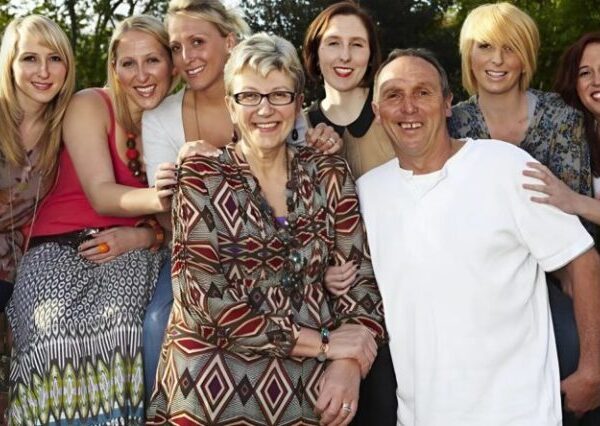
Today, decades later, all six daughters are adults with their own families and personal responsibilities. They have grown beyond the extraordinary circumstances of their birth, building lives shaped by both their shared history and their individual experiences.
Their story remains widely referenced in discussions about multiple births and medical possibility. It is often cited as an example of how advances in medical care and strong family commitment can support survival even in highly complex pregnancies.
At its core, the story of Janet and Graham Walton is not only about a rare medical event. It is also about long-term partnership, emotional resilience, and the challenges and rewards of raising a large family under extraordinary circumstances. Their experience highlights both the unpredictability of life and the strength required to navigate it.
More than forty years later, their journey continues to be remembered as one of the most remarkable cases of sextuplet survival in modern history, showing how unexpected outcomes can transform not only a family’s life but also public understanding of what is medically possible.

